Showing posts with label self-driving cars. Show all posts

Thursday, September 15, 2016

Why AVs Will NOT Usher in the Age of EVs, and other myths of the autonomous vehicle era

A complete misnomer that I keep reading about ties the fate of electric vehicle technology with that of the expected market takeover of autonomous vehicles.  Along with this assertion comes other assumptions that parking lots will be eliminated, private car ownership will dwindle and vehicles will be utilized 3 or 4 times as much as they are today.  Hey, you don't have to sell me on the benefits of autonomous vehicles, or electric for that matter.  I was an early adopter on the Chevy Volt, proudly plugging in my car at home, at work and elsewhere for more than 5 years now, and I've preached tirelessly about the carnage we face every day - in one month, we have as many deaths on the road due to human error as we had on 9/11.  We've essentially had a 9/11 death-toll every month since 9/11 happened; yet we stand together against that one tragedy and are completely indifferent towards the ongoing tragedies.  Still, I have a lot of problems with this assertion that driverless vehicle technology will finally give the electric vehicle the demand its been looking for all these years.  Clearly, there are writers prophesying about the future of transportation whom are not well acquainted with the life of an electric vehicle driver, as I am.  


First of all, electric vehicles do not recharge as fast as filling up a gas tank.  This I know first hand; I plan my day around my charging schedule if and when possible, or relent to the need to use gas for a portion of my daily requirements.  My commute may be more than the average commute, but its not terribly unusual.  I drive 25 miles uphill to work on a freeway, which means my Volt battery is close to depleted (between 2 - 7 miles left depending on driving aggression that day, and environment control).  It takes about 7 - 8 hours to completely recharge my car, which is just a little bit less time than I spend at work most days, so my car is topped off when I am done.  It is downhill home, so I end up with about 15 miles to run errands with, although I still try to take efficient routes so as not to exceed my battery's limits.  I hate using gas.  But once I'm home, I pretty much need to start charging right away, or within a few hours, to make sure my car is ready to go the next morning.  So to say it could be better utilized is hard to swallow.  Sure there would be some efficiencies gained with an autonomous vehicle: it will accelerate more slowly and brake less dramatically, it would take the most efficient or speediest route, as dictated I suppose, and with the addition of an AV lane, it could platoon behind other AVs to reduce wind resistance.  But I don't foresee a gain of more than 4 - 8 miles each way, and that means a driverless car servicing my commute could maybe make one more short trip per day, but not much else. 


Maybe I'm an atypical case, and I would be the exception for whom car ownership makes sense, or I would be forced by reasonable economics simply to move closer to work.  But I tend to disagree that I'm all that unusual.  On the contrary, I think a lot of Americans, given AVs as a viable option for their rush hour commutes, will choose to live further from work, knowing they can be productive during their drive, and because they won't have to deal with the frustrations of insane traffic, because the car is dealing with it.  When you aren't paying attention to your driving, a half hour or even an hour of downtime before and after work actually sounds pretty appealing.   


Admittedly, Teslas and even Nissans have faster charging capabilities than my gas-enabled Volt, but my understanding is that this express charging is actually not very good for the battery.  It may be okay for the occasional road trip for private owners, but building a business model around fast-charging autonomous EVs potentially several times a day to keep them whirring about city streets requires a lot more consideration for the battery life than accounted for in most of the poorly devised proposals I've seen.  Along those lines, then, the prospect for this mobility versus car ownership model to deteriorate car sales seems to be overstated; the companies who own the electric AVs would need to replace them much more frequently, or at least replace the expensive batteries used in them. 


Another point that I'd call into question is this idea that we could eliminate parking lots and turn them into green spaces.  It sounds lovely, but if we eliminate parking lots, where exactly do you suppose those cars will be?  Especially if private car ownership recedes to hobbyist levels, cars will no longer be parked in our homes' garages, so they need to be somewhere when not in use during low-demand hours like at 3 am on a Tuesday morning.  We need a ton capacity of vehicles to get us around, unless we drastically change our lifestyles away from the need to drive tens or hundreds of miles a day altogether, and that is just a completely different rabbit hole.  These autonomous cars utilized solely for mobility, if electric, will need to charge somewhere for extended periods of time.  Thousands of them.  And while we may be able to place such charging parking lots further away from central hubs (because humans no longer need to walk to and from such parking lots), the further out you put them, the more energy they will expend just getting to and from the parking lots.  No, I don't think the vast majority of parking lots will disappear in the next 50 years, I think they will be transformed into lots with more services to maintain the vehicles while the humans are going about their workday.   
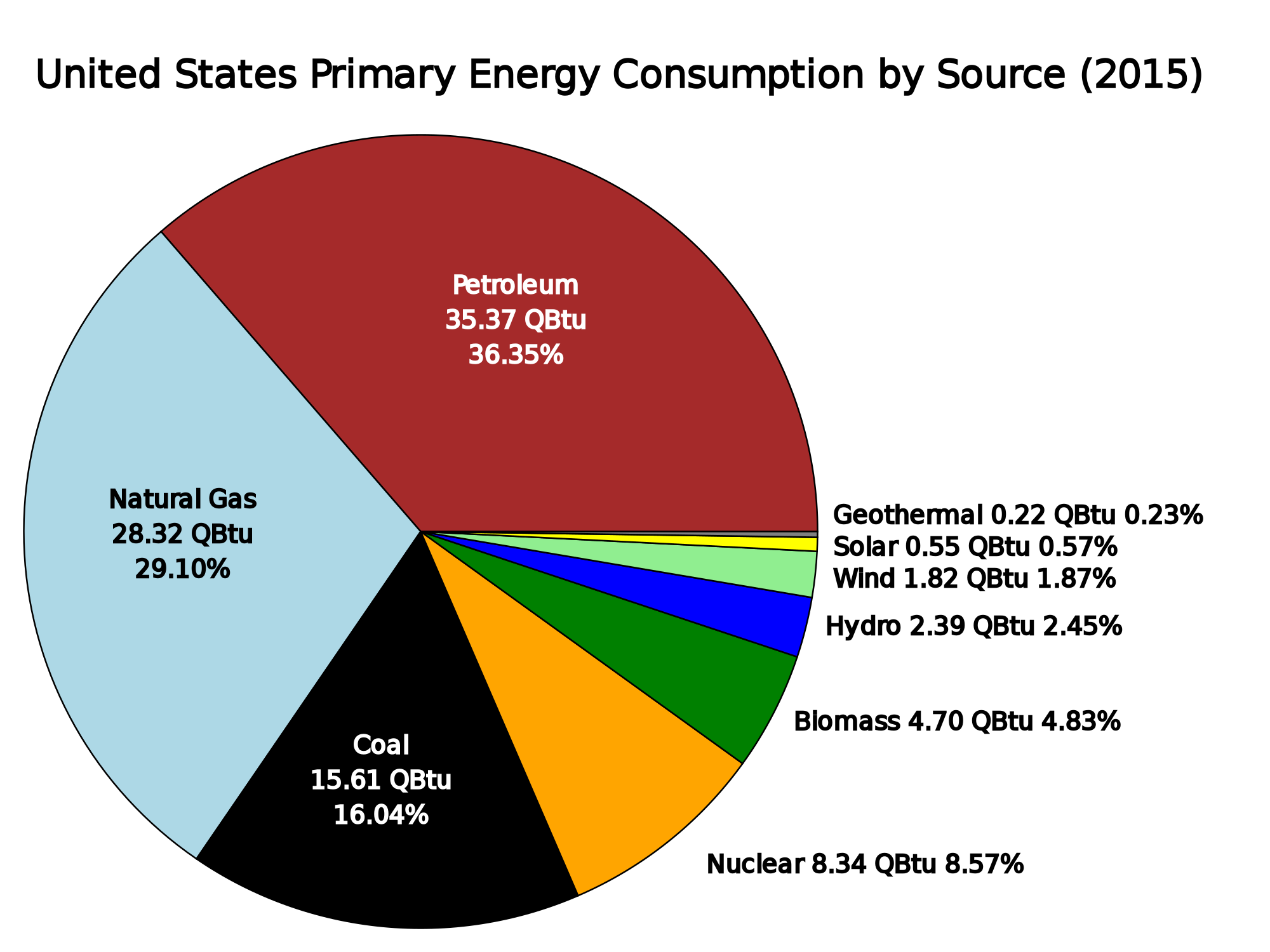

And where will this energy come from for such large amounts of transportation?  Electricity may seem like it appears out of nowhere because we can pull it out of our walls, but it has to be produced somewhere.  Sure, we can string solar arrays along all the rooftops in the city, but to support the entire transportation network with all electric, we're going to need a hell of a lot more power per kilometer than a reasonable amount of solar panels in that same kilometer could support.  As much as I love the idea of solar, the technology just isn't efficient enough yet, and wind is even less promising.  No, I think a good amount of our transportation energy will still come, in one form or another, from some form of fuel, be it biodiesel, natural gas, or fossil fuel.  It can be made cleaner, but it will certainly be prevalent for decades to come, era of autonomous vehicle or not. 

Friday, October 30, 2015

Halloween: In Memoriam


My life changed on Halloween last year.  I didn’t know it then; I thought it was a phase that I’d shrug off, a period of mourning that would heal with time.  It healed some, but seems it nevertheless changed me for good. 

One year ago I got the horrific news that a family member had been struck by a vehicle and killed instantly.  She had been walking down the road holding hands with her loving husband.  They had just moved to Florida together to start their dream retirement.  All I could think of was how full of life she had been, one of the most joyful people I knew, and how detrimental it would be to poor Jim, her husband who had to pick up the pieces of their life that she left too soon.  

I’d known people who had died before.  I’ve lost grandparents to those things that take you in old age.  I’ve known families who have lost babies within days or months of giving birth.  I’ve seen teenagers get in with the wrong crowds and lose their lives.  I’ve had classmates who died in war.  But no death has shaken me like Joyce’s.  Perhaps it’s the juxtaposition of her being so full of life and love, and then such sudden death.  Perhaps it struck close to home - I go for walks, and I drive, and she had no influence on the outcome.  

I can’t put my finger on it, but there’s something more to her death.  It’s a tragedy, but not just a tragedy.  It’s horrible irony, but not just a shame.  It’s as if her death was supposed to have meaning to me, a purpose, and so fate made it so.  

Ever since Halloween last year, I’ve had an uncanny notion of Joyce watching over me when I drive, shunning me when I steal a glance at my phone, and praising me when I avoid a pedestrian who didn’t hear or see me coming.  Joyce’s story has made my passion for autonomous vehicles not just selfishly indulgent, but imperative for mankind.  And she made it personal.  It’s no longer about the “cool” factor of the technology.  Joyce is to human drivers as Hiroshima’s Peace Park is to the atomic bomb – a vivid memorial that begs modern society to do away with such destructive forces.  

We don’t know what caused the driver to veer suddenly to the side of the road, but I think it’s fair to assume that the driver was distracted, whether it be by a cell phone or otherwise.  I’ve been in a collision because the driver behind me was fidgeting with his radio, something that we don’t villanize as we do texting or drunk driving.  

What I’ve come to learn in my research is that there are far too many variables when it comes to driving behavior.  No one product or activity can ever make a driver completely dangerous or completely safe.  I’ve texted while driving in order to stay awake.  I rationalized that an alert but distracted driver is safer than a driver whose eyes aren’t even open.  Drivers who have had a couple drinks are often safer drivers than those who have had no alcohol at all – slightly inebriated drivers are aware of the risk of getting caught and therefore behave better.  

Thus, I’m not going to crusade against any one behavior – texting, drinking, applying makeup, aggressive driving – because none of these are inherently more or less dangerous than any others.  Instead, I’m crusading against the one aspect that puts us in danger at all, and that’s putting human beings behind the wheel.  We are far too comfortable with driving, far too distracted by life, and far too bad at it (statistically, you are worse than you think).  We need smart vehicles to take over, so that we can spend our time doing being distracted.  

Take the human element out of driving, and you remove the human error that puts us in danger every time we get near a roadway.  Until then, the only thing I can think to do is be the best driver I can be, and I hope that Joyce approves from above. 

Wednesday, October 21, 2015

Back to the Future: A Sneak Peek at 2045

There is a big difference between following current trajectories into the future to imagine a dismal fate, and believing that the small efforts today can turn those trends around.  Maybe its the hopeful optimist in me, or maybe its my faith in humanity's ability to prevent foreseeable disasters, but I believe 30 years from today will be an awesome time to live.  There are three areas that I'm most anxious to fast-forward to: technology, health and the economy.

Self-driving cars will be practically mandated; it won't contravene hard law to drive oneself, but it will be rendered completely impractical and economically challenging because insurance rates will skyrocket for non-autonomous vehicles.  A new industry will arise around furnishing and "pimping" your self-driving car, free from the restrictions of forward-facing seats and the tethers of strict safety features.  Cars will morph into lounges of productivity, comfort and service, while zooming along safer roads than ever seen in the history of the car. 

Programming will be taught in schools instead of cursive.  Some will excel at it and become programmers, but most people will know basic computer languages. 

3D printing as a technology will mature into a mass production tool for specific applications, such as wearable technologies, on-the-go sound equipment and hot-off-the-printer food delivery services.  Most middle-class people will have some sort of 3D scanner at home, with many also having a 3D printer for specific housekeeping requirements. 

Speaking of housekeeping, robots will be employed in most homes to do the mundane work - washing and putting away dishes and clothes, taking out the garbage and recycling, vacuuming and cleaning surfaces. 

Wearables will be as pervasive as cellphones are today, and will become more invasive as we get accustomed to the Internet of Things.  These technologies will drive the turnaround of the obesity epidemic, bringing diabetes, asthma, IBS, heart disease, allergies and even cancer to their knees.  Your device will inform you that you are low on a specific nutrient and will select recommendations from your list of favorite foods as well as new dishes to try at local restaurants to satisfy your dietary requirements.  Restaurants will have no choice but to offer tasty, healthful options to win and retain customers.  Your device will also walk you through your grocery store identifying products that you may enjoy based on your tastes and dietary needs, avoiding those that you have a habit of over-indulging on.  Health and weight loss will no longer be a pressing matter, as it will be so effortless to stay healthy that obesity will seem like a frivolous concept, and all the diseases that are correlated with poor dieting will seem foreign. 

The economy will accelerate like never before, primarily because we will have long since done away with partisan politics and replaced the political system with an issues-based and performance-driven model. Flourishing in this economy is as simple as getting paid fairly for what you excel at, enjoy doing or what you are learning.  The increased transparency of skills, qualifications and talent compared to relative salaries in every field will make it nearly impossible to be under- or over-paid.  There will be more part-time and flex-time jobs and the development of hybrid jobs - where you spend part of your time in one function, and the rest of your time on another function - to best make use of the skills and value each person brings to an organization.  With job satisfaction and productivity up, and economic uncertainty diminished, the finance will be a no-brainer.  The work week will be shorter, providing us more time to exercise and participate in activities that keep us healthy. 

These are the things that I see as inevitable, if not a slightly optimistic or accelerated view of 30 years from today.  The future is ours to invent, and if we don't invent it, someone else will.  Deciding what aspect of the future to be a part of making is an ongoing challenge for me, but its the right way to think for any company or individual wanting to be around and see these things come to fruition in 30 years. 

Wednesday, August 12, 2015

The Car of the Future

You probably don't know me well if you don't realize that I was one of the first to put money down on a car that didn't exist yet - the Chevy Volt - and have since trumpeted both the praise I have for the car, as well as some of the "opportunities" we'll call them.  It is a point of pride to me to be a part of pioneering EV technology; it was not an economical decision by any means, it was 100% the draw of a cool technology that could change the world.  I fell in love the minute I first saw the concept car, and even though the real thing would not be rolled out in my state until years later, I had to get one.    

I've received tons of compliments and questions about the car, especially in the first couple years; people in the cars next to me at a stop light would signal for me to roll down my window to interview me, and I'd get stopped in parking lots all the time.  I'll never forget one taxi driver who asked me, "Does it really get awesome mpg?  How can you trust the numbers the computer gives you?"  I took a peek at my dashboard and retorted, "Well, it's been over 1400 miles since I last filled my tank, and it only holds about 9 gallons.  You do the math."  The taxi driver was so delighted, he screamed gleefully, "That's my next car!" as the light turned green and we drove off.  Sometimes people complimented me on the styling of the car, not even recognizing that it was electric.  When I told them that, they were dumbfounded!  Most EVs at the time looked like dinky capsules with googly alien eyes for headlights.  

A lot of people didn't understand the difference between the Volt's hybrid technology, or range-extended EV technology as GM tried to sell it, and that of a common Prius.  The difference, I'd have to explain over and over again, is that you can hardly ever drive a Prius for any useful distance at any reasonable speed, without the gas engine kicking on.  With the Volt, I get through most weekdays without ever using gas; the gas is there only as a backup if I run out
of electricity, and for longer trips.  While many of my eco-friendly technophile friends were gunning for the Nissan Leaf, an all-electric car with a lower price-point, I knew that wouldn't do it for me because my family lives a little over 100 miles away, and the charging station at the midpoint was not installed yet (although I knew it was coming... some day).  To me, the Leaf was a great commuter car, but could not suffice as the only car of a household.  I faced a lot of criticism from the EV-purests; GM was, after all, the company reputed for killing the EV1 in the 90's, so who's to say the Volt would ever even come to fruition?  Plus, the Volt didn't qualify yet for HOV lane access, a privilege granted to the Prius and two other inferior hybrids, and all electric vehicles.  My commute at the time didn't benefit from HOV lane access much, and I stood firm on patriotic and technologically sound principles that the Volt was the way to go.  I got the last laugh, of course, as Nissan Leafs failed to hold up in the scorching heat of Phoenix summers, and all my Leaf-fanatic friends lemon-lawed or ditched their cars at a huge loss very quickly, while I am still thrilled with the performance and battery life of my Volt.

I had done all the negotiations upfront through email with the dealer in California, and he even friended me on facebook.  It was nothing like a "normal" car buying experience.  I had customized what little options there were to choose from, and the Volt Advisor assigned to me provided updates on where it was in the process and shipping.  When I arrived at the dealership, I was greeted with familiarity and hugs, even though I had never met a soul there.  I signed all the paperwork to purchase the car, and hadn't even seen it (except in passing, it was being taken to fill up as we were pulling in, and I caught just a glimpse of it).  When I finally got in the car, before I could even drive it, someone on the lot offered me $60,000 for it, almost 150% of the price I just agreed to pay through financing.  Since then, the car has been great to me, albeit some hickups along the way, but overall I am still thrilled to own Volt #492.

All that being said, the passion for EVs has faded a bit; I think the world has come to accept them more (there are 3 Volts and 2 Teslas at my work, all of which plug in, and Arizona now allows Volts to get HOV lane access which is great because my new commute practically requires it), and I think they are definitely an embedded part of the inevitable future.  It's not that I don't love my EV as much, it's just that with lower resistance comes a reduced passion to fight the good fight for EVs.  I no longer get surprised looks in parking lots, or badgering questions, and people have even stopped sending me news clips of Volts catching on fire (all of which were terribly inaccurate).  I look now to the future, which I am even more anxious and excited about.  I think the next step is autonomous vehicles, and I don't think they can come soon enough. If EVs scared the general public, self-driving technology has the potential to drive people out of the country in sheer terror.  But at the same time, I reason that the most dangerous thing you can do any day of the week is get into a vehicle.  Whether you're driving or not, you have a higher potential of dying in a car wreck than any other activity most people encounter in a year, with obvious exceptions. 

I saw a lot of irony in the fear of EVs for two reasons.  One, every person who feared the technology also owned multiple devices that employed that exact technology.  In fact, if you read between the lines in the crazy blown-out-of-proportion articles, the only ways to make a Volt catch on fire, it seemed, was to either set the whole damn place on fire, and the car would eventually catch on too, or severely damage the battery multiple times, turn it on its side, let fluids leak out for weeks, and then it might ignite itself.  So, my conclusions were, if your garage is on fire, don't get into the Volt that's in the garage, and don't stay in a Volt for weeks on end after a severe collision.  Following these two rules would prevent any death "caused" by the oh-so-dangerous Volt.  Nevermind, that it exceeded the safety regulations, it was an EV and therefore its scary!  Give me a break!  Meanwhile, iPhone batteries were burning up and endangering hundreds of people at a time on airplanes, but nobody got up in arms about those.  You know why?  Because iPhones are familiar, and Volts are not.  Second, people were perfectly comfortable driving around "internal combustion engines" - it has the word combustion right in there!  Gas is flammable, did people forget that?  Cars catch on fire from time to time, and they are not EVs.  So even if EVs were as dangerous, the worst that could happen is status quo. 


Similarly, I hear fears that I find irrational when casually discussing the potential of autonomous vehicles.  The most predominantly irritating question to me is, "What happens if the car fails to respond appropriately?"  My response is usually, "What if you fail to respond appropriately?  Or what if the car behind you fails to respond appropriately?"  Every day people die because humans fail to respond appropriately, so this fear is irrational to me.  Then again, I've been programming macros for years, and have always faced fears that the macros are doing something they aren't supposed to do.  When dealing with my macros, I reassure people that it is programmed to take the same steps you would take, it just does it a lot faster.  My experience in programming gives me faith in the potential for autonomous vehicles, because of just that. An autonomous vehicle, programmed well, would react the same way I would or should react, but much faster, and without distraction.  Whereas I may miss something while looking in a mirror, the autonomous vehicles effectively has eyes in all directions, and the logic would kick in much faster than human reaction time even without distraction.  I just finished reading, "The Great Race" by Levi Tillemann, which was primarily about the history of the EV, with an Afterword focused on autonomous vehicles.  The book cites one NHTSA study that showed "human error caused or contributed to 99 percent of incidents," translating to "tens of thousands of lives a year in America" that could be saved with appropriate automation.  I think the fear of automation is more of a control issue - if you feel like you are in control, then you have a false sense of security.  Handing that control over to a computer, even if its a more capable driver than you are, is what leads to this fear.  As for me, as long as I trust the programming and sensors, I will have no problem relinquishing control, because I believe computers are more capable already, and will only get better with time.  Even if my car's computer fails, it is likely going to do a better job handling a given situation than I would, and that's less of a risk than the risk we take every day driving ourselves to and from work. 

Yet autonomous vehicles, for all the promises they carry, do have some legitimate safety concerns.  Cyberattacks, to me, seem to be the most threatening.  There will have to be significant momentum around autonomous vehicles before hackers will bother to attempt such hacks, but as long as the cars are somehow connected to the internet, there will probably be a way to hack into them.  This is the most troubling aspect to me; because it is terribly sexy to think of being dropped off at the front door, and letting my car park itself, or better yet, generate some income for me by enlisting itself on an Uber-like service for the day, then being recalled to my location with an app on
my SmartPhone.  But in order for it to be recalled back to us, and in order for it to play on car-sharing services, it has to be connected.  And that connection point is a threat.  No amount of cyber-security will ever assure me that a connected car cannot be hacked.  So, I try to play out the scenario of a completely self-sufficient autonomous car that is not actively connected to the Internet.  Maybe we plug it in at home for a limited amount of time to get the latest map and construction updates, but once unplugged, it operates in an airplane-mode-like status.  This still poses a small threat of downloading, but at least its not an "always on" connection.  I'd imagine there could be encrypted packages coming directly from whatever authority we trust, that we put on a flashdrive and install on the cars.  We can still get traffic and weather updates on our phones live during the drive, so if something severe did come up, we could still manually tell the cars how to respond without them being connected themselves.  But this means the cars will sit, like they do today, in the parking lot and we have to go out to it to tell it where to go next.  Maybe that's the sacrifice we'd make for assured or enhanced security.  I also imagine that cars could communicate among themselves with something less than full connectivity but more than sensors; maybe a hybrid technology lovechild between Bluetooth (localized) and EDI (standardized, plain-text) so that no viruses or hacking mechanisms could attach themselves. 

The biggest barrier, as far as I can see, for autonomous vehicles is not the technology, not the consumer demand and not the infrastructure.  To me, the biggest hindrance is going to be the laws and government policies which also currently seem to be rooted in fear.  Even liability will work itself out, I think, but if autonomous cars are not allowed to drive without an alert driver, then the technology is worse than pointless.  In fact, that makes it almost more dangerous: requiring an alert driver in an autonomous vehicle means a driver who is primarily not occupied with driving and yet vehicle manufacturers hold no liability because the driver is supposed to be alert.  If "The Great Race" teaches
us anything, its that government needs to promote new and socially beneficial technologies with supportive policies, incentives and grants.  Putting up roadblocks does not deter the cars from coming into being, and it does not protect the government from being liable.  Government roadblocks will cause the host country to fall behind the technology race, and leaves the government open to lawsuits and criticism, at best.  Imagine if Canada, Europe, China and Japan all had networks of primarily autonomous vehicles racing at high speeds with fewer accidents combined than that in the state of Illinois, and the US laws prevented the technology from growing and prospering in this country.  People would be dying, becoming paralyzed or seriously injured every day, for no other reason than because of those laws.  How long would it take for victims and their families to build a class action lawsuit to remove the barriers to autonomous vehicles?  When they win, which they would, then the US would have to play catch up in the technology, maybe paying royalties to Japan and elsewhere, while the rest of the world has already benefited from years of experience and advancements.  The technology seems to be pretty robust, and America has the opportunity right now to get ahead and stay ahead in this technology. 

My Dad commuted further than the average American for a good part of my early childhood, and regularly got speeding tickets.  He always dreamed of a way to get between Phoenix and Tucson, two hours away by today's speed limits, in which cars would hook into a chain and be stacked up inches away from the next car and fly at incredible speeds of over 100 mph to shorten this well-traveled and congested route.  While I never thought it would be practical to install such a chain, I do foresee a future in which cars could travel at otherwise dangerous speeds, but being autonomous and (at least slightly) connected, would not be dangerous.  This is possible with autonomous cars.
On a freeway with four or more lanes, one could be dedicated to autonomous cars, much like today's HOV lane.  The autonomous cars could have an increased speed limit, maybe 100 mph, and even draft off each other which increases fuel efficiency in addition to reducing time traveled.  The idea of an autonomous vehicle lane, to me, may even reduce the anxiety and fears of both government and the general public.  The laws could be altered to say that alert drivers are required to enter and exit the autonomous vehicle lane, but once in that lane, the car would be allowed to take over, and the driver is freed to read the news or check facebook.  This would mean that any accidents in that lane would not impact non-autonomous traffic, and could allow for a proving ground until acceptance has broadened.


Unfortunately, if EV fears is any indication, and I believe it is, I presume that fully autonomous vehicles will not be widely adopted for a long time.  I'd like to believe that they're just around the corner, but I just think there are too many hurdles, not in technology but in regulation and consumer trust.  Instead, I think we'll see autonomous features sneak their way into luxury cars, and then trickle down to their economy counterparts.  Lane keeping, park assist and automatic braking are evidence, as these features are already present in some cars.  I don't believe autonomous cars are science fiction, I think they are inevitable.  The questions will be, how long does it take to get there, and who will lead us into this inevitable future?

A close relative was walking down the street last Halloween, hand-in-hand with her husband.  They had just moved to their dream retirement house in Florida, and they walked every morning.  A presumed distracted driver veered to the side of the road, hit her and killed her almost instantly.  To me, whenever autonomous vehicles are rolled out on a mass scale, they will be too late.  But, better late than never.  


Let's get to work America, and make our roads safer for all the lives that can still be saved. 


Friday, March 7, 2014

Pizza Delivery Supply Chain Improvement: The World's First Culinary 3PL

Don't ask me what made me think of this, I really don't know.  But somewhere between reducing capacity concerns at a liquid hand soap co-packer and refilling my cup of water, I got the whiff of a ridiculous idea for fast pizza delivery - or maybe it was the pizza being pushed by me as I made my way back from the water cooler.  Whatever it was, I think I'm on to something, or at least, its amusing to think about.

First, some background for non-supply-chain people.  The products you buy in stores are considered make-to-stock products.  Make-to-stock supply chain models are best suited for products that are low in value, like commodity items, have long shelf lives and have long lead times on the raw materials or manufacturing processes (or both).  Products that are high in value, like fancy computers and cars, are often make-to-order rather than make-to-stock.  Products with very short lead times and short shelf lives, like pizza or sandwiches, are generally make-to-order as well.  Make-to-stock supply chains require demand forecasting (and forecasts are almost never correct, they can be too high or too low), production planning (which either makes too much or too little, depending on the forecast and lot size factors), and materials planning which can wreck havoc on an otherwise perfectly planned production plan if the materials are not available.  When too much is produced and not sold, it becomes inventory which carries a cost.  When too little is produced, customers get upset and service levels tank.  It is easy to see why supply chain folks love make-to-order, because there is much less risk involved; you generally get payment up front, you have firm orders from real customers instead of forecasts, and all you have to do is produce it.  

Manufacturing companies also have a lot of logistics problems to work through on both sides of their operations: getting the raw materials or components needed to make what they make, and getting their finished products out the customers.  That is where 3PLs often come in.  3PL stands for third party logistics provider, and they are a unique kind of company that specializes in those logistical nightmares that manufacturing companies tend to struggle with.  My own experience with 3PLs has proven gains in efficiency, inventory accuracy, and service to our production lines and to our customers.  

So now that we have our basics, let's get back to my blasphemous or radically innovative idea I came to write about.  I started wondering what would happen if there was a 3PL managing pizza delivery.  On the one hand, sales forecasts are more accurate the more aggregated they are, so by removing the luxury of large warehouses, a 3PL might seem impractical.  On the other hand, lean methodologies tell us that a lot size of as low as 1 can still be efficient if the processes around it support lean principles.  

Let's imagine a densely populated neighborhood which orders on average 25 pizzas for dinner per night:  6 cheese pizzas, 13 pepperoni pizzas, 4 sausage pizzas and 2 special order pizzas.  Let's say the standard deviation is 1 pizza in each category except pepperoni, where the standard deviation is 3 pizzas.  The orders are placed between the hours of 5:30 pm and 8 pm and are normally distributed.  Would it be possible to set up a micro-delivery station in that neighborhood and other neighborhoods like it, where the pizzas could be made based on a forecasting system and delivered within minutes of the order, without losing too much freshness?  Imagine Jimmy John's delivery speed applied to pizza - if quality and freshness were comparable, it would blow away the pizza delivery market!  

It wouldn't be that hard, assuming, of course, that the demand is steady enough to warrant such a setup and and high enough to be profitable.  Some pizzas would be discarded at the end of each night (taken home by the delivery boys as a bonus), and special orders would still take a little bit longer.  But even special orders could be semi-baked the time the order comes in; if the order is for a pepperoni and sausage pizza, just throw some sausage on a semi-baked pepperoni pizza, right? In fact, I could imagine these little micro-franchises could be run by a person living in the neighborhood, and the pizza could be delivered by bike rather than car.  A teenager could do it after school, or a stay-at-home mom could run the dinner business when her husband comes home.  The possibilities are pretty neat when you make it so tiny anyone can do it.  And if there's no separate facility, there's no overhead.  Just materials (cardboard boxes) and ingredients, which pay for themselves when the customers pay for their pizza.  The only upfront cost would be a commercial oven, assuming that the conventional ovens at home are not large enough to support even this kind of demand.

I have another twist, too.  I believe the very near future will include self-driving, autonomous vehicles in the marketplace.  Now, pizza delivery boys are not known to drive the nicest of cars, but let's imagine if the company provided the vehicles in order to support their business model.  With an autonomous delivery vehicle, an oven a mini-kitchen can be installed, and the delivery boy can be your cook as well.  He literally would let the vehicle drive him around as orders pop up (there would have to be some algorithm to deploy delivery boys based on location and availability, not unlike a taxi service today) and he would prepare the pizza on the way there.  When it finishes cooking, he boxes it up and brings it to your doorstep.  Now THAT'S fresh pizza!

So, until we have self-driving cars with pizza ovens in them (and the legislation to allow autonomous cars to be driven without the driver being attentive), I suppose the only issue is whether or not a neighborhood or small geographic area could have the volume and reliability of demand to support such a business.  Validating it prior to opening up shop could be difficult, as there are a lot of different pizza delivery companies, who are not likely to share their data with you.  I suppose you could set up cameras and watch for pizzas to be delivered; the good news is that its pretty obvious how many pizzas are being delivered visually.  In addition, the value proposition of impossibly quick pizza delivery is different than regular pizza deliveries.  In fact, it could increase demand for pizza delivery.  Borrowing a model I've heard for other startups, one way to validate it would be to set up a website to take orders, and when the orders come in, apologize to your would-be customers for not being able to deliver, and offer them a chance to sign up to find out when you actually are open.  This seems like it could turn people off though, and I would be afraid of the damage it would do.  Unless, of course, you did it in a different but similar geographic region then the one you plan to actually open up shop in.  Alternatively, coupons for future purchases might alleviate some of the "burned" feeling of your customers.  
 

Perhaps a good way to start is by making a few pizzas tonight and open up a preliminary shop (not yet equipped with commercial ovens), but limit the ordering process on the website to only take the first few orders with the 5 minute delivery time, and the rest to promise a more reasonable delivery time.  You'll know pretty quickly what your demand looks like.  You could even get friends and family who live nearby to pitch in their help for the first few opening nights in order to keep as many 5-minute delivery times as possible.  
 

That's about as far as I got.  I'm not all that interested in being in food service myself, but I think its an interesting proposition for someone looking to start perhaps the world's first culinary 3PL.  Anyone hungry yet?


Tuesday, November 5, 2013

Braking Bad: How to Reduce Car Accidents Quickly and Cheaply

I have a solution that local governments and their residents can start implementing immediately that will greatly reduce accidents. It's simple, and will financially benefit the cities who use it. Ticket or tax every car owner with a broken or missing middle break light. 

I recently started at a new company and so I'm getting used to a completely new commute. On my new morning drive, there is a lot of stop and go traffic, despite it being 99% freeway. Every lane slows and speeds up at different intervals, at different rates, at different times. Many vehicles are taller than mine and/or have shaded windows, preventing me from being able to see two cars ahead. Thus, I am relying a lot on the brake lights of just a single vehicle. Since the sun was still rising, it was difficult to tell if the left and right lights were lit up for braking or just because the headlights were on. That middle brake light was the only reliable indicator of braking. And here's the problem: THERE ARE FAR TOO MANY VEHICLES WITH BROKEN OR MISSING MIDDLE BRAKE LIGHTS.

Can you tell the difference?


Without that clear indicator, at that time of day, it is very easy to mistake brake lights for running lights. But that's a costly mistake: reaction time is often the difference between crashing and avoiding a crash. And of course, accidents often cause rubber necking and additional congestion, which leads to more accidents. Any reduction in the initial collisions will have a snowballing effect of reducing additional accidents. 


So my proposal is to simply ticket/tax and charge the owners (defined by who registered the vehicles) with broken or missing middle brake lights. There are many ways to implement this simple idea, but the primary goal is to get those cars off the road or get the middle brake lights installed or fixed. Cars can be examined at the same time as emissions, for example. At that point, registration is either denied or an expensive fee is assessed. Alternatively, police can focus, even for a short period of time, on pulling drivers over and issuing the tickets. Publicizing this focus will be a big deterrent for many drivers not wanting to get pulled over. 


My camera actually caught more light from the brakes than I was actually seeing, so these photos don't even do justice to the true difficulty of seeing the brake lights.


How important is this? I would argue this is equally as important, if not more, than the emphasis on DUIs. Hear me out: its not the drunkenness that kills people, its the fact that drunk drivers have slowed reaction times, poor decision making and/or are not paying attention. But if every other driver and pedestrian was watching out for and able to avoid that drunk driver, than the worst she can do is kill herself. Drunk driving or not, defensive drivers can save you, even if you make a mistake or an illegal maneuver, but only if they can tell what you're doing. The problem with the brake lights is that without that clear indicator, other drivers do not have that information and cannot make adjustments in a timely manner to avoid collision. Also, DUIs by their nature are achieved when people when their decision making is impaired; either they think they're ok to drive or they are willing to take the risk because calling a cab and then finding a way to get their cars back the following day seems like too much of a hassle. Fixing the brake light issue, on the other hand, is a proactive, sober decision that not only prevents future hassles (getting pulled over, dealing with a fender bender), it will save them money if a ticket is prevented, and could save their lives. But the risk of getting ticketed must be present for those arguments to have the effect needed to drive action.