Showing posts with label traffic. Show all posts

Thursday, September 15, 2016

Why AVs Will NOT Usher in the Age of EVs, and other myths of the autonomous vehicle era

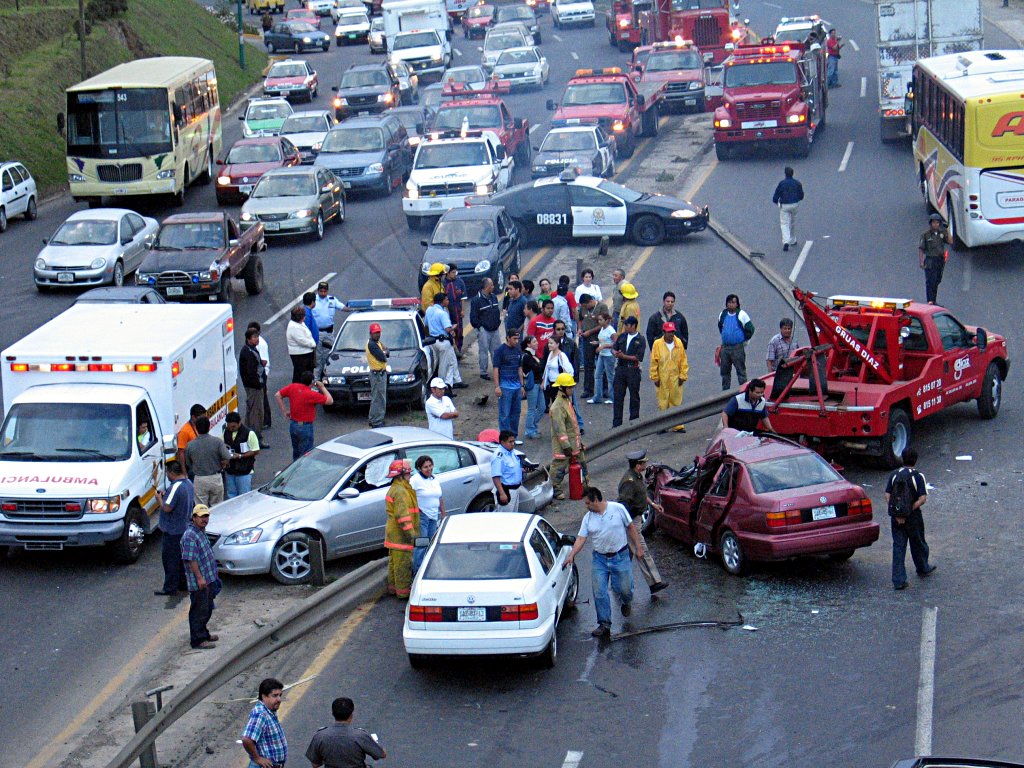
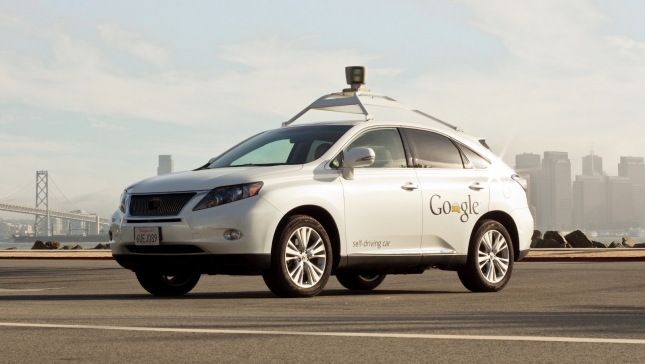
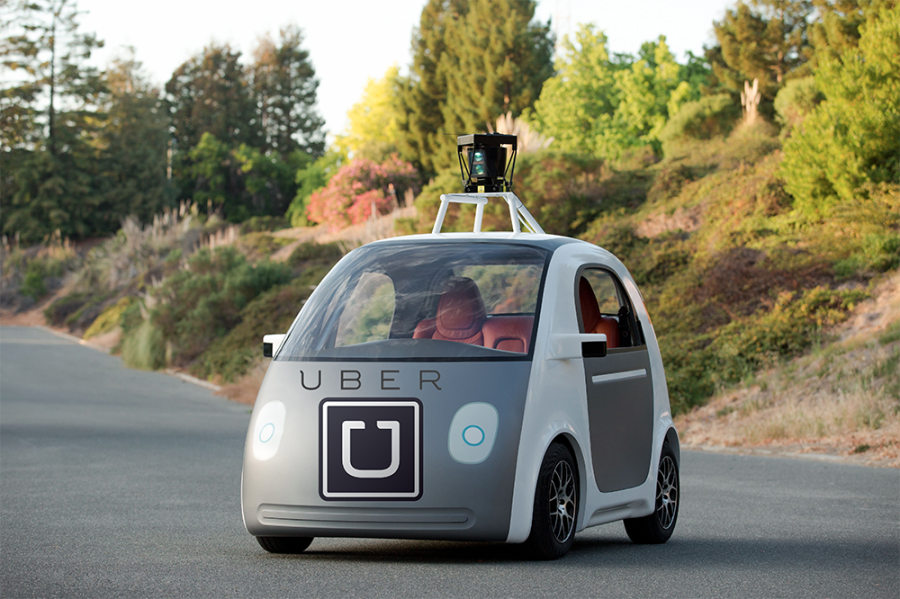
A complete misnomer that I keep reading about ties the fate of electric vehicle technology with that of the expected market takeover of autonomous vehicles.  Along with this assertion comes other assumptions that parking lots will be eliminated, private car ownership will dwindle and vehicles will be utilized 3 or 4 times as much as they are today.  Hey, you don't have to sell me on the benefits of autonomous vehicles, or electric for that matter.  I was an early adopter on the Chevy Volt, proudly plugging in my car at home, at work and elsewhere for more than 5 years now, and I've preached tirelessly about the carnage we face every day - in one month, we have as many deaths on the road due to human error as we had on 9/11.  We've essentially had a 9/11 death-toll every month since 9/11 happened; yet we stand together against that one tragedy and are completely indifferent towards the ongoing tragedies.  Still, I have a lot of problems with this assertion that driverless vehicle technology will finally give the electric vehicle the demand its been looking for all these years.  Clearly, there are writers prophesying about the future of transportation whom are not well acquainted with the life of an electric vehicle driver, as I am.  


First of all, electric vehicles do not recharge as fast as filling up a gas tank.  This I know first hand; I plan my day around my charging schedule if and when possible, or relent to the need to use gas for a portion of my daily requirements.  My commute may be more than the average commute, but its not terribly unusual.  I drive 25 miles uphill to work on a freeway, which means my Volt battery is close to depleted (between 2 - 7 miles left depending on driving aggression that day, and environment control).  It takes about 7 - 8 hours to completely recharge my car, which is just a little bit less time than I spend at work most days, so my car is topped off when I am done.  It is downhill home, so I end up with about 15 miles to run errands with, although I still try to take efficient routes so as not to exceed my battery's limits.  I hate using gas.  But once I'm home, I pretty much need to start charging right away, or within a few hours, to make sure my car is ready to go the next morning.  So to say it could be better utilized is hard to swallow.  Sure there would be some efficiencies gained with an autonomous vehicle: it will accelerate more slowly and brake less dramatically, it would take the most efficient or speediest route, as dictated I suppose, and with the addition of an AV lane, it could platoon behind other AVs to reduce wind resistance.  But I don't foresee a gain of more than 4 - 8 miles each way, and that means a driverless car servicing my commute could maybe make one more short trip per day, but not much else. 


Maybe I'm an atypical case, and I would be the exception for whom car ownership makes sense, or I would be forced by reasonable economics simply to move closer to work.  But I tend to disagree that I'm all that unusual.  On the contrary, I think a lot of Americans, given AVs as a viable option for their rush hour commutes, will choose to live further from work, knowing they can be productive during their drive, and because they won't have to deal with the frustrations of insane traffic, because the car is dealing with it.  When you aren't paying attention to your driving, a half hour or even an hour of downtime before and after work actually sounds pretty appealing.   


Admittedly, Teslas and even Nissans have faster charging capabilities than my gas-enabled Volt, but my understanding is that this express charging is actually not very good for the battery.  It may be okay for the occasional road trip for private owners, but building a business model around fast-charging autonomous EVs potentially several times a day to keep them whirring about city streets requires a lot more consideration for the battery life than accounted for in most of the poorly devised proposals I've seen.  Along those lines, then, the prospect for this mobility versus car ownership model to deteriorate car sales seems to be overstated; the companies who own the electric AVs would need to replace them much more frequently, or at least replace the expensive batteries used in them. 


Another point that I'd call into question is this idea that we could eliminate parking lots and turn them into green spaces.  It sounds lovely, but if we eliminate parking lots, where exactly do you suppose those cars will be?  Especially if private car ownership recedes to hobbyist levels, cars will no longer be parked in our homes' garages, so they need to be somewhere when not in use during low-demand hours like at 3 am on a Tuesday morning.  We need a ton capacity of vehicles to get us around, unless we drastically change our lifestyles away from the need to drive tens or hundreds of miles a day altogether, and that is just a completely different rabbit hole.  These autonomous cars utilized solely for mobility, if electric, will need to charge somewhere for extended periods of time.  Thousands of them.  And while we may be able to place such charging parking lots further away from central hubs (because humans no longer need to walk to and from such parking lots), the further out you put them, the more energy they will expend just getting to and from the parking lots.  No, I don't think the vast majority of parking lots will disappear in the next 50 years, I think they will be transformed into lots with more services to maintain the vehicles while the humans are going about their workday.   
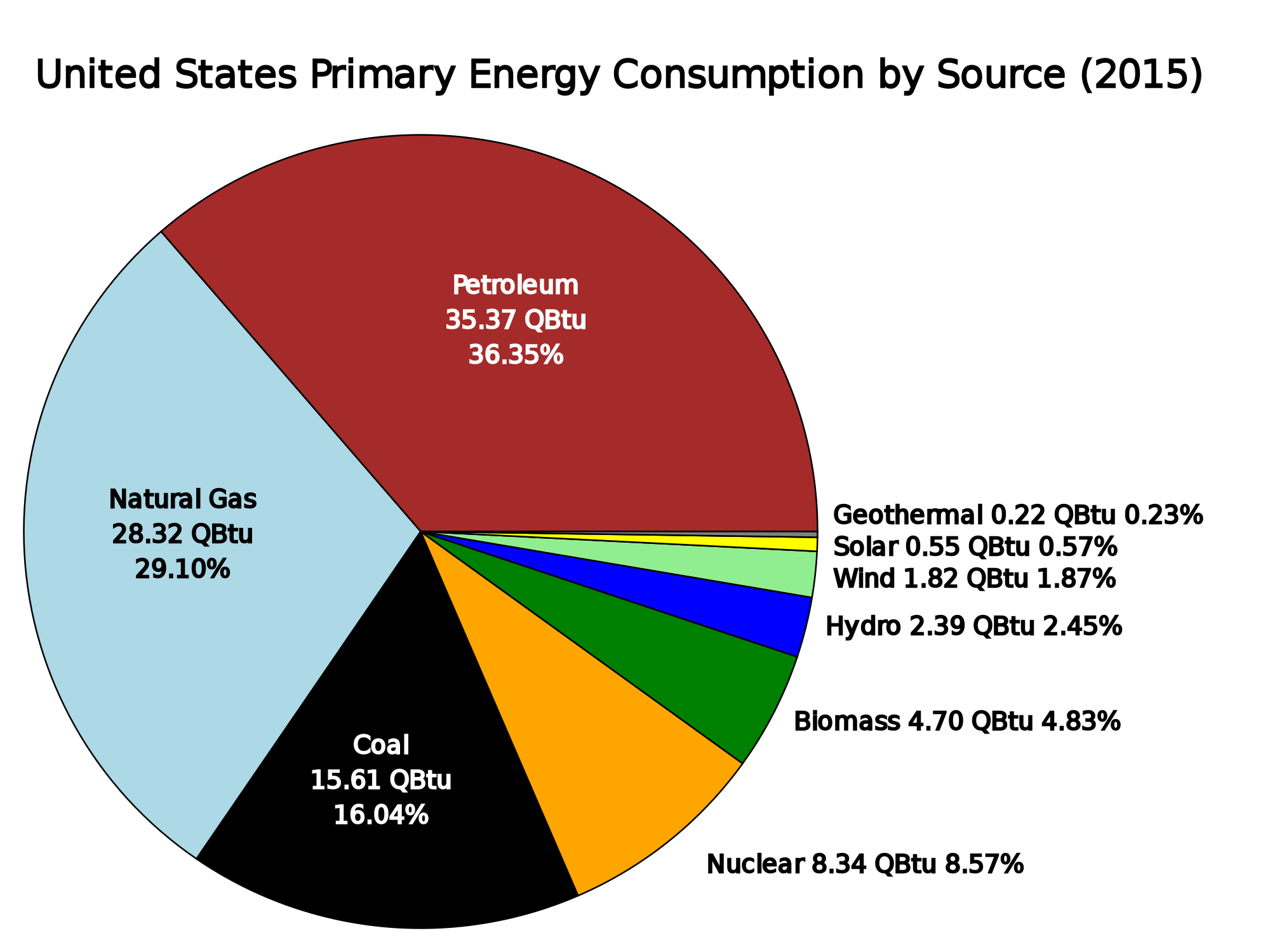

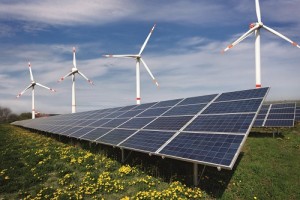
And where will this energy come from for such large amounts of transportation?  Electricity may seem like it appears out of nowhere because we can pull it out of our walls, but it has to be produced somewhere.  Sure, we can string solar arrays along all the rooftops in the city, but to support the entire transportation network with all electric, we're going to need a hell of a lot more power per kilometer than a reasonable amount of solar panels in that same kilometer could support.  As much as I love the idea of solar, the technology just isn't efficient enough yet, and wind is even less promising.  No, I think a good amount of our transportation energy will still come, in one form or another, from some form of fuel, be it biodiesel, natural gas, or fossil fuel.  It can be made cleaner, but it will certainly be prevalent for decades to come, era of autonomous vehicle or not. 

Friday, October 30, 2015

Halloween: In Memoriam


My life changed on Halloween last year.  I didn’t know it then; I thought it was a phase that I’d shrug off, a period of mourning that would heal with time.  It healed some, but seems it nevertheless changed me for good. 

One year ago I got the horrific news that a family member had been struck by a vehicle and killed instantly.  She had been walking down the road holding hands with her loving husband.  They had just moved to Florida together to start their dream retirement.  All I could think of was how full of life she had been, one of the most joyful people I knew, and how detrimental it would be to poor Jim, her husband who had to pick up the pieces of their life that she left too soon.  

I’d known people who had died before.  I’ve lost grandparents to those things that take you in old age.  I’ve known families who have lost babies within days or months of giving birth.  I’ve seen teenagers get in with the wrong crowds and lose their lives.  I’ve had classmates who died in war.  But no death has shaken me like Joyce’s.  Perhaps it’s the juxtaposition of her being so full of life and love, and then such sudden death.  Perhaps it struck close to home - I go for walks, and I drive, and she had no influence on the outcome.  

I can’t put my finger on it, but there’s something more to her death.  It’s a tragedy, but not just a tragedy.  It’s horrible irony, but not just a shame.  It’s as if her death was supposed to have meaning to me, a purpose, and so fate made it so.  

Ever since Halloween last year, I’ve had an uncanny notion of Joyce watching over me when I drive, shunning me when I steal a glance at my phone, and praising me when I avoid a pedestrian who didn’t hear or see me coming.  Joyce’s story has made my passion for autonomous vehicles not just selfishly indulgent, but imperative for mankind.  And she made it personal.  It’s no longer about the “cool” factor of the technology.  Joyce is to human drivers as Hiroshima’s Peace Park is to the atomic bomb – a vivid memorial that begs modern society to do away with such destructive forces.  

We don’t know what caused the driver to veer suddenly to the side of the road, but I think it’s fair to assume that the driver was distracted, whether it be by a cell phone or otherwise.  I’ve been in a collision because the driver behind me was fidgeting with his radio, something that we don’t villanize as we do texting or drunk driving.  

What I’ve come to learn in my research is that there are far too many variables when it comes to driving behavior.  No one product or activity can ever make a driver completely dangerous or completely safe.  I’ve texted while driving in order to stay awake.  I rationalized that an alert but distracted driver is safer than a driver whose eyes aren’t even open.  Drivers who have had a couple drinks are often safer drivers than those who have had no alcohol at all – slightly inebriated drivers are aware of the risk of getting caught and therefore behave better.  

Thus, I’m not going to crusade against any one behavior – texting, drinking, applying makeup, aggressive driving – because none of these are inherently more or less dangerous than any others.  Instead, I’m crusading against the one aspect that puts us in danger at all, and that’s putting human beings behind the wheel.  We are far too comfortable with driving, far too distracted by life, and far too bad at it (statistically, you are worse than you think).  We need smart vehicles to take over, so that we can spend our time doing being distracted.  

Take the human element out of driving, and you remove the human error that puts us in danger every time we get near a roadway.  Until then, the only thing I can think to do is be the best driver I can be, and I hope that Joyce approves from above. 

Wednesday, October 22, 2014

The Collision Fine

I don't believe in the word "accident" when it comes to vehicle collisions.  When one vehicle collides with another, it is almost always because somebody was doing something stupid or wasn't paying attention.  In the case of mechanical problems or road conditions, maybe it wasn't sheer stupidity but there is still a cause and ways of avoiding it (better maintenance of vehicle, adding extra following distance when ice may be present on the road).  Thus, when I am significantly delayed by an accident on the freeway, it infuriates me.  I believe that people who cause collisions should be penalized much more than today's penalty structure allows.  It is not just damage to the vehicle, or injury to the innocent victim that needs to be compensated for.  Every person who is delayed suffers because of one person's poor driving decisions.  In addition, I believe that if the penalty for causing a collision was significantly higher, people would be incentived to drive safer and pay better attention, which is a huge win for society if we can reduce so-called accidents.  

First, let me say that my gut reaction is that anyone who causes a collision during rush hour that causes significant delays for so many people should have his license revoked permanently and/or car seized and/or shipped out of state/deported.  That's my gut reaction.  But I know that's not realistic, nor do I really want to live in a society that is so unforgiving.    I had an economics teacher joke (in half seriousness) that if everyone's vehicles were equipped with an irremovable knife jarring out of the steering wheel, nobody would drive unsafely; the implication that the safer our cars become, the more our drivers will feel invincible and cause more crashes.  So taking a step down from such an extreme view, here's how I would structure penalties for causing vehicle collisions.

A model would be developed using traffic statistics organized by day of the week, time of the day and direction of travel.  Then, when a collision is reported, the model would determine how many drivers would be delayed as a result.  A similar model would be applied based on the severity of the collision and resulting road blockage to determine a standard amount of time allowance for clean up.  Based on these two models, each collision would have a significant penalty.  The guilty driver will have to pay this fee into a pool collected by the city or state, in addition to paying for direct damages and medical expenses like normal.  If the guilty driver cannot pay this fee, he forfeits his license and is not allowed to drive until such time as he has paid it back in full, or performed the equivalent amount of community service time at $5 per hour, or any combination of the two.  At the end of the year, the pool is distributed evenly to every person in the region who has (1) a valid driver's license, (2) valid car registration and (3) a clean record with no accidents or traffic tickets.  The payout can be pro-rated for individuals who had car registration or a license for only part of the year.  However, if there is any recorded accident or traffic ticket, the driver is disqualified for the year in which those incidents occurred.  

Let's take for example a standard collision, blocking one lane of traffic for 30 minutes during rush hour.  I'll say that this delay is valued at $10 to every driver immediately impacted.  If 500 drivers are assumed to be impacted while the accident is being cleaned up, then the penalty starts at $5000.  If the accident happened at the beginning of rush hour, around 4:30 pm, then traffic doesn't just resume normality after the accident is cleaned up, so another 1000 drivers are inconvenienced at a value of $2.50.  So now the fee is up to $7500.  With 100 such accidents per year, we'd have a pool of about $750,000.  Let's say there are 10,000 drivers who qualify for the payout, so each driver would get a nice little check for $75.  It's not a huge bonus, but it's a nice way for the city or state to say,  "Thank you for being a safe driver this year, here's compensation for the idiots who were not as smart and safe with their driving."  And I think that's dandy.

Now, let's look at actual numbers.  The following stats are from 2013 Arizona DOT's report on crashes.  There were 4,826,903 licensed drivers in AZ, and 107,348 crashes.  There were 76,335 crashes in Maricopa alone.  Of Arizona crashes involving multiple cars, 45.98% were rear ends, 71.66% were in daylight, 86.45% were on days with clear skies, and 93.2% were on dry roads.  That is to say that nearly 50% of car-on-car collisions could have and should have been avoided.  On weekdays, between the hours of 6 am and 9 am, there were 14,837 accidents.  Between the hours of 4 pm and 7 pm on weekdays, there were 20,624 accidents.

Following my model, the 35,461 accidents during morning and evening rush hours could have contributed up to $2.7 billion to the proposed pool.  Assuming the 4.8 million licensed drivers maintained current registration throughout the year on at least one vehicle, and even ignoring the fact that probably 100,000 of those people would not get the reward because they caused accidents, that would amount to $550 per person as compensation for being inconvenienced by car accidents.  That number could go up if you consider longer hours of impact, or if my model underestimated the number of impacted drivers.  But even still, I'd take $550 for being inconvenienced, no problem.  

Friday, June 20, 2014

The Tools of an Anal Retentive Organization Freak

It's been a while, admittedly, since someone has asked me, "How do you do it all?", but I think that's probably because I haven't entered any new circles recently, and the people in my life have just gotten used to me.  I am also not quite so go-go-go right now, because I actually like where I work so I'm not quite as driven to get away from it (what a difference!!).  Regardless, I still have some obsessive organizational qualities about me that I need to manage, and I was inspired to catalog a number of them for you today in hopes of helping others who either need such tools to balance their anal retentive style, or who need such tools because they lack motivation to stay organized.  I will qualify this post with the fact that this is not nearly an exhaustive list of all awesome tools, nor do these tools reflect the best or only tool in their category.  There may be other ways of achieving these functions, and perhaps even better ways of doing so; in short, these are simply the tools that I have experience with and like. 

EverNote
I am a convert from previously using Microsoft's OneNote, but both are very solid tools for writing, keeping and organizing notes.  I think where these tools lose people is that they associate note-taking with school, and if they're not in school, they assume they don't take notes.  So what is a note?  A note can be a to-do list, a journal entry or blog draft, a means of tracking performance qualitatively, a visual that you need to refer to only once every so often, and so much more.  But before I dive into all the many kinds of notes, I want to talk briefly about why I like EverNote.  EverNote (as does OneNote) allows me to group my notes into "Notebooks", so I know where to look for a specific note that I'm looking for later on.  It also magically Syncs between computers and even my SmartPhone.  The syncing was the initial differentiator for me; at the time of my conversion to Evernote, OneNote didn't sync with everything else just yet, although I believe that has changed now.  So this means that I can write a note at work, and without emailing or saving to a flash drive or anything like that, my note is magically on my phone and on my laptop at home.  This seems simple and straightforward enough, but its a very powerful thing to not have to think or worry about saving or sending this kind of data.  For example, I keep a checklist in Evernote of work tasks, and sometimes I'll remember something I need to do at 3 am.  Rather than getting up and going to my computer to send an email to myself, or taking the risk of forgetting it, I can open up my list on my phone next to me in bed, add that item to my list, and go back to sleep. 

So, what is a note?  I will differentiate lists with visual elements to them and lists with more textual information here, and put forth that To Do Lists, Shopping Lists (especially for something broad like Christmas shopping), and Favorite Quotes lists are all ideal candidates to be put into a note.  I have a dedicated Notebook called Lists, and each note is a separate list.  OneNote and Evernote have a checkbox capability, which is especially nice for those of who like to feel the victory of checking a box after accomplishing something (hey, it's the little things that count)!  I also have lists of goals, notes for house guests (on numerous occassions I have offered up my home to visitors and this list helps me make them feel welcome and ensures they understand the nuances of my poor old house), interview questions and good examples to use in response (great for job seekers to review right before an interview) and a Watch/Read/Listen to list. 

Another kind of note is a reference.  Perhaps the best way to explain this is with some examples.  When I first moved into my (fixer-upper, old, ugly, broken) house, I spent a good deal of time mapping out the electrical network: for each circuit, what light switches, which fixtures, which outlets are on each circuit.  I used some generic architecture software to draw a floorplan of my house and label each fixture and outlet so that I could visually see where each circuit goes.  Now, I certainly don't need this every day, so if it had been a simple file (which I suppose it was at some point), I probably would have lost it with a new computer or just in the shuffle of moving files around.  But because its in a note under my Home Notebook, I can quickly pull it up on my phone or computer whenever I need to shut off the electricity to a certain appliance or outlet.  Another example of a reference I used a lot during my job search was job descriptions.  I was applying to about 5 jobs per week, which doesn't sound like too much to keep track of, except when you consider that it might take four to eight weeks to get a call back.  Suddenly, I would get a call from a recruiter wanting to ask me more about my experience as it relates to job x, and I would have to either make something up, admit that I don't know which job they were referring to, or fumble about trying to find what the hell job I applied to.  And it's such an easy fix!  I simply created a new dedicated Notebook called Job Descriptions (duh), and everytime I applied to a job, I would just copy the entire job description and paste it into the note.  Usually, the title of the job is the first thing on the page, and Evernote adopts the first line of a note as the title unless you specify a title, so I literally didn't have to type in anything!  Just copy, paste. 

I like to write my blog posts in my Evernote, rather than drafting them in the blog site itself.  I'm wary of writing inside websites because there are 100 things that could go wrong and cause you to lose all your work.  With a note application like Evernote, the work is saved automatically from time to time, and not just to the machine I'm on, but to my very own little cloud.  That's a nice feature when you are constantly at risk of a phone dying or computer crashing.  Plus, it does a better job of spell checking than most websites.  An added benefit to the always-on-the-go person is the fact that you can dictate into your smartphone, so that if you have a brilliant idea but you're an hour away from home, you don't have to wait until you get home to get your idea down on (virtual) paper.  Also, by keeping journal entries and blog posts in my notebook, I can easily search them if I'm looking for a specific reference. 

Brilliant Ideas and Gift Ideas are two other notebooks I maintain.  I am terrible at buying gifts for people as Christmas and birthdays approach, but throughout the year I tend to think of great ideas for gifts (usually when I least need ideas).  So keeping a record of gift ideas helps me when I actually need them.  Likewise, I have dozens of (what I consider) brilliant ideas to make the world a better place, but I don't have the means, position or resources to pursue all of them.  So I feel better having at least documented them for reference later, if I happen to be in a position or have the means of accomplishing them.  I also come back to them when I need inspiration; they help recharge my mojo so to speak. 

For anyone who is employed in a rigorous professional job, I have a recommendation for you that I've only recently implemented myself in the last couple years: Performance and Potential notes, sometimes called Praise Piles.  I keep track of every email that gives me an earnest recognition of a job well done at work.  In addition, I keep notes on activities that demonstrate the skills and attributes set forth in the goals and performance evaluations of my company.  So when it comes time to for my performance evaluation, I can back my ratings up, or make a case for my manager to increase my ratings, with concrete examples from the previous year.  I cannot say this actually won me anything in my last job, but there's a reason I left that job that may or may not be related to that.  I am optimistic it will help in my new job. 

Alright, I think this blog is already getting a bit long, so I'll wrap this section up with a list of other "notes" I keep, and by saying that pretty much anything wordy that you'd want to track may qualify as a "note" that you'd want to enter and store in a notebook program like Evernote for future reference. 

Other notes:

  • Shared notebooks for start-ups or teams to load research, draft copy, updates, etc.
  • My favorite massage therapists (and my least favorite ones) so I hopefully know what I'm getting into when I book a massage
  • Packing checklist for upcoming trips (i.e. bring sand castle mold to Hawaii)
  • Places to go / activities to do for upcoming or unscheduled (dream) trips
  • Taxes - to document mileage to/from doctors, charitable donations (non-monetary), etc.
  • Measurements of windows and other physical attributes of my house for shopping purposes
  • Reimbursable expenses (with pictures of receipts)
  • Drug prescriptions (with pictures)
  • Restaurant orders for my honey (in case I'm surprising him with something like donuts or Chipotle)


Pinterest

If you don't know what Pinterest is, they describe themselves as a virtual pinboard.  It's a very broad, loose definition and I don't think the world has grasped its novelty and usefulness just yet.  In fact, I wrote a whole post about the various uses (and sins) of Pinterest (and thus, do not feel the need to exhaust every opportunity I see again here).  I mention it after Evernote because they can be used for some of the same things.  For example, before I started using Pinterest, I maintained a Watch/Read/Listen to list in Evernote.  But most such items can be graphically represented, and thus, look a lot more exciting as virtual pins on a Pinterest board.  So the differentiation is whether the "list" you are starting or keeping is more textual or more graphical - that should determine whether Pinterest is better or Evernote.  Also, if most items on your list can be associated with links, Pinterest is a better option, because they will preserve the links for you as well as the graphical imagery and your specific text.  Other boards I recommend people create / maintain in Pinterest include:
local places to try (i.e. restaurants, museums, etc.)
Things to do in ______ (i.e. Vegas, so that you have it ready for your next Vegas trip)
Wish List (this is the best way to keep a public wish list that I've found)
Gift Ideas (keep this board secret so nobody knows what you're getting them)


Hootsuite

I've probably raved about Hootsuite in half a dozen posts all over the web, but I think its worthwhile to reiterate here.  Hootsuite is a great way to manage your social media presence, whether we're talking a company, volunteer organization, part of a softball league, or just you (and even better when you're dealing with a combination or all of the above)! 

For example, I might be traveling or business on Father's Day, having celebrated with my father on an earlier occasion, but still want to post something to thank my father and all fathers.  So I can use Hootsuite to load up my message (and associated photo), schedule it for Father's Day morning, and have it post without having to remember to log in or try to find internet service while I'm on the go.  This ability to schedule posts is awesome when I have something I think is hilarious to share at 3 am, because I can jot it down in Hootsuite, schedule it, and rake in all the likes and favorites and retweets once it gets posted at a time when more people are awake.  "Autoschedule" allows me to space out my posts if I am browsing and finding lots of interesting articles, videos, and tidbits, rather than bombarding my followers with a bunch of posts in rapid succession.  Last spring I converted a lot of my old VHS tapes of various high school performances to digital video clips, and rather than throwing them all up on the web at the same time, I spaced them out to weekly intervals.  So all summer my followers would be surprised and delighted (as was I) when some random old video popped up.  I scheduled my favorite to post on my birthday.  Slightly more sinister, if you're at work and you don't want your co-worker friends to know you were browsing the internet at work, you can schedule your post for whatever time you should be getting home so that it looks like you just saw it and shared it at that time. 

Besides the scheduling feature, Hootsuite has a very functional (albeit not as pretty) dashboard type of feel that allows you to view multiple "streams" of your choosing, which can be searches on specific topics or events going on as well as certain users' posts, etc.  Thus, in one screen, I can see who is talking about #NASA, what is going on at #PhxCC (Phoenix ComiCon), and what the tweeters I follow are posting.  Unlike in Twitter and facebook themselves, Hootsuite stores these searches so everytime I log in I can see them without having to recreate the searches every time. 


Microsoft Excel

Yes, I am considered an Excel guru, so this should be no surprise to some of you.  Most people will not use Excel nearly as much as I do, but there are a few reasons why most people should use it.  Banks and credit card companies as well as financial software claim to have good budget tools, but I prefer to do it myself in Excel.  I maintain a Cash Flow worksheet that is actually very simply but is the most effective tool I've found to help me identify where I have cash flow issues as well as to budget how much I can pay off student loans and car loan, as well as how much I have that could be invested and how much extra fun money I have.  It starts with the current amount in my bank account and lists all of the upcoming expenditures impacting my bank account for roughly the next 18 months.  I go in there every other week or so and delete the line items that have been taken out of my bank account, and update the current balance and any new expenditures I've learned of.  Then I tweak the payments on loans and credit cards until I'm happy with my cash flow status, and then I go into each of those websites and schedule the payments accordingly.  I also have clever notes about interest rate and how long it will take me to pay down each debt based on the payments, which motivates me to pay down the highest interest rate items more instead of giving myself more fun money.  If you stay on top of this, you should never have a late fee, overdraft issue, trouble making minimum payments, and yet you need to keep a very minimal balance in your bank account.  I  run a very tight ship this way, making the most of my income to get to a debt-free situation asap. 

Excel is inherently good at anything calculation based.  Thus, another application any person might use it for would be planning a vacation.  I recently used Excel to minimize costs for a trip to Cedar Point in Ohio.  I had about five airports we could have flown into, so I listed each of those as an option, and then wrote next to them the cost of each flight.  Then I looked up rental car prices from each airport and listed those, then added in estimated fuel usage and associated cost.  Another option was staying right at the park, flying into the nearest airport and then taking a taxi, so I enumerated and calculated that option.  That helped me determine the best way to get there.  Then there was the matter of deciding upon which hotel to stay at and whether or not to buy the 2-day passes from the hotel.  I listed out all the options with and without the ticket packages, with and without breakfast and added in the tickets to the options with no tickets, and added the estimated cost of breakfast to the deals without breakfast included.  I couldn't imagine doing all this manipulating and calculating in any other tool or by hand.  Excel is it for me! 


onStar

I love technology, and when I got my fancy new Chevrolet Volt a few years ago, it came with five years of onStar.  I didn't think I would use it much, and its true that I haven't called them more than three or four times in the past several years.  But what I didn't realize until I had it was that with the onStar app I can send destinations to my car's navigation system from my phone.  So before I leave for a new place, I send it to my car and then my car picks it up shortly after I turn it on.  This is cool, and also a big time saver.  Likewise, if I'm at a computer, I can use Mapquest to send the destination to my car (although the retrieval takes a few additional steps).  onStar also gives me a somewhat detailed report every month, which the data analyst part of me enjoys dissecting from time to time. 


Waze

I stumbled upon Waze while stuck in a traffic jam and using Google Maps to figure out what was going on.  Waze is primarily a commuting app that gives you traffic conditions, warns you of police and obstacles in the road, and provides a live ETA to you and whomever you wish to share it with.  The data primarily comes from users sharing their information, tagging where accidents, police or broken down cars are, etc., and automatically transmitting their speed through the app.  Since I am now driving in the carpool lane, I don't usually turn it on because I don't want my data to give an overly optimistic picture of what traffic conditions are like for the poor saps in the regular traffic. But it is incredibly useful for my honey to transmit his ETA to me when we're meeting somewhere or running tight on a schedule.  Once he sends me the link to his data, I can track his progress and see how far he is, which helps the psycho anal retentive person in me to make decisions, and calms the tightly-wound worst-case-scenario beliefs.  I wish I had had this app for previous relationships, it actually might have solved some problems and made life just a little better.  An added perk is that if you are meeting someone at a place that is new/different to you or to them, you can transmit your current location.  So, I parked on the south side of a large complex, and transmitted my location so that my honey could park in the same area as me.  Clever, right?  It's a pretty neat little app, not something I use all the time but helpful when I do use it. 


Retractable charge cord

What would this list be with only virtual tools?  One of the most useful things I carry in my purse is a little USB charger that retracts into a small cylndrical shape and never gets tangled as a result.  Paired with a USB to electrical outlet plug, it allows me to charge with a computer (or other device with USB) or with an electrical outlet anywhere I go.  And its compact enough that its really not a bother to carry with me at all times. 


TripIt

I don't know of an app that is so simple and so helpful as this one.  Of course, it's used for a very specific purpose, so it's not something I'm in all the time, but when I need it, it's awesome.  I first heard about TripIt from LinkedIn a long time ago, before smartphones, and it was basically a website you could create an account with and link with your LinkedIn I guess just to brag about your previous and future trips, and also to see when/where you will be in the same vicinity as someone else.  Both a little cool in their own respects, but TripIt didn't mean much until I had a smartphone with the TripIt app.  Suddenly, I was able to carry my itinerary in a clean, simple form, with me on my phone all time.  Populating the itinerary is super easy, too, because you simply take your confirmation emails from your airline, hotel, rental car, or restaurant reservation and forward them to a generic TripIt email address from your email address that you used to sign up.  Within seconds, your itinerary is populated with dates, times, addresses, confirmation numbers, costs, and any other pertinent information TripIt identifies from the email.  Sharing trips is just as easy, you add a traveler, and that person also gets the itinerary on their phone.  So while we're traveling, I can open my TripIt app to get directions or check the time of our reservation at a specific venue.  Never again will I miss my flight while hanging out on the beach of Cancun because I got the departure time mixed up with the arrival time - (and yes that did happen once) - never again! 


Designated places

Organizing things virtually is one of my favorite things to do, but sometimes we get physical things, like tickets to a game or show, and they are so easy to lose track of!  So there are certain things that I have designated places for, and it requires so habit-forming to remember each of those places.  As an example, I have a board in my hallway where I put "spent" ticket stubs up with tape just for fun, and there's a little clip on the left side, so I slide in any tickets for upcoming events into that clip, thus I always know where to look for them when it's time to go.  Admittedly, I could probably use more of these "designated places" because things like my purse, incoming mail, and my boyfriend's backpack are always landing somewhere different every day. 


Google Alerts

I don't spend a lot of time browsing the internet or looking up the same things over and over again.  So when there is a topic I want to keep track of, or an eminent event that hasn't been scheduled, I will set up a Google Alert about it, so that I am emailed with information about that topic based on the frequency and relevancy that I choose.  For example, I was anticipating the Harmon Hotel in Las Vegas to be imploded, so I started having articles with the words "implode", "Harmon" and "Vegas" sent to me.  My hope was that as soon as a date was set, I would book a room at a nearby hotel overlooking the Harmon so that I could have a great view of the show!  Unfortunately, it looks like the Harmon is going to be peacefully disassembled over a very long period of time.  A more successful example is following the news of the Chevrolet Volt and Nissan Leaf when they first came out; I knew before anyone else when there was controversy, potential recalls, and how sales were doing.  I also got to see a lot of information about other electric cars because they articles would reference the Volt or the Leaf. 

I think it's especially important to have Google Alerts about yourself; that is, I have an alert for "Laura Winger" and "Laura Lee Winger" so that I can see what comes up about me on the interwebs.  You might be surprised what comes up about you.  Some of the top hits for me in the past have been my Japanese e-portfolio I did while studying in Hiroshima, the articles I wrote while working for ASU's school newspaper, The State Press, and fabric designs I've created that are really popular.  There is another woman who comes up from time to time by the same name, and she also went to engineering school, so I could see a potential employer getting us confused.  But as long as she doesn't become a drug dealer or open a porn website, I'm okay with her name intertwining with mine. 


Ceiling Studies

Okay, I made that term up, but stick with me because this may be helpful for you.  A while back, I signed up for a trip to China with my kenpo dojo.  We were going to Beijing, Shanghai, and Dengfeng, where the Shaolin Temple is.  Not being very good at geography growing up, I thought it would be a good idea to at least understand where those cities were on a map and in relation to one another.  So I google a map of China, and then googled a simple clipart of China.  Using the map as a guide, I marked the major cities in big, bold lettering, and then printed the graphic on a few sheets of paper.  I took the prints and taped them to the ceiling over my bed.  As the sun started coming up in the morning, I wasn't quite awake enough to get up, and didn't even want to play with my phone yet, but I idly eyed the map of China.  Every morning I'd wake up and see that map, and eventually, it got ingrained in my head, without any real effort to learn it.  After coming back from my second trip to China, the one I took with my MBA class, I had learned of up-and-coming cities in China that were of interest to me, so I added those to my graphic and put that above my bed until I knew them as well.  I did the same thing with India when I started meeting a lot of people from India and wanted to be more knowledgeable when they told me what part of India they were from. 

There are a lot of things that can be made into visuals that can aid our learning.  As adults, we may not be taking classes all the time, but there are certainly things that we want to learn, and if those things can be made into a large visual like I've described here, perhaps they can be learned with minimal effort just by staring at the ceiling each morning. 

Thursday, October 3, 2013

A New Economy: Industries of the Autonomous Vehicle

I'm intrigued, excited and fascinated by the autonomous vehicle for so many reasons.  Many are personal, but I am also anxious to see how it plays out on a macro economic scale.  Disruptive technologies always shuttle in with them new business needs that most people wouldn't have imagined just years prior.  Whole industries crop up as a result of the technologies or ways of doing business differently.  There are ultimately winners and losers, and even the winners will eventually get replaced.  The history of innovation fascinates me, but what really gets me going is what the future could hold.  When self-driving cars are the norm, whole industries will be demolished, and brand new ones, unfathomable ones, will rise up.  The developed world and emerging economies will look very different, and what they look like are what I want to explore here.  

The Driverless Vehicle
Most of us see autonomous vehicles as modes of transportation for ourselves that are automated.  This is, however, just one exciting application of vehicle autonomy.  On the opposite end of the spectrum, we will no longer need truck drivers, taxi drivers, chauffeurs or valets, because the vehicles can operate without humans inside.  Just imagine calling a cab from your smart phone (or whatever device we use in the future), and getting into a completely empty vehicle, being driven to your destination, and getting out so that the cab can go pick up another passenger.  Packages will be shipped across the country in trucks with no cab and no human; thus they will not have to stop for sleeping breaks or food, and will be faster and safer.  When your own self-driving car brings you to your destination, it can let you out at the front door and go park itself.  Then you can call it to come get you when you are ready to leave, combining valets and chauffeurs into a single function independent of a human to pay or tip.  

Rentals and Contracted Services
Autonomous vehicles will ultimately reduce the price of cab fares, because they will not require a human to be able to make a living off of the profits.  The price will compete with public transportation, which has its own drawbacks (slower, sitting next to weirdos, uncomfortable), and thus the use of public transportation may also become extinct.  People own private vehicles today for many reasons, but some of those are basically to combat the negatives associated with the alternatives: cabs are too expensive and public transportation stinks for reasons previously alluded to.  So as the expense of cabs comes down (and the lack of some creepy immigrant who can't speak English as the driver), they become a favorable alternative.  Thus, fewer people will own private vehicles.  In addition, many private vehicles will be put to use on some sort of contract basis as a cab.  See, it would seem silly to have a perfectly functional vehicle sit in a parking lot, baking in the sun or getting drenched in the rain or snow while you are working for 8 to 12 hours a day.  Sure, some people won't want strangers in their cars, but others would find it a marvelous opportunity to send their car off after its delivered them to their office and have it earn some supplemental income while they are working.  Sure, it puts mileage and wear and tear on the car, but if owned, it will probably be more profitable than just letting it sit each day.  In-car camera systems will be installed to detract from vandalism; customers will be automatically charged by the contract service for any damage done.  

More Entertainment and Productivity Technologies
There are already entertainment packages available today, but most of them consider distraction of the driver as a threat and take precautionary steps towards not distracting the driver. With no human driver to distract, consumption of video, music and game entertainment will go through the roof.  Imagine streaming the likes of Netflix into your car while you are transported to work, and picking up where you left off on your return trip.  Your car will have surround sound, 3D (or 4D) entertainment systems and satellite-enabled video conferencing with internet connectivity for your devices.  Carpooling?  A soundproof barrier can separate you and your companion so you can work on or enjoy separate activities without plugging your ears with headphones.  

Destination Parking Grounds
I don't know exactly what to call this, but DPGs sound just as good as any other name I came up with (Potels, anyone?).  This will be a new industry for the avid traveler who can work remotely or needs to travel for work.  It's a mix between a motel and an RV camping site.  Let's say you have a destination 6 to 8 hours away.  You need or want to be there tomorrow.  You pack your things, set your destination and depart at night.  You curl up in your comfy car bed while your car autonomy does the driving.  You get a full night's sleep, and when you awake, you are in another state or perhaps another country.  The car has pulled into a DPG, where there are showers and dressing rooms available at a minimal fee.  You grab your bag, hop in the shower, get dressed, and return to your car.  Now you have just a few more miles to drive to get to your actual destination.  Or, if you are going to be working remotely, you set up your office computer in your car, and start taking calls and discussing metrics, or whatever it is you do.  When work is done, then you get to go have drinks with your friend in the area, or visit that fantastic restaurant you read about.  Travel no longer requires a day, you travel in your sleep so you can maximize your time awake.  With DPGs, some people may give up their homes and live out of their cars, hopping from DPG to DPG, traveling the country or world while still being able to get work done.  Their cars may be equipped with small washers and dryers, mini-kitchenettes and wine refrigerators.  

Insurance, Law Enforcement and Lawyers
DUIs will be a thing of the past, so law enforcement and DUI attorneys will have to find something else to do.  But new types of insurance will exist; there will be specialists for cars with human drivers, and the majority of car insurance policies will assume no driver liability.  Insurance prices should go down overall, and regulations may drop the requirement to have insurance on autonomous cars.  Law enforcement and insurance will be more concerned about people hacking the settings on their autonomous vehicles.  Lawyers and IT security experts will concern themselves with people hacking into others' cars.  

AutoNASCAR
While people may still flock to car racing with human drivers, there will be some sports fans that will favor autonomous vehicle racing.  These races will be all about the logic used in the programming, the equipment in the cars, and the ability of the cars to navigate and react to their surrounding competitors.  These cars will be willing to crash and burn, making for spectacularly brutal attacks that human drivers wouldn't risk.  

Better, Real-Time Navigation Systems
When I automate a process at work, there is an added bonus that the programming also captures data that I would otherwise not bother capturing.  Likewise, when autonomous cars are commonplace, they can transmit commute time and traffic data to centralized locations to allow other cars to better adjust their routes in real time.  If that sounds too Big Brother-ish, consider that at a minimum, the cars can determine the best commute routes by time of day and seasonal trends for the specific owners' commutes (without transmitting any data to anyone else), and recommend departure times to their drivers based on historical statistics.  "Best" commute routes can be defined by fastest, most consistent, most energy conservative, or safest.  Can you even imagine having that kind of analysis today?

Modular Vehicle Assemblies
The customization of your car's interior will become an industry onto itself.  Car design can take on a whole new string of innovations, from sleeping arrangements and vanities to finish getting ready for work while commuting.  You could get a massage on your commute, or practice your Italian, or curl your hair and put on makeup (without the near misses and accidents if attempted today).  But don't expect to have too much time, because when all cars on the road are autonomous, commutes will be much faster, with less stop-and-go reactions than human drivers.  No matter what your needs, there will be products available to fit them.  High-end car manufacturers will sell complete, luxury packages customizable on the web before the car is built, while economy car manufacturers will sell a shell for which you can add on and replace modules as you see fit throughout the life of the vehicle.  

Driverless Drive Thrus
Your car will be able to run some errands for you while you are at work or asleep.  It can pick up your prescriptions at Walgreens, order and pick up Jack-in-the-Box for lunch, drop off packages at the post office, and pick up Christmas gifts bought online at Best Buy.  Stores and restaurants will adapt by having a special drive thru line for autonomous vehicles to transmit their orders via technology like Bluetooth (or to keep the cars off the grid, generating a QR code that can be scanned) and then the drive thrus will have robot arms to deliver the orders into the autonomous vehicles.  They will get their own car washes, and maybe even go to the gas stations themselves (attendants may need to fill the tank).  Forget your wallet or some paperwork at home?  Send your car home and have your wife or son put the wallet or paperwork in the car, and then call your car back to your location.  Of course, wallets and paperwork may be on their way out, but surely there will be something you will need.  


I'm sure there are other industries which we can't even imagine right now, but I think these are already going to rock the world and change the lives of millions.  


Monday, July 22, 2013

How to police self-driving cars

As you know from a previous post, I am a huge advocate of self-driving or autonomous cars.  In short, they would be exponentially safer than a human driving a car, and would free up time for its human passengers to do other activities.  After the question of safety, which I am not going to debate here, the next question is always around the law: who is accountable should a self-driving car have an accident?  I think the difficulty people are having with answering this question is that it is such a foreign concept to us that we can't wrap our brains around it.  Thus, I was inspired to write this post in order to simplify our thinking and perhaps clear the way for future discussions on this topic.  I'm going to make the case that car manufacturers, or more specifically, the company producing and installing the software into autonomous vehicles, should be held responsible for any accidents caused by vehicles using said software.  

Before you get all defensive on me, hear me out.  If a brand new car, driven off the lot, spontaneously explodes and injures the driver and a person in another car, the car manufacturer is at fault.  I think we can agree on that much.  More broadly, a malfunction of an unmodified vehicle that causes harm to someone (or really, had the potential to harm someone) is a product defect and thus the responsibility falls on the car manufacturer.  Of course, a car owner could void this responsibility by tinkering with the vehicle, in which case the car owner would be responsible if he/she created a defect in an otherwise certified safe car.  If another company did the tinkering that lead to the harm, the vehicle owner would hold that company accountable.  All of this is in practice today, and has been for many years.  

Now, let's apply it to autonomous vehicle features, without going fully self-driving.  New (high end) cars have some of these features already.  Yes, you heard me right: mass-produced cars are already doing some of the thinking for us.  Some drivers are already entrusting their lives into the hands of a car that makes its own decisions; and the rest of us are driving on the same roads as those cars.  The primary example I will focus on is the Volvo that stops itself before impact with a large object.  My brother-in-law was so excited when he test drove the car, bragging about how the salesman encouraged him to drive it directly at a brick wall.  Against all intuition, he successfully approached the brick wall at such a speed as to trigger the car to automatically apply the brakes.  Amazing!  Does this excite you?  Or scare you?  And more importantly, what happens if the car's software has a glitch?  One could imagine how a glitch could trigger the car to randomly apply the brakes on the freeway, causing the car behind it to plow into it.  Who is at fault for the cause of the accident?  Sure, the other driver might get a ticket for driving too close to be unable to stop in time, but I would argue that stopping in the middle of the freeway with no reason could be questioned; and its certainly not the Volvo owner's fault, right?  The test drive showed that no matter what the driver is doing, those brakes are going to be applied if that's what the car has decided to do.  Thus, responsibility must be taken out of the driver's hands.  

 
Now let's take a different angle.  Let's suppose that the Volvo driver is suddenly faced with stopped traffic ahead and an out-of-control runaway semi-truck barreling down a hill at him.  The driver, seeing this, attempts to swerve around the stopped traffic, maybe even attempt to hit the guard rail and plow through it, rather than be squashed between a semi and the car in front of him.  Certainly, if the driver is able to rationally see the guard rail as a favorable collision to being squashed, he should be able to maneuver the car in order to do so, and potentially save his life.  If then the Volvo's autonomous braking feature prevents the driver from driving into the guard rail, and he is instead squashed, would there not be a public outcry and lawsuits against Volvo?  

Parking is another aspect we're seeing early autonomy in.  Some features are just park assist features, like guide lines on the camera.  But some cars are actually controlling and manipulating the steering wheel.  If this doesn't scare the nay-sayers, I don't know what it will take to scare them.  Yet parking is one of the most accident-prone parts of driving, because we are dealing with tighter tolerances.  Tighter tolerances is also a good reason to have the computer take over, too, since computers are more precise and accurate than people are.  Regardless of the rationale, there will still be some damage done by an auto parking car eventually, and I am sure that the car manufacturer will be found at fault for this error that could have been prevented by a human driver.  

I'd be willing to bet that, long before our cars drive themselves completely, we'll see at least one such accident go to court and favor the driver.  That court case is going to be crucial in setting the precedent for future autonomous car accidents.  Car companies installing autonomous features have to be ready for this. 

This, in no way, should deter car manufacturers from adding these features to their cars and moving forward with vehicle autonomy.  Smart features that enhance the safety of a vehicle are going to be primarily selling points.  There will be late adopters who will resist, and that's true of all technologies.  But the majority of the population will gradually become comfortable with these features, and the features will become selling points or requirements in future purchasing decisions.  Instead of car manufacturers shirking away from the technology because of the messy legal fears, they need to embrace the responsibility with the added value that can be derived from the features.  This will serve as motivation to ensure utmost safety of their features - glitch-proof, do-no-harm mentality needs to be instilled, while the return on investment will still be positive.

Still, there will be accidents.  Some will be tragedies that would not have happened had a human driver been in control.  And the nay-sayers will point to them being the beginning of the end.  But my bet is that we will see a vast improvement in safety overall: fewer fatal accidents, fewer pedestrian accidents, fewer accidents causing injuries.  Fewer intentional "accidents", too, by the way, caused by road rage and suicidal / homicidal incidents that go unrecorded for lack of evidence.  All across the board, our roads will get safer and safer as more people drive cars with more and more autonomous features.  Autonomous cars are better for the society as a whole, and will greatly reduce the inherent risk of getting into a vehicle.  Let's not forget how fatal driving can be today - we must never forget that.  The most important thing, when there is an accident caused by an autonomous feature, is to collect all the data we can about that accident and prevent it from happening again.  Pioneers of all sorts are often made into sacrifices and martyrs, and I wish just as much as anyone else that this didn't have to be the case with early adopters of the self-driving car, but I know it is bound to happen.  It will happen, we will settle it in court, and we will move on.