Showing posts with label autonomous cars. Show all posts

Friday, October 30, 2015

Halloween: In Memoriam


My life changed on Halloween last year.  I didn’t know it then; I thought it was a phase that I’d shrug off, a period of mourning that would heal with time.  It healed some, but seems it nevertheless changed me for good. 

One year ago I got the horrific news that a family member had been struck by a vehicle and killed instantly.  She had been walking down the road holding hands with her loving husband.  They had just moved to Florida together to start their dream retirement.  All I could think of was how full of life she had been, one of the most joyful people I knew, and how detrimental it would be to poor Jim, her husband who had to pick up the pieces of their life that she left too soon.  

I’d known people who had died before.  I’ve lost grandparents to those things that take you in old age.  I’ve known families who have lost babies within days or months of giving birth.  I’ve seen teenagers get in with the wrong crowds and lose their lives.  I’ve had classmates who died in war.  But no death has shaken me like Joyce’s.  Perhaps it’s the juxtaposition of her being so full of life and love, and then such sudden death.  Perhaps it struck close to home - I go for walks, and I drive, and she had no influence on the outcome.  

I can’t put my finger on it, but there’s something more to her death.  It’s a tragedy, but not just a tragedy.  It’s horrible irony, but not just a shame.  It’s as if her death was supposed to have meaning to me, a purpose, and so fate made it so.  

Ever since Halloween last year, I’ve had an uncanny notion of Joyce watching over me when I drive, shunning me when I steal a glance at my phone, and praising me when I avoid a pedestrian who didn’t hear or see me coming.  Joyce’s story has made my passion for autonomous vehicles not just selfishly indulgent, but imperative for mankind.  And she made it personal.  It’s no longer about the “cool” factor of the technology.  Joyce is to human drivers as Hiroshima’s Peace Park is to the atomic bomb – a vivid memorial that begs modern society to do away with such destructive forces.  

We don’t know what caused the driver to veer suddenly to the side of the road, but I think it’s fair to assume that the driver was distracted, whether it be by a cell phone or otherwise.  I’ve been in a collision because the driver behind me was fidgeting with his radio, something that we don’t villanize as we do texting or drunk driving.  

What I’ve come to learn in my research is that there are far too many variables when it comes to driving behavior.  No one product or activity can ever make a driver completely dangerous or completely safe.  I’ve texted while driving in order to stay awake.  I rationalized that an alert but distracted driver is safer than a driver whose eyes aren’t even open.  Drivers who have had a couple drinks are often safer drivers than those who have had no alcohol at all – slightly inebriated drivers are aware of the risk of getting caught and therefore behave better.  

Thus, I’m not going to crusade against any one behavior – texting, drinking, applying makeup, aggressive driving – because none of these are inherently more or less dangerous than any others.  Instead, I’m crusading against the one aspect that puts us in danger at all, and that’s putting human beings behind the wheel.  We are far too comfortable with driving, far too distracted by life, and far too bad at it (statistically, you are worse than you think).  We need smart vehicles to take over, so that we can spend our time doing being distracted.  

Take the human element out of driving, and you remove the human error that puts us in danger every time we get near a roadway.  Until then, the only thing I can think to do is be the best driver I can be, and I hope that Joyce approves from above. 

Friday, March 7, 2014

Pizza Delivery Supply Chain Improvement: The World's First Culinary 3PL

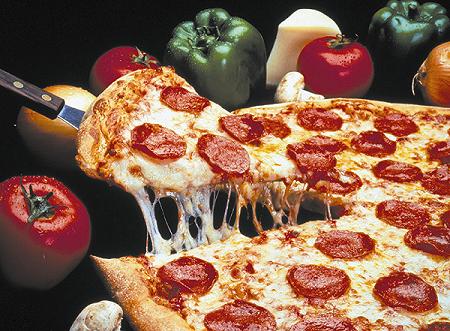
Don't ask me what made me think of this, I really don't know.  But somewhere between reducing capacity concerns at a liquid hand soap co-packer and refilling my cup of water, I got the whiff of a ridiculous idea for fast pizza delivery - or maybe it was the pizza being pushed by me as I made my way back from the water cooler.  Whatever it was, I think I'm on to something, or at least, its amusing to think about.

First, some background for non-supply-chain people.  The products you buy in stores are considered make-to-stock products.  Make-to-stock supply chain models are best suited for products that are low in value, like commodity items, have long shelf lives and have long lead times on the raw materials or manufacturing processes (or both).  Products that are high in value, like fancy computers and cars, are often make-to-order rather than make-to-stock.  Products with very short lead times and short shelf lives, like pizza or sandwiches, are generally make-to-order as well.  Make-to-stock supply chains require demand forecasting (and forecasts are almost never correct, they can be too high or too low), production planning (which either makes too much or too little, depending on the forecast and lot size factors), and materials planning which can wreck havoc on an otherwise perfectly planned production plan if the materials are not available.  When too much is produced and not sold, it becomes inventory which carries a cost.  When too little is produced, customers get upset and service levels tank.  It is easy to see why supply chain folks love make-to-order, because there is much less risk involved; you generally get payment up front, you have firm orders from real customers instead of forecasts, and all you have to do is produce it.  

Manufacturing companies also have a lot of logistics problems to work through on both sides of their operations: getting the raw materials or components needed to make what they make, and getting their finished products out the customers.  That is where 3PLs often come in.  3PL stands for third party logistics provider, and they are a unique kind of company that specializes in those logistical nightmares that manufacturing companies tend to struggle with.  My own experience with 3PLs has proven gains in efficiency, inventory accuracy, and service to our production lines and to our customers.  

So now that we have our basics, let's get back to my blasphemous or radically innovative idea I came to write about.  I started wondering what would happen if there was a 3PL managing pizza delivery.  On the one hand, sales forecasts are more accurate the more aggregated they are, so by removing the luxury of large warehouses, a 3PL might seem impractical.  On the other hand, lean methodologies tell us that a lot size of as low as 1 can still be efficient if the processes around it support lean principles.  

Let's imagine a densely populated neighborhood which orders on average 25 pizzas for dinner per night:  6 cheese pizzas, 13 pepperoni pizzas, 4 sausage pizzas and 2 special order pizzas.  Let's say the standard deviation is 1 pizza in each category except pepperoni, where the standard deviation is 3 pizzas.  The orders are placed between the hours of 5:30 pm and 8 pm and are normally distributed.  Would it be possible to set up a micro-delivery station in that neighborhood and other neighborhoods like it, where the pizzas could be made based on a forecasting system and delivered within minutes of the order, without losing too much freshness?  Imagine Jimmy John's delivery speed applied to pizza - if quality and freshness were comparable, it would blow away the pizza delivery market!  

It wouldn't be that hard, assuming, of course, that the demand is steady enough to warrant such a setup and and high enough to be profitable.  Some pizzas would be discarded at the end of each night (taken home by the delivery boys as a bonus), and special orders would still take a little bit longer.  But even special orders could be semi-baked the time the order comes in; if the order is for a pepperoni and sausage pizza, just throw some sausage on a semi-baked pepperoni pizza, right? In fact, I could imagine these little micro-franchises could be run by a person living in the neighborhood, and the pizza could be delivered by bike rather than car.  A teenager could do it after school, or a stay-at-home mom could run the dinner business when her husband comes home.  The possibilities are pretty neat when you make it so tiny anyone can do it.  And if there's no separate facility, there's no overhead.  Just materials (cardboard boxes) and ingredients, which pay for themselves when the customers pay for their pizza.  The only upfront cost would be a commercial oven, assuming that the conventional ovens at home are not large enough to support even this kind of demand.

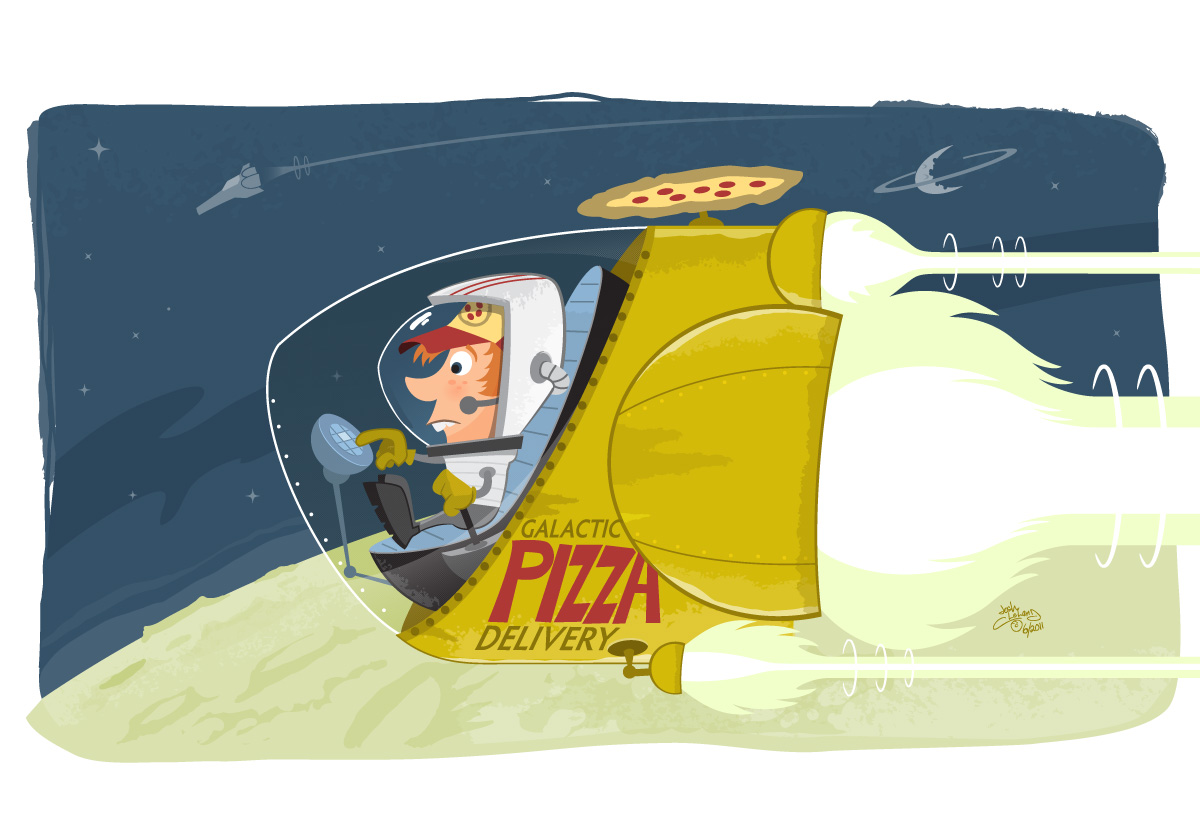
I have another twist, too.  I believe the very near future will include self-driving, autonomous vehicles in the marketplace.  Now, pizza delivery boys are not known to drive the nicest of cars, but let's imagine if the company provided the vehicles in order to support their business model.  With an autonomous delivery vehicle, an oven a mini-kitchen can be installed, and the delivery boy can be your cook as well.  He literally would let the vehicle drive him around as orders pop up (there would have to be some algorithm to deploy delivery boys based on location and availability, not unlike a taxi service today) and he would prepare the pizza on the way there.  When it finishes cooking, he boxes it up and brings it to your doorstep.  Now THAT'S fresh pizza!

So, until we have self-driving cars with pizza ovens in them (and the legislation to allow autonomous cars to be driven without the driver being attentive), I suppose the only issue is whether or not a neighborhood or small geographic area could have the volume and reliability of demand to support such a business.  Validating it prior to opening up shop could be difficult, as there are a lot of different pizza delivery companies, who are not likely to share their data with you.  I suppose you could set up cameras and watch for pizzas to be delivered; the good news is that its pretty obvious how many pizzas are being delivered visually.  In addition, the value proposition of impossibly quick pizza delivery is different than regular pizza deliveries.  In fact, it could increase demand for pizza delivery.  Borrowing a model I've heard for other startups, one way to validate it would be to set up a website to take orders, and when the orders come in, apologize to your would-be customers for not being able to deliver, and offer them a chance to sign up to find out when you actually are open.  This seems like it could turn people off though, and I would be afraid of the damage it would do.  Unless, of course, you did it in a different but similar geographic region then the one you plan to actually open up shop in.  Alternatively, coupons for future purchases might alleviate some of the "burned" feeling of your customers.  
 

Perhaps a good way to start is by making a few pizzas tonight and open up a preliminary shop (not yet equipped with commercial ovens), but limit the ordering process on the website to only take the first few orders with the 5 minute delivery time, and the rest to promise a more reasonable delivery time.  You'll know pretty quickly what your demand looks like.  You could even get friends and family who live nearby to pitch in their help for the first few opening nights in order to keep as many 5-minute delivery times as possible.  
 

That's about as far as I got.  I'm not all that interested in being in food service myself, but I think its an interesting proposition for someone looking to start perhaps the world's first culinary 3PL.  Anyone hungry yet?


Tuesday, November 5, 2013

Braking Bad: How to Reduce Car Accidents Quickly and Cheaply

I have a solution that local governments and their residents can start implementing immediately that will greatly reduce accidents. It's simple, and will financially benefit the cities who use it. Ticket or tax every car owner with a broken or missing middle break light. 

I recently started at a new company and so I'm getting used to a completely new commute. On my new morning drive, there is a lot of stop and go traffic, despite it being 99% freeway. Every lane slows and speeds up at different intervals, at different rates, at different times. Many vehicles are taller than mine and/or have shaded windows, preventing me from being able to see two cars ahead. Thus, I am relying a lot on the brake lights of just a single vehicle. Since the sun was still rising, it was difficult to tell if the left and right lights were lit up for braking or just because the headlights were on. That middle brake light was the only reliable indicator of braking. And here's the problem: THERE ARE FAR TOO MANY VEHICLES WITH BROKEN OR MISSING MIDDLE BRAKE LIGHTS.

Can you tell the difference?


Without that clear indicator, at that time of day, it is very easy to mistake brake lights for running lights. But that's a costly mistake: reaction time is often the difference between crashing and avoiding a crash. And of course, accidents often cause rubber necking and additional congestion, which leads to more accidents. Any reduction in the initial collisions will have a snowballing effect of reducing additional accidents. 


So my proposal is to simply ticket/tax and charge the owners (defined by who registered the vehicles) with broken or missing middle brake lights. There are many ways to implement this simple idea, but the primary goal is to get those cars off the road or get the middle brake lights installed or fixed. Cars can be examined at the same time as emissions, for example. At that point, registration is either denied or an expensive fee is assessed. Alternatively, police can focus, even for a short period of time, on pulling drivers over and issuing the tickets. Publicizing this focus will be a big deterrent for many drivers not wanting to get pulled over. 


My camera actually caught more light from the brakes than I was actually seeing, so these photos don't even do justice to the true difficulty of seeing the brake lights.


How important is this? I would argue this is equally as important, if not more, than the emphasis on DUIs. Hear me out: its not the drunkenness that kills people, its the fact that drunk drivers have slowed reaction times, poor decision making and/or are not paying attention. But if every other driver and pedestrian was watching out for and able to avoid that drunk driver, than the worst she can do is kill herself. Drunk driving or not, defensive drivers can save you, even if you make a mistake or an illegal maneuver, but only if they can tell what you're doing. The problem with the brake lights is that without that clear indicator, other drivers do not have that information and cannot make adjustments in a timely manner to avoid collision. Also, DUIs by their nature are achieved when people when their decision making is impaired; either they think they're ok to drive or they are willing to take the risk because calling a cab and then finding a way to get their cars back the following day seems like too much of a hassle. Fixing the brake light issue, on the other hand, is a proactive, sober decision that not only prevents future hassles (getting pulled over, dealing with a fender bender), it will save them money if a ticket is prevented, and could save their lives. But the risk of getting ticketed must be present for those arguments to have the effect needed to drive action.

Thursday, October 3, 2013

A New Economy: Industries of the Autonomous Vehicle

I'm intrigued, excited and fascinated by the autonomous vehicle for so many reasons.  Many are personal, but I am also anxious to see how it plays out on a macro economic scale.  Disruptive technologies always shuttle in with them new business needs that most people wouldn't have imagined just years prior.  Whole industries crop up as a result of the technologies or ways of doing business differently.  There are ultimately winners and losers, and even the winners will eventually get replaced.  The history of innovation fascinates me, but what really gets me going is what the future could hold.  When self-driving cars are the norm, whole industries will be demolished, and brand new ones, unfathomable ones, will rise up.  The developed world and emerging economies will look very different, and what they look like are what I want to explore here.  

The Driverless Vehicle
Most of us see autonomous vehicles as modes of transportation for ourselves that are automated.  This is, however, just one exciting application of vehicle autonomy.  On the opposite end of the spectrum, we will no longer need truck drivers, taxi drivers, chauffeurs or valets, because the vehicles can operate without humans inside.  Just imagine calling a cab from your smart phone (or whatever device we use in the future), and getting into a completely empty vehicle, being driven to your destination, and getting out so that the cab can go pick up another passenger.  Packages will be shipped across the country in trucks with no cab and no human; thus they will not have to stop for sleeping breaks or food, and will be faster and safer.  When your own self-driving car brings you to your destination, it can let you out at the front door and go park itself.  Then you can call it to come get you when you are ready to leave, combining valets and chauffeurs into a single function independent of a human to pay or tip.  

Rentals and Contracted Services
Autonomous vehicles will ultimately reduce the price of cab fares, because they will not require a human to be able to make a living off of the profits.  The price will compete with public transportation, which has its own drawbacks (slower, sitting next to weirdos, uncomfortable), and thus the use of public transportation may also become extinct.  People own private vehicles today for many reasons, but some of those are basically to combat the negatives associated with the alternatives: cabs are too expensive and public transportation stinks for reasons previously alluded to.  So as the expense of cabs comes down (and the lack of some creepy immigrant who can't speak English as the driver), they become a favorable alternative.  Thus, fewer people will own private vehicles.  In addition, many private vehicles will be put to use on some sort of contract basis as a cab.  See, it would seem silly to have a perfectly functional vehicle sit in a parking lot, baking in the sun or getting drenched in the rain or snow while you are working for 8 to 12 hours a day.  Sure, some people won't want strangers in their cars, but others would find it a marvelous opportunity to send their car off after its delivered them to their office and have it earn some supplemental income while they are working.  Sure, it puts mileage and wear and tear on the car, but if owned, it will probably be more profitable than just letting it sit each day.  In-car camera systems will be installed to detract from vandalism; customers will be automatically charged by the contract service for any damage done.  

More Entertainment and Productivity Technologies
There are already entertainment packages available today, but most of them consider distraction of the driver as a threat and take precautionary steps towards not distracting the driver. With no human driver to distract, consumption of video, music and game entertainment will go through the roof.  Imagine streaming the likes of Netflix into your car while you are transported to work, and picking up where you left off on your return trip.  Your car will have surround sound, 3D (or 4D) entertainment systems and satellite-enabled video conferencing with internet connectivity for your devices.  Carpooling?  A soundproof barrier can separate you and your companion so you can work on or enjoy separate activities without plugging your ears with headphones.  

Destination Parking Grounds
I don't know exactly what to call this, but DPGs sound just as good as any other name I came up with (Potels, anyone?).  This will be a new industry for the avid traveler who can work remotely or needs to travel for work.  It's a mix between a motel and an RV camping site.  Let's say you have a destination 6 to 8 hours away.  You need or want to be there tomorrow.  You pack your things, set your destination and depart at night.  You curl up in your comfy car bed while your car autonomy does the driving.  You get a full night's sleep, and when you awake, you are in another state or perhaps another country.  The car has pulled into a DPG, where there are showers and dressing rooms available at a minimal fee.  You grab your bag, hop in the shower, get dressed, and return to your car.  Now you have just a few more miles to drive to get to your actual destination.  Or, if you are going to be working remotely, you set up your office computer in your car, and start taking calls and discussing metrics, or whatever it is you do.  When work is done, then you get to go have drinks with your friend in the area, or visit that fantastic restaurant you read about.  Travel no longer requires a day, you travel in your sleep so you can maximize your time awake.  With DPGs, some people may give up their homes and live out of their cars, hopping from DPG to DPG, traveling the country or world while still being able to get work done.  Their cars may be equipped with small washers and dryers, mini-kitchenettes and wine refrigerators.  

Insurance, Law Enforcement and Lawyers
DUIs will be a thing of the past, so law enforcement and DUI attorneys will have to find something else to do.  But new types of insurance will exist; there will be specialists for cars with human drivers, and the majority of car insurance policies will assume no driver liability.  Insurance prices should go down overall, and regulations may drop the requirement to have insurance on autonomous cars.  Law enforcement and insurance will be more concerned about people hacking the settings on their autonomous vehicles.  Lawyers and IT security experts will concern themselves with people hacking into others' cars.  

AutoNASCAR
While people may still flock to car racing with human drivers, there will be some sports fans that will favor autonomous vehicle racing.  These races will be all about the logic used in the programming, the equipment in the cars, and the ability of the cars to navigate and react to their surrounding competitors.  These cars will be willing to crash and burn, making for spectacularly brutal attacks that human drivers wouldn't risk.  

Better, Real-Time Navigation Systems
When I automate a process at work, there is an added bonus that the programming also captures data that I would otherwise not bother capturing.  Likewise, when autonomous cars are commonplace, they can transmit commute time and traffic data to centralized locations to allow other cars to better adjust their routes in real time.  If that sounds too Big Brother-ish, consider that at a minimum, the cars can determine the best commute routes by time of day and seasonal trends for the specific owners' commutes (without transmitting any data to anyone else), and recommend departure times to their drivers based on historical statistics.  "Best" commute routes can be defined by fastest, most consistent, most energy conservative, or safest.  Can you even imagine having that kind of analysis today?

Modular Vehicle Assemblies
The customization of your car's interior will become an industry onto itself.  Car design can take on a whole new string of innovations, from sleeping arrangements and vanities to finish getting ready for work while commuting.  You could get a massage on your commute, or practice your Italian, or curl your hair and put on makeup (without the near misses and accidents if attempted today).  But don't expect to have too much time, because when all cars on the road are autonomous, commutes will be much faster, with less stop-and-go reactions than human drivers.  No matter what your needs, there will be products available to fit them.  High-end car manufacturers will sell complete, luxury packages customizable on the web before the car is built, while economy car manufacturers will sell a shell for which you can add on and replace modules as you see fit throughout the life of the vehicle.  

Driverless Drive Thrus
Your car will be able to run some errands for you while you are at work or asleep.  It can pick up your prescriptions at Walgreens, order and pick up Jack-in-the-Box for lunch, drop off packages at the post office, and pick up Christmas gifts bought online at Best Buy.  Stores and restaurants will adapt by having a special drive thru line for autonomous vehicles to transmit their orders via technology like Bluetooth (or to keep the cars off the grid, generating a QR code that can be scanned) and then the drive thrus will have robot arms to deliver the orders into the autonomous vehicles.  They will get their own car washes, and maybe even go to the gas stations themselves (attendants may need to fill the tank).  Forget your wallet or some paperwork at home?  Send your car home and have your wife or son put the wallet or paperwork in the car, and then call your car back to your location.  Of course, wallets and paperwork may be on their way out, but surely there will be something you will need.  


I'm sure there are other industries which we can't even imagine right now, but I think these are already going to rock the world and change the lives of millions.  


Monday, August 12, 2013

Elon Musk gives the world a #Hyperloop design

Happy Hyperloop Day! 

Today's date may go down in history as the day Elon Musk revealed his alpha plan for the fifth mode of transportation, the Hyperloop.  Or, it could disappear into oblivion like the buildings near that giant sinkhole that opened up somewhere that nobody is paying attention to right now.  Only time will tell.  As for me, I want to honor the occasion with some thoughts and some humor.  You know, just in case this gets serious.  

Prior to today at 1:30pm, the world knew very little of Elon's big Hyperloop plans: it was to be a mix between a Concorde, a railgun and an air hockey table.  After public speculation, Elon added that it would not operate in a total vacuum.  MagLev designs were proposed along with all sorts of other speculative concepts, but to my knowledge, nobody got it right.  Yet Elon and team delivered on their promise with a 57-page adventure into the future of travel.  

It is beyond ironic to me that, at the very time I needed it most, technology failed me, and I was unable to really digest the Hyperloop plan until getting home later in the day.  First, my cell phone battery died, and even plugging it in was not enough to get sufficient juice in order to navigate to Twitter to find Elon's post.  Since my work blocks all forms of social media, I had to rely on search engines to attempt to find Elon's blog post, and they only led me to articles speculating about the Hyperloop, not to Elon's post itself.  Grrr...  


Frustrated and a bit stressed (other factors involved making matters worse), I loaded the Hyperloop plan onto my Nook and headed for my pedicure.  Here are my initial observations / reactions:

  • The plan calls for a fifth mode of transportation, naming air, water, road and rail the first four.  It later frames the problem statement as being specific to the transportation of people and/or cars between LA and San Francisco.  It states that air is too expensive and car and rail are too slow.  What it doesn't talk about is water.  Obviously, slow boat would be too slow, but it made me wonder, with LA and San Fran having close proximity to the ocean, if there would be some feasible solution in the form of a fast ferry system.  Probably not, but I just want someone to think it through and prove it to be infeasible or too expensive or something.  
 
  • The plan states that "the lower cost of traveling on Hyperloop is likely to result in increased demand," which I poked fun of in a Tweet, saying that the cool factor is likely to increase demand.  While I was being a little funny here, there is some truth to the comment.  How many additional passengers will the Hyperloop draw that wouldn't normally make the commute?  I don't think that number is so insignificant it can be disregarded, especially in the first year of operation.  I'd be interested in seeing stats on similar openings, although its possible nothing really would compare to being one of the first to ride on a product of Elon Musk's imagination. 
 
  • The 20 foot pillar requirement really bothers me.  First, it was not well explained (or perhaps, well understood by me) why this requirement even exists at all.  I get that it would be nice to minimize real estate requirements, but if the majority of the path will be along the freeway, and the commuter load on that freeway was to be greatly reduced by Hyperloop, then I see no reason why it can't utilize a lane or two of the existing freeway, rather than be built to tower over it.  Second, I think the general public, and even early adopters, are going to be nervous about zooming along 20 feet above ground with only .7 inches between you and your death.  Having seen how the media tore apart my remarkably awesome Chevy Volt, it's not hard to imagine the lies, heresay and ridiculous speculation that will be passed off as journalism about the Hyperloop, should it ever come to fruition.  Traveling at over 600 mph seems significant enough, why does it have to be lifted in the air for an additional fear factor?  
 
  • I wasn't alone in foreseeing how this technology could be better utilized in, say, Mars, where Elon's SpaceX just happens to have set its sights.  In fact, the Hyperloop appeals to almost every aspect of my inner nerd, from the autonomation that can be likened to the benefits of autonomous or self-driving cars, to the solar infused electric power system that allowed a number of coincidental plugs (no pun intended) of Tesla's electric cars (see caption on pic to the right).  Even my love of supply chain is intrigued with the idea of moving people and things at near Mach 1 speed, not to mention the fact that LA has one of the largest ports in America.  Oh yes, one could imagine a distant future, where bimodal transportation becomes trimodal transportation, involving a leg of Hyperloop between slow boat from China and semitruck to its final destination.  As I tweeted to one fellow geek, 3D printing is the only thing missing in this otherwise ultimate nerd design. 
 
  • A lot of the news coverage talks about Hyperloop in terms of minutes, which is cool.  But its not nearly as cool as talking about traveling from LA to San Fran in a matter of seconds.  Elon's plan called for a precise 2,134 seconds between stations.  I can't emphasize enough how much I love this singular number and what it represents.  

And now, some of my favorite #HyperloopHumor (in no particular order except sequential timing):

  1. America falls out of love with concept after realizing they can't take it to or go visit mama and them at the
  2. name approve after original "Death Train 3000" tests poorly with focus groups.
  3. Panhandlers on will have to abide by strictly enforced 148 character limit for their pitch.
  4. I need to have better side projects.
  5. Elon Musk has been watching too much
  6. The word of the day was . It serves to remind us all to keep testing oblivion to discover what limits there may be to infinity.
  7. I bet the connecting Delhi to Mumbai would be over-crowded leading to ladies-only versions
  8. I really hope we make the with 3D printers. The futurist in me is completely overwhelmed w/ excitement
  9. Invention of the wheel was a great thing. Commercialization of a and use of air bearing is even better.
  10. I want to take open source HyperLoop design and turn it into worlds longest water slide. Should I it?
  11. The great tragedy of the is that is too busy being equally incredible at and to build it
  12. Can't wait for to reach Texas so I can teleport on the reg.
  13. Betting Elon Musk hits the health care industry next so he can try to live forever
  14. The top secret codename for the Mexican is HyperLupe
  15. So far, reaction to split in my circles Tech folks: "Cool! It's a tube! To shoot people thru!" Transportation folks: <facepalm>
  16. Some celebrity will name their kid because it was conceived in the loo inside the .
  17. Every elementary school teacher should be required to teach the to inspire our future generation in pysics, engineering, and math
  18. When you enter the gates of the it should just say HYPERLOOP really loudly and deeply.
  19. He has a crazy name, spaceships, and a commercially viable electric car line. Perhaps we should pay attention.