Showing posts with label President. Show all posts

Friday, April 10, 2026

Let's Do the MATH: Yang 2028

 "Every system is perfectly designed to get the results it gets."                                                 — W. Edwards Deming

If you look at our current political landscape and see chaos, division, and a complete inability to solve 21st-century problems, remember Deming’s words. Our system isn't "broken"—it’s performing exactly as it was designed to. It was built for a world of steam engines and the American Dream, not AGI and global competition and warfare.

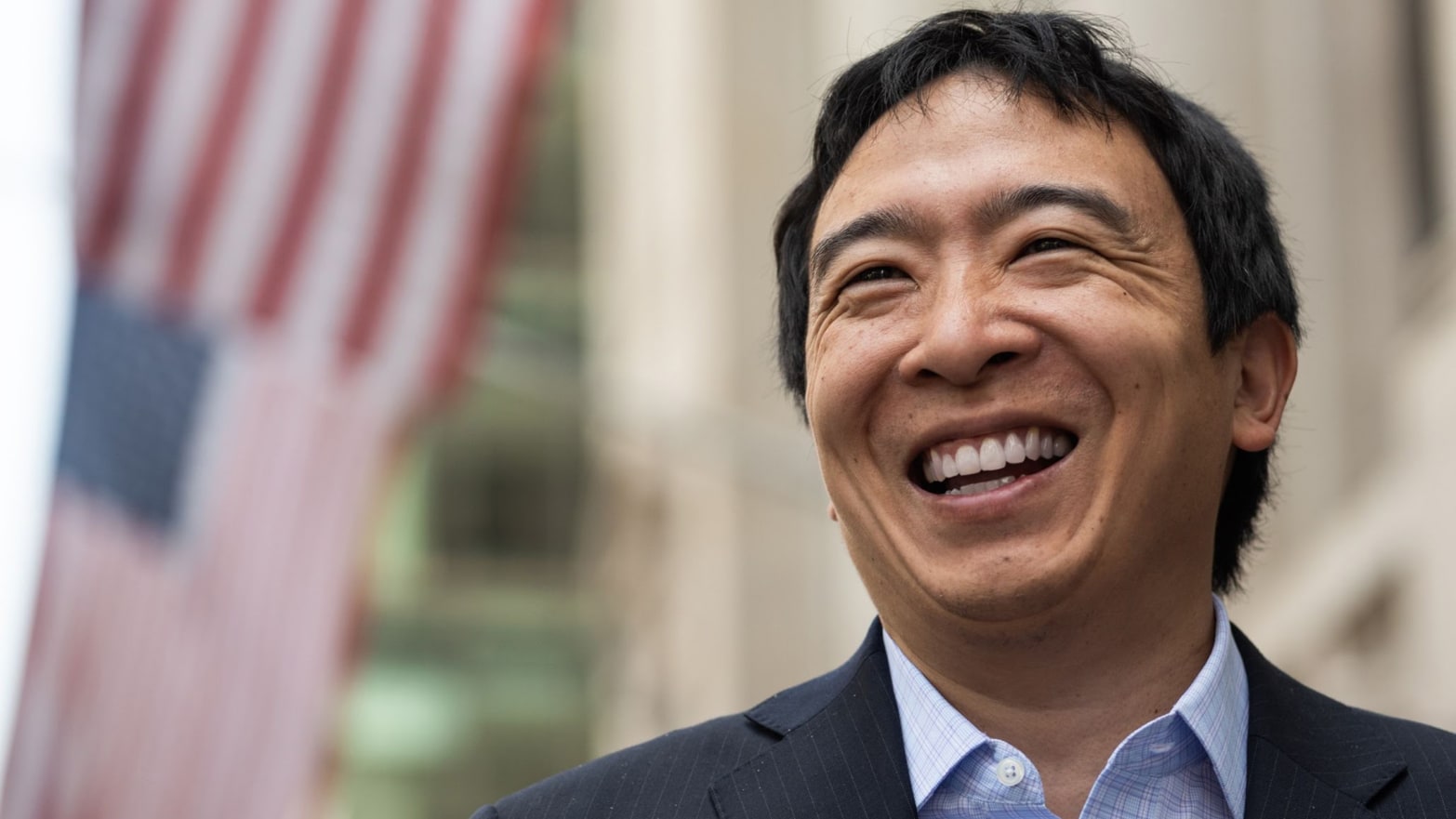
If we want different results, we need to change the system. We need to move Forward. And that’s exactly why Andrew Yang needs to run for President in 2028, and why you should learn about him and his ideas, support him and vote for him. 


From Job Creator to Chief Futurist

Before he was the Presidential candidate with perhaps the most outrageous discrimination in the news outlets (more on that later), Andrew Yang was on the front lines of the American economy. Through his nonprofit, Venture for America, he spent years trying to spark entrepreneurship in cities like Detroit and Cleveland. But he saw a hard truth the data couldn't hide: you can’t "out-hustle" a robot.
He realized we aren't just in a rough patch; we are in the middle of the "Great Displacement." 

My journey into Yang's vision actually started with a bit of a "eureka" moment. I was deep into his second book, The War on Normal People, when it suddenly dawned on me: I had read this author before. Years earlier, I’d picked up a book called Smart People Should Build Things and loved its message about redirecting our country's best talent away from "paper-shuffling" on Wall Street and back into the real economy.

His library of authored books follows his journey from promoting entrepreneurship to promoting Universal Basic Income (UBI) and then reflecting on the problems in our political system that he witnessed first-hand:

Smart People Should Build Things (2014): The book that started it all. Yang argues that our country’s talent is being misallocated and that we need to reconnect our "human capital" with the actual building of businesses and solutions in the real world.


The War on Normal People (2018): The foundational text. Yang explains how automation is hollowing out the middle class and why "normal" jobs—trucking, retail, administrative work—are in the crosshairs of progress.


Forward: Notes on the Future of Our Democracy (2021): This is the manual for the system reboot. He breaks down why the "duopoly" is incentivized to ignore us and how we can use Ranked-Choice Voting (RCV) and Open Primaries to hack the system.


The Last Election (2023): A speculative thriller (co-written with Stephen Marche) about a constitutional collapse. It’s a sobering look at what happens if we don't update our political software.


Hey Yang, Where’s My Thousand Bucks? (2026): His newest release—a witty, candid memoir of his journey from "random man" to political pioneer. It’s the perfect mix of "protopian" hope and hard-earned political reality.


The "Longshot" That Could: Andrew Yang runs for President (2020)

Andrew Yang’s 2020 run is one of the most fascinating examples of "hacking" the political system. When he filed to run in 2017, he was a complete unknown, but he gained massive traction by bypassing traditional gatekeepers and speaking directly to the internet. His 2019 appearance on The Joe Rogan Experience was the spark, transforming him from a "fringe" candidate into the leader of the Yang Gang, a devoted, digital-native fanbase.

The Invisible Candidate: The Media Blackout

Despite his surging numbers and fundraising prowess, Yang faced a staggering "media blackout" that became a rallying cry for his supporters. Major networks like CNN and MSNBC frequently omitted him from candidate graphics, even when he was polling significantly higher than the candidates they included. In one famous instance, a network displayed a list of top candidates and included someone polling at 1% while leaving out Yang, who was at 3%. 

During the debates, he consistently received the least speaking time; in the November 2019 debate, he wasn't even called on for the first 30 minutes. An analysis by Business Insider later confirmed that Yang had the highest "deficit" of any candidate between his polling strength and his actual media coverage, suggesting the "perfectly designed system" was working overtime to keep his "different" ideas out of the mainstream conversation.

Beyond the media blackout, Andrew Yang’s 2020 run was plagued by a series of "glitches in the matrix" that felt less like bad luck and more like a system actively rejecting a foreign object. For an optimistic futurist, these are the ultimate examples of why the "plumbing" of our democracy needs a total overhaul.

The "Muted Mic" Incident

One of the most viral and frustrating moments of the 2020 primary occurred during the very first Democratic debate. Supporters noticed that while Yang was on stage, he was barely speaking. It wasn't just a lack of aggression; Yang later claimed that his microphone was actually turned off when he wasn't being directly addressed. While NBC denied any intentional technical issues, video clips circulated showing Yang trying to interject while his mouth moved but no sound came out. For a candidate who had fought so hard just to get on that stage, having his literal voice silenced was a massive blow to his momentum.

The Iowa Caucus "Coding Error"

If every system is designed for its output, the 2020 Iowa Caucus was designed for chaos. Yang had spent a massive amount of his campaign’s "human capital" on the ground in Iowa, hoping for a surprise breakout. Instead, the reporting app—built by a shadowy startup called Shadow Inc.—suffered a "coding error" that delayed results for days.
    • The Result: The "momentum" that candidates usually get from a strong showing in Iowa was completely neutralized. By the time the math was finally sorted out, the news cycle had already moved on to New Hampshire. For a "math-first" candidate, losing the ability to show his data-driven growth in real-time was a critical setback.

The "John Yang" and "Name Omissions"

The media blackout wasn't just about ignoring him; it was about the subtle ways they minimized his legitimacy.
    • The Wrong Name: At one point, NBC News displayed a graphic of Yang crowd-surfing but identified him as "John Yang." * The "Erasure" Graphics: On at least a dozen occasions, CNN and MSNBC aired graphics showing the "Top 6" or "Top 10" candidates. They would frequently include candidates polling at 1% while leaving Yang out, even when he was polling at 3% or 4%.

The Ohio "Bureaucratic Loophole"

Perhaps the most "systemic" surprise came from Ohio. Despite his supporters gathering three times the required signatures to get him on the ballot, he was disqualified due to an "awkwardly-worded law" regarding a technical paperwork issue (he didn't include a specific statement of candidacy on the signature headers). While other candidates had their paperwork accepted despite similar minor errors, the state's Secretary of State initially denied his access, forcing his team into a legal battle just to be an option for voters.

The AI Imperative

In 2020, Yang was often dismissed as a "doom-and-gloom" tech guy as he prophesied the AI-powered technological unemployment that could challenge work as we know it in ways that are fundamentally different than technological upheavals of the past. Now, with the explosion of generative AI and automation since 2023, his core warnings are no longer theoretical—they are daily headlines. This gives him "I told you so" credibility that few other politicians possess. 

With Generative AI disrupting everything from coding to Hollywood, the "work-to-survive" model is hitting a wall. The tech founders and gurus closest to the technologies are the ones who are speaking out the most about its dangers. For me personally, the more I learn and see the power of it, the more I convinced I am that these concerns are legitimate as well. It is not just a buzzword, it is powerful, which can be great for some, and devastating for many. 

Yang’s view is that technological unemployment is a success we weren't prepared for. UBI is the bridge that lets us transition to a future where we work because we want to, not because we’ll starve otherwise.

The Freedom Dividend: A Floor to Stand On

Yang’s core solution—Universal Basic Income (UBI)—is the ultimate system upgrade. By giving every American adult $1,000 a month, we provide a "Freedom Dividend" that recognizes our value as shareholders in the richest nation in history. Now, before you gawk at the incredulity of such a proposal and the math of how to support it, let me assure you, he lays this out in great detail in The War on Normal People in a logical way. Also, it’s not a radical new idea; it’s a classic one that almost made it:

The Proponents: From Thomas Paine to Martin Luther King Jr., thinkers have argued that a floor under every citizen is the only way to ensure true liberty.

The Nixon Near-Miss: In the early 1970s, Richard Nixon’s Family Assistance Plan passed the House twice. We were this close to having a basic income floor decades ago before it got caught in the gears of partisan Senate politics.

Since Yang's first run at the office, UBI has moved from a fringe idea to a mainstream debate. Dozens of cities across the U.S. have run guaranteed basic income pilots with positive data, making his signature policy feel much more "vetted" than it did eight years ago.

Interestingly, the terminology is shifting. You’ll often hear it called "Guaranteed Basic Income" (GBI) now rather than UBI. The distinction is that these city programs are usually "targeted" (given only to low-income residents) rather than "universal" (given to everyone regardless of wealth).

Major Cities & Recent Trials

While dozens of cities have dipped their toes in, a few major programs stand out for their scale and recent findings:

Cook County & Chicago, IL: This remains one of the largest and most significant programs. Following a massive $42 million pilot that gave $500 a month to over 3,000 residents from 2022 – Jan 2025, Cook County recently became the first in the nation to establish permanent funding for guaranteed income. The success here was measured in "prevention." By providing $500 a month to 3,250 households, the county argued it prevented thousands of evictions. Public safety experts noted that housing stability is one of the strongest predictors of lower neighborhood crime.

Austin, TX: Their pilot specifically looked at housing stability in gentrifying neighborhoods from 2022 – 2024. Results showed that participants spent over 50% of the cash on housing costs, significantly improving their housing security compared to low-income residents who didn't receive the funds. Researchers found that in the specific communities where the pilot was active, violent crime dropped by 44% during the experiment years. The logic was that the "floor" prevented the kind of high-stakes financial stress that leads to domestic violence and street-level robbery.

Denver, CO: A recent study of their program focused on the unhoused population, showing that the cash helped many move into stable housing and reduced emergency room visits. While Denver didn't report a massive drop in city-wide crime stats, they saw a 50% decrease in the use of emergency shelters and a doubling of people in stable housing. From a public safety perspective, this reduced the "public nuisance" calls and police interactions that often occur with unhoused populations. This squares with Yang's position that the concept essentially "pays for itself" through reduced public service costs, and provides real-world evidence. 

Boulder, CO & Compton, CA: These cities have focused on how frequency matters. Results from Compton suggested that getting smaller payments twice a month was more effective at reducing debt than getting a large lump sum once a quarter.

Many UBI trials across the country were heavily supported by federal funds from the American Rescue Plan Act (ARPA). Those federal dollars were designed as one-time "bridge" funding during the COVID-19 recovery. Once that money dried up in 2024 and 2025, the cities were forced to choose between using its own general funds (taxpayer dollars) or ending the programs. Without the federal safety net, the political will to keep the checks flowing evaporated.

While Austin was trying to keep its program alive, Texas Attorney General Ken Paxton was busy dismantling a similar program in Houston (Harris County). Paxton sued Harris County, arguing that "no-strings-attached" payments violate the Texas Constitution, which prohibits the "gratuitous" giving of public funds to individuals without a direct benefit to the state. The legal victory against Houston created a roadmap for state leaders to kill these programs. Austin’s leadership knew that even if they found the money, they would likely face a massive, expensive lawsuit from the state that they might not win.

This is exactly why Yang argues that UBI must be Federal. If it’s tied to the national VAT (Value Added Tax) and the federal budget, it can’t be picked apart by a local tax revolt or a state attorney general.


Introducing the Forward Party

Operating on the hypothesis that perhaps a Presidential bid was too big a start for someone who seemingly came out of nowhere, Andrew Yang set his sights on running for the mayor of New York City.  The irony of that race, as he’s mentioned on his blog and in interviews, is that many people who wanted to vote for his "protopian" vision couldn't because they weren't registered Democrats by the city's early deadline. That "math" is exactly why he now focuses so heavily on Open Primaries—he wants to make sure that the next time a candidate with big ideas runs, they aren't locked out by the "plumbing" of the system.

It was actually his experience in that race—specifically seeing how the closed primary system excluded many independent-minded voters—that served as a major catalyst for his decision to leave the party. He officially changed his registration to Independent in October 2021, shortly after the mayoral race ended, and launched the Forward Party immediately afterward.

The motto of the Forward Party (FWD) is "Not Left. Not Right. Forward." With the mission of "rebooting" American democracy from the ground up, they focus on the "plumbing" of democracy—Ranked-Choice Voting and Open Primaries—so that candidates like Yang can actually win without being "spoilers."  

As of early 2026, the party’s achievements have focused on building a "bottom-up" infrastructure rather than just top-ticket vanity runs:


    • Electoral Wins: The party has successfully elected several local officials and shifted representatives to their line. A major milestone occurred in Utah, where the party gained official status and currently holds a seat in the State Senate (via Sen. Emily Buss).


    • Ballot Access: Moving toward their goal of 50-state access by 2028, they have already secured official party status in several key states, including Colorado, Florida, Utah, and South Carolina, with active "Forward-Independence" affiliates in Minnesota.


    • Candidate Endorsements: In April 2026, the party unveiled its first slate of Congressional endorsements for the upcoming midterms, backing a mix of independents and reform-minded candidates who pledge to prioritize problem-solving over party loyalty.


    • Membership Growth: The party has built a massive digital footprint, claiming tens of thousands of members and a growing donor base that includes tech leaders and "disaffected" voters who represent the 36%–40% of Americans now identifying as Independent.
    
By focusing on local offices and the rules of the game, Forward is essentially "beta testing" a new version of American politics, preparing the terrain for a national breakthrough in the 2028 cycle.


The Path to the White House

The 2028 field is shaping up to be one of the most crowded and high-stakes races in decades, largely because both parties are facing a massive "identity crisis" regarding their future direction. If Yang ran again, he's not going to jump back into the Democratic popularity contest. He would run as an independent, and undoubtedly would proactively counteract those barriers he was surprised to uncover in his first Presidential run. 

To get him to the White House by 2028, we have to follow the math:

Yin and Yang: Two Ways to Win

To get Andrew Yang into the White House by 2028, the "math" doesn't require a traditional electoral strategy of getting to the clean 270-vote majority, which third-party candidates almost never win, his path could utilize a constitutional maneuver called a Contingent Election. Yang only needs enough electoral votes to ensure that neither the Republican nor the Democrat gets to 270. If he wins just a handful of states, the election is "thrown to the House."

Yang wouldn't just look at "Red vs. Blue." He would target states with three specific traits: Open Primaries, Ranked-Choice Voting (RCV), and High Tech/Independent Populations.

Here is the breakdown of the electoral map he would need to "hack" the system.


State

EVs

Why it's in the Yang Column

Alaska

3

Uses RCV. He is highly popular with their independent, "off-grid" voting base.

Maine

4

Uses RCV. New England voters have a history of supporting pragmatic independents.

Utah

6

A "Forward Party" stronghold. The tech-heavy "Silicon Slopes" prefer his "problem-solver" vibe over partisan firebrands.

Colorado

10

A "protopian" hub. His focus on sustainability and AI resonates with the Denver/Boulder tech corridor.

Minnesota

10

His self-declared "launch state." High levels of civic engagement and a history of third-party success (e.g., Jesse Ventura).

TOTAL

33

This is enough to prevent a 270 majority for either side.

The Contingent Election

If the map above happens, the 12th Amendment of the Constitution kicks in. This is the most likely way a third-party candidate like Yang wins.
    • The House Decides: The House of Representatives chooses the President from the top three finishers.
    • The "One State, One Vote" Rule: This is the wildcard. Instead of 435 individual votes, each state gets exactly one vote. California gets 1 vote; Wyoming gets 1 vote.
    • The Strategy: Yang would position himself as the "Unity Candidate." If the country is deadlocked and polarized, he would bet on 26 state delegations choosing him as the "safe" compromise to avoid a civil standoff between the two major parties.


The 270 "Purple Surge"

Securing 270 electoral votes is the steepest climb in American politics for anyone outside the two-party system. As an Independent candidate, Yang cannot rely on the "automatic" base of voters that a Democrat or Republican enjoys. Yang's path to 270 is built on the premise that a significant portion of the electorate (which is currently over 40% Independent in some states) is ready to abandon both major parties. He would need to build a coalition of "Pragmatic Independents," "Disaffected Democrats," and "Future-Focused Republicans." 

To hit the majority of the electoral college votes, Yang would have to execute a "Core-to-Coast" strategy, flipping the script on how modern campaigns are won. To reach the majority, he would have to win several "High-Independent" states and then break into the "Blue Wall" or "Sun Belt."

Phase 1: The Politically Forward(-thinking) Strongholds (55 EVs)
He starts with states where the rules or culture favor third parties:
    • Alaska (3) & Maine (4): These states use Ranked-Choice Voting, which eliminates the "spoiler" fear and allows him to win on second-choice votes.
    • Utah (6): One of the Forward Party's strongest hubs. Its tech-savvy, pragmatic culture is a natural fit for "Human-Centered Capitalism."
    • Minnesota (10): Yang’s self-declared launch state. It has a high registration rate (over 80%) and a history of independent-minded voters.
    • Arizona (11) & Nevada (6): These states have seen independent registration soar to over 33% by 2026.
    • New Mexico (5): Just this week, Yang officially launched the NM Forward Party in Santa Fe. The state has a strong "independent minor party" tradition and a voter base that is increasingly exhausted by the border/energy gridlock.
    • Maryland (10): As of 2026, the Maryland Forward Party is one of the most active in the nation, already running a slate of 8+ candidates for state and local offices. The high-tech corridor between D.C. and Baltimore is "prime Yang territory."
 

Phase 2: The "Protopian" Tech Hubs (161 EVs)
He must flip states that value his focus on AI, sustainability, and the "Future of Work":
    • Colorado (10), Washington (12), & Oregon (8): These states have strong "experimental living" and tech-centric populations.
    • California (54): This is the "Big Boss" of the map. As a tech entrepreneur, Yang would need to leverage Silicon Valley support to flip the largest prize in the union. Without California, the math for an independent nearly evaporates.
    • New York (28): His home base. He must flip the "Blue" establishment by winning over the massive 25% independent bloc.
    • Georgia (16) & North Carolina (16): Booming tech sectors in Atlanta and the Research Triangle (NC) align with his futurist brand.
    • Virginia (13) & New Hampshire (4): Yang can appeal here to the highly educated, "data-hungry" electorates, with his math and well-thought-out detailed policy ideas. 
 

Phase 3: The Displaced Rust Belt (61 EVs)
This is where he wins the election by speaking directly to workers losing ground to AI. He must convince the Rust Belt that UBI is the only solution to the AI-driven job losses they are seeing in 2026–2028:
    • Michigan (15), Pennsylvania (19), Ohio (17), & Wisconsin (10): These states are the front lines of the automation crisis. If he can prove his "I told you so" credibility here, he takes the presidency.


The Timeline

To be a serious contender, the "money machine" has to start early to combat the massive war chests of the two major parties.

Pre-Launch (Now – Late 2026): Yang is currently in the "infrastructure phase." He doesn't need to fundraise for himself yet, but he is raising money for the Forward Party to secure ballot access in all 50 states—a process that costs millions. 

The "Exploratory" Phase (Early 2027): This is when he would likely file a Statement of Candidacy with the FEC. Legally, once he raises or spends more than $5,000, he must register.

The "Goldilocks" Start Date: Historically, serious independent candidates need to start their primary fundraising by Spring/Summer 2027 to ensure they have enough capital to hire staff for the grueling petition drives required in late 2027.

Fall 2027: Yang hits the 15% polling threshold to force his way onto the debate stage. Once the country sees the "Math" again, the surge begins. 

Election Day (Nov 7, 2028): He must win at least 2–3 states to ensure no one hits 270. 

The Contingent Vote (Jan 6, 2029): This is the day the House would officially vote to make him President.

Main Party Candidates Getting On Board

It's worth mentioning that there is a "New Guard" taking inspiration from Yang. They aren't just copying his notes; they are taking his "protopian" theories and attempting to bake them into actual government policy at the state and federal levels.

By early 2026, these figures have moved past the "fringe" label and are positioning themselves as the "competent futurists" of the 2028 cycle. Here is the breakdown of the major players, their platforms, and their viability. 


Josh Shapiro (Governor, PA)

The Platform: Shapiro is the "Speed of Business" Democrat. While Yang talked about the coming automation crisis, Shapiro is trying to "capture" the AI boom to save Pennsylvania’s economy.

The "Shapiro Standard": He signed a nation-leading executive order for safe AI adoption in state government and partnered with OpenAI to pilot ChatGPT Enterprise for state employees.

The Move: He is currently pushing GRID (Governor’s Responsible Infrastructure Development), which aims to make PA a global hub for energy-hungry data centers—essential for the AI era—while trying to balance environmental pushback.

2028 Potential: High. He is consistently ranked as a top-tier moderate who can win over the "Displaced Rust Belt" you mentioned in Phase 3. He takes the "data-first" approach of Yang but adds the polish of a popular swing-state governor.
 

Wes Moore (Governor, MD)

The Platform: Moore’s brand is "Work, Wages, and Wealth." He has adopted a proactive stance on the "AI Economy" that mirrors Yang’s warnings about workforce displacement.

The Move: In early 2026, Moore launched a $4 million AI Workforce Investment, creating grants for "upskilling" and "reskilling" workers specifically for the AI economy. He often speaks about "service-to-career" pathways, which aligns with Yang’s interest in intentional communities and non-traditional labor.

2028 Potential: Rising. Moore is a powerful orator who can bridge the gap between the progressive and moderate wings. His focus on "future-proofing" the workforce makes him a natural intellectual ally for Forward-leaning voters.


Ro Khanna (U.S. Rep, CA-17)

The Platform: Representing Silicon Valley, Khanna is the "Architect of the New Social Contract." If Yang is the one who identified the problem, Khanna is the one trying to legislate the solution in Congress.

The Move: He recently introduced the Creator Bill of Rights (2026), a direct response to the "Platform Economy" (Uber, YouTube, TikTok). It calls for portable benefits (a major Yang pillar)—allowing health care and retirement to follow the worker, not the employer.

2028 Potential: The Progressive Wildcard. Khanna is often the lone voice warning about "oligarchic capture" of AI. He could secure a nomination if the party decides to lean into "Economic Patriotism" mixed with "High-Tech Regulation."


The GOP Angle: Vivek Ramaswamy

On the Republican side, Vivek Ramaswamy (currently running for Governor of Ohio) has adopted the "outsider/disruptor" energy that Yang once held. While their solutions differ (Vivek favors cutting the "Administrative State" rather than UBI), they both appeal to the same "System is Broken" demographic. Vivek is the most likely Republican to adopt Yang-like rhetoric regarding the "technological displacement of the soul" and the need for a new national identity.


Do the MATH: Support Yang 2028

The biggest variable is the state of the country. If the next two years see significant economic disruption due to AI—or if the public remains deeply dissatisfied with the two-party "status quo"—the appetite for a data-driven, non-ideological problem solver could be higher than ever.

While he hasn't officially declared for 2028, he recently released a new book, Hey Yang, Where’s My Thousand Bucks?, which many see as a way to keep his policy ideas in the public eye as the next cycle approaches. He has teased it a number of times on his podcast, which has evolved from Yang Speaks into the aptly titled Andrew Yang Podcast.

Our current system is perfectly designed to give us the frustration we feel today. If you want a different result, you need to change the input.

Learn about UBI. Join the Forward Party. 
Let's stop fighting over the 20th century and start building the 21st. 


Resources to learn more: 


TED Talk: Poverty isn't a lack of character; it's a lack of cash: Skeptical about the merits of UBI? Watch this with an open mind to start. 

The War on Normal People: Get the book, learn how Yang does the math. It's pretty enlightening and hard to argue with. 

Raising the Floor by Andy Stern: Another great book about UBI and why poverty is a problem for everyone

Andrew Yang Podcast: Keep up with the great thinker's latest thinkings. I have gotten great book recommendations and been inspired by a number of these! 

Forward Party website and news: See the momentum in real time and find out how you can get involved!

Saturday, March 16, 2019

The Arguments Against UBI

You've seen the headlines. This crazy Asian entrepreneur wants to run for President so he can give everyone in the US $1000 per month. It's crazy, right? Nothing is free. It can't work. It's just a headline. 

But actually, the concept of UBI is older than our great nation. And it's not just a crazy theory, it actually has some teeth and solid evidence behind it. Below are some of the biggest arguments I've heard against UBI, and what the evidence and experts actually say about those arguments. My intention here is not to necessarily convince you that UBI is the right solution, because there's actually a lot more content out there to do that. My intention is to show that it's not just some crazy idea that will never work in reality, to prompt further questions and challenges, and to ultimately learn together if this is a feasible idea to implement in the US. 

Landlords will just increase rent by $1000 per month / UBI will cause inflation and the number will just have to keep increasing
Actually, we're in a deflationary period in terms of consumer goods. Technology has delivered the goods on improving our lives and making things more affordable. Remember, there was a time when only the richest households could afford a refrigerator or a car. Those things are much more commonplace now, taken for granted by most households. Clothes are cheaper, you can buy fruits and vegetables from all over the world instead of just what is in season in your local area, and the list goes on. The reason these things have become more affordable is competition. Housing is also subject to competition; if one apartment complex, or let's say even most apartment complexes in a given area, decide to increase the rent because their renters now have $1000 more in their pockets, the prices will go up initially. But all it takes is one complex to not price gouge, or even undercut the price gouging by just enough, and that introduces competition. Then the other complexes would eventually need to lower prices until they are once again at a place where they are competitive. With an additional $12000 per year, renters can choose to live further away if that makes sense to them, perhaps spending a little more on their commute but saving substantially more on their rent. Or, they could choose to just get up and move to a more affordable place and get a different job altogether. Yang calls his UBI the "Freedom Dividend" because it gives people the freedom of choice. People will be "less stuck" and more free to make the decisions that want to make about their lives. Ultimately, UBI is capitalism where the bottom isn't zero. So no, there is no evidence or logical argument that supports a long term rise in rent increases that would negate the UBI.

The two bills in our lives that are most shielded from competition are college education and healthcare. These are also the two places where we see inflationary growth in prices. These are big hairy issues, so I'm only going to scrape the surface here and go in a couple different directions.

First of all, college is overprescribed in this country. We have been telling the last few generations that they have to go to college to be successful. That may have been good advice when college was more affordable and college graduates were more rare, but now students are racking up 2.5 times more debt in student loans, and graduating with fewer job prospects. This idea that everyone can and should go to college is toxic, and creates a stigma around the good work done by mechanics and technicians and other high-skilled labor fields. The irony is that some of the highest-paid college graduate jobs are some of those being targeted first for automation: legal work, examining x-rays, even surgical operations are seeing technology excel beyond human capability. Even journalism (yikes!!) is being automated. Hey, as a college grad, I will say that college was great - it was fun, I learned a lot, I expanded my mind and horizons, had valuable experiences - but I also saw a lot of my peers fall by the wayside; it was tough and it's not for everyone. Bernie Sanders came up with this free college scheme, and that sounds great if you believe that college is the way to a better life. Unfortunately, it's just not the right path for 100% of our people, so sure, maybe a free a college education would benefit some really smart but underfunded young people, but all in all, it addresses only a portion of our society. UBI addresses 100% of adults in the US, period. Now, there's nothing stopping a motivated student to spend their $12000 on college courses, so the trick is getting college to be affordable enough that the UBI can pay for most or all of it, if that's how a person chooses to spend it. College affordability, then, needs to be addressed, and I'll leave it at that, except to say that the UBI proponent Andrew Yang has a really well-thought-out plan for this on his website here: https://www.yang2020.com/policies/controlling-cost-higher-education/

Healthcare is another whole bag of worms. I've been blessed with healthcare tied to my job for my entire adulthood, and was on my father's work's healthcare before that, so I've only seen that side of things. But I can tell you, it is infuriating at times. A recent example comes to mind: I have exercise-induced asthma, and so from time to time I take a hit off my rescue inhaler. I recently realized my inhaler was out of pumps, so I called my Teledoc, which is a neat service where you talk to a doctor on the phone, no travel needed or waiting in the lobby for your appointment, and if they can diagnose or assist you over the phone, they do. You still a pay a copay for it ($40 does seem like a lot for what amounted to about 45 seconds of discussion), but it is exponentially more convenient than going to a regular doctor. It was Sunday. I hadn't used this Teledoc yet because I just started my job back in July, so I had to go through a few extra steps to set up my account. It took maybe ten minutes or so. But once we got to actually scheduling the appointment, I was informed that my insurance was not eligible for Teledoc. I thought to myself, "Hmm, I guess I should have paid attention to the changes they said were coming to our healthcare this year…" So I had the option of paying the non-insured price, or hanging up and sorting it out with my insurance company. I ended the call and attempted to call my insurance, but it was Sunday and they didn't answer the phone. Frankly, a couple weeks went by because I can never remember to do these things during working hours, because I'm, you know, working. I finally carved out some time at work and called my insurer. They assured me I was qualified for Teledoc, so I asked them to make a call and clear it up. They did and got Teledoc back on the phone, and they kept asking me why I wasn't allowed to set up my account before. I don't freaking know, you guys were the ones telling me I wasn't qualified!! Deep breath. I forged on, asked them to go ahead and set me up my account (again), so I could have a call with a doctor that day. I spent 40 minutes on the phone in total on that day, before getting the call from the doctor. So now I've spent close to an hour on the phone just to establish that I can talk to a doctor. I set the call up for asap, and the doctor called me just a few minutes later. The conversation went like this:
    "Hi, I'm Dr. [So-and-So], how can I help you today?"
    "Hi, I have exercise-induced asthma and my inhaler is out. I'd like to get it a new prescription for it."
    "Ok, what inhaler do you use?"
    "I use [Pro-Air]."
    "Do you have any other symptoms?"
    "No."
    "Has your asthma gotten worse?"
    "No."
    "Do you want two refills or three?"
    "Three would be great."
    "Ok, I will send three refills to your pharmacy."
    "Ok thank you."
    "Good bye."
Brilliant, right? Now I don't have to make an appointment with a doctor, carve out time in my day to go over there, drive the distance to the doctor, wait in the lobby, check out, drive home, etc. This is something all Americans should have, really. It's amazing. But then, I went to my pharmacy, and after waiting several minutes for someone to talk to me (there was no one in line ahead of me) I was told it wasn't filled yet, and to come back in 10 minutes. I did some shopping at Target and came back. Then I was told they thought they had had the inhaler but they were out. I waited another 10 minutes or so for them to find an inhaler at a different pharmacy. I had an appointment to get to, and didn't have time to drive over to that pharmacy before it closed, so I had to go the following day. I got there, waited in line behind one person, they were swamped, they had a line at the drive thru, people waiting in chairs, and were barely acknowledging the people in line. An overhead voice chimed every 10 seconds or so, "Call on the pharmacy line," but nobody picked up the phone. The person ahead of me in line finally was greeted and talked with the pharmacist, got what he needed and was on his way. Another few minutes passed, and I was greeted. I got my inhaler and was on my way. It took about a half hour to get home from that pharmacy, not because it was far, but because of the spring break traffic that has set in on my area. So all in all, I spent about 2 hours getting my inhaler, and the most critical step, the doctor prescribing it, lasted less than a minute. If there was better competition, these inefficiencies would be knocked out. The Teledoc agent I first spoke to should have recognized that I was qualified for the program, that would have eliminated the additional 40 minute phone call. The inventory of inhalers should have been accurate, that would have eliminated the need for me to go to a second pharmacy. In fact, something like an inhaler, which doesn't need to be measured, could be just as easily shipped to me, or alternatively, at least picked automatically and made available in a vending machine type device for me to retrieve with my insurance card or something similar. We can get cupcakes out of "Cupcake ATMs" but we can't figure out how to get people the medicine they need in an efficient manner. Besides the doctor, there really was no need for any interaction with a human, it's all just red tape. And really, a robot could have asked me the same questions that the doctor did, too.

That was a long-winded story to show why competition is needed in healthcare. I’m an advocate for applying the same technological advances Amazon and Google use to healthcare. The problem is how to get everyone to comply. Frankly, I don't know the answer here. Yang's answer is Single-Payer Healthcare, and I can't say whether I'm for or against it, it makes a lot of sense, but I just don't know. The point is, the healthcare system is broken. What's neat about UBI is that it gives people a minimum income no matter what they do, a backstop against poverty. With such a cushion, it is possible that more people will become entrepreneurs, because the risk is reduced. I think some really brilliant people working low-paying jobs in healthcare might take that UBI and address the problems they see in healthcare, and could come up with some brilliant solutions. We don't need to legislate it necessarily; I believe in the American ingenuity, and when you remove or reduce the barriers and risk, you open up a world of possibilities.
This looks like socialism, it will never work in America
Actually, this is a very American idea, dating back to Thomas Paine in 1796, and was passed by the House under Nixon's administration before failing to pass the Senate because they didn't think it was enough money. It's not taking over the means of production and giving everyone an equal amount of the total pie. It's capitalism where the bottom isn't zero, plain and simple. Yang proposes we fund it with a VAT tax, which is something that has been implemented in every advanced economy except the US, and he's proposing it at about half that of the European VAT level. People will have more money to spend on what they need, and there are no strings attached like there is with food stamps, housing subsidies, disability and other welfare programs.

Reference: https://basicincome.org/basic-income/history/

Poor people will just spend it on stupid things
This is a misconception that we've had engrained in our heads, and I’m not entirely sure why or where it came from. Perhaps it is just wealthy people's way of rationalizing why they are better off than the homeless beggars on the street. If I'm fundamentally superior to them, then I don't have to pay attention to them or try to help them. The thing is, the overwhelming evidence is that this is simply not true. Giving poor people free money with no strings attached has led to reduced homelessness, reduced crime, better mental and physical health, and so much more. I am not sure I can speak to it better than Rutger Bregman in his TED Talk that first changed my mind about it, so I'm going to say that if you have any inkling that poor people will spend the UBI on stupid things, you need to take the 20 minutes to watch this video. Like, seriously, stop reading this blog and go watch it, I'll wait.


Rutger Bregman: Poverty isn't a lack of character; it's a lack of cash


People will quit their jobs and be more lazy
Again, this is where we have actual data that proves this to be incorrect. $12k is just enough to get every American adult above the poverty line. If Joe Smith is making $50k and the government says, hey, I'm going to give you another $12k on top, Joe's probably not going to quit his job and live off that $12k. But, if Sue Banner is working two jobs for a net of $24k and has a kid at home, and can't seem to find the time to go back to school to make a better life for herself, she might take that $12k, quit her second job and either spend more time with her child or start night classes, or both. UBI gives people choices. It gives minimum wage earners more bargaining power - when you are at a negotiation table and you have no alternative, then you don't have leverage. But now everyone has the option of quitting their jobs and spending time finding better jobs or better ways to spend their time, which means employers will have to pay what the market demands because people won't be so desperate for the jobs. The two groups of people that are shown to quit jobs when given a UBI are people who will stay home to spend time and take care of kids or elderly relatives, and young people who go to school. 

You should just make college free
I've already addressed this above, that college isn't for everyone, and it's not the answer to long-term technological unemployment or underemployment. Making college free would only help a subset of the country in the short term, which would be great for those people for that timeframe. UBI is for everyone, and makes college that much more affordable for those who do want to go.

It doesn't fix the inequality
This is a fair argument, and I agree to an extent. But I would actually say, fixing inequality shouldn't be the goal. If you want everyone to have exactly the same amount of everything, you're no longer talking about a capitalist society, and you're not talking about America. We want people to innovate and create and excel, and to be motivated with rewards for doing so. That is what has made America one of the most (if not the most) creative and innovative countries in the world. If we said to those creators and inventors that what you do won't make a big difference in your life, merely that it will subtly improve the lives of everyone, they may not be interested in spending their time, energy and effort on creating and inventing. People who create amazing things should be rewarded! But, we have enough wealth in our country that we don't necessarily need people in poverty in order to reward innovation. So UBI actually just fixes the very fringes of inequality. Under a UBI plan with the VAT that Yang is proposing, nobody would be under the poverty line, and the people at the top reaping the benefits of the amazing technology they developed would have a thin slice shaved off. But it does even more than that, because it gives people more choice.

Government can't be trusted (to not take it away)
This may be the most compelling reason a UBI may not be successful. The idea that we could be promised $1000 per month, make adjustments to our lives with that cushion in mind, and then have the UBI program cancelled because a new administration decides it doesn't work is even more terrifying than not addressing the need for the UBI in the first place. So perhaps this is more of a caution than anything else: we need to make sure we do it correctly so that it can't be removed. But, I don't think that's an impossible task, and the data supports it. Social Security, while not being properly funded for years and being the flawed system that it is, has continued well beyond its feasible life. We also have an example of something much more closely related to UBI to use as a model: the Alaskan Permanent Fund Dividend, which is funded by oil. This has not only succeeded many changes in government, it has done so in a very deep red state.

$12000 per year isn't enough
My response to this rebuttal is, "Enough for what? Enough to make you rich? You're right!" Look, the $12k wasn't plucked out of the air, it targets the poverty line directly. The thing about UBI is that it is not contingent. It does not keep people down at the $12000 wage line, it lifts people out of poverty and boosts people by $12k. If you're making $6k, then you're now getting $18k. If you're making $20k, then you're now getting $32k. And if you're making $100k, you're now making $112k. It's elegant in how simple it is. It doesn't get taken away from you at some level. It doesn't require that Taco Bell pay high school students a livable wage. It allows the market to work, but ensures that nobody is suffering from poverty.
The technological unemployment thing is a myth - we'll have new and different jobs to replace the ones that are lost to automation
This goes back to the rationale of why we need UBI. It's true that history has shown us a fear of technological unemployment that hasn't come true in past revolutions. In those instances, jobs we couldn't have imagined were created, like Social Media Manager and Airbnb host. The argument is that this time is fundamentally different, because the robots and AI and automation are no longer enhancing humans, they're replacing them. And it's not people on the fringe of society crying wolf and then crawling back to the rock they live under, these are the intelligent entrepreneurs, technologists and job creators who are saying this is going to happen: Warren Buffett, Bill Gates, Elon Musk, Mark Zuckerberg, Andrew Yang. Andy Stern's book called "Raising the Floor" has some good insights on this topic, as do "The Future of the Professions", "Four Futures" and "What To Do When Machines Do Everything". There's a great fiction book, also, that's a quick read and so completely out there it's a little crazy, but I like it for the way it lays out paths to dystopia and utopia that are near-real, and I've been referring to it because I think it's a great thought exercise for this kind of discussion; it's called "Manna: Two Visions of Humanity's Future". 


Yang talks about this a little more urgently. He says we're in the third inning of this automation revolution already! Self-driving trucks are being tested, and truck driving is the most common job in 28 states. Food service and checkout counters are being automated, we see those things already, and retail and food service jobs make up a huge portion of the population currently. The typical response from nay-sayers, then, is we'll just re-train them to be programmers. There's some logical fallacy here, and then there's some numerical problems here. First, re-training programs have shown to be 0-15% effective, meaning some are 0% effective, and at best, 1 in 10 people would be successful. Second, truck drivers likely started driving trucks because they weren't really big fans of school to begin with, what makes you think they'd want to go back to school 10 or 20 years later? Third, only about 8% of jobs are in STEM fields, where we put a lot of value. If 100% of the population tried to go for those jobs, somewhere around 90-92% would fail to find employment. And technology will only worsen this problem - AI is getting better at writing code. Finally, programming is hard! I consider myself to be a pretty smart person, and I've learned basic coding, but at some point, it gets too confusing to me. Programming is not something everyone can do, and I include myself in that, so as to say I'm not belittling the intelligence of non-programmers.  


The truth is, nobody has a crystal ball, not even Musk or Zuck. Maybe they've got it all wrong, and it will be a laughable mistake akin to when the president of IBM said in 1943, "I think there is a world market for maybe five computers." 80 years from now we may just as well laughingly say, "Ha ha ha, Elon Musk, thinking that AI was going to take our jobs away. We have more well-paying jobs now than we could ever fill! Silly Elon!" Even if that were to be the case, there's nothing inherently wrong with having a UBI to usher us in to this new unforeseeable age. Afterall, if its good enough for Alaska, why can't the whole country benefit?


On the other hand, the benefits of UBI are amazing, and evidence that shows these benefits will happen whether or not technology drives us all out of jobs. Yang lists many in his book, and I'll summarize what hits home most for me: UBI reduces financial stress, allowing people to make better decisions based on an abundance mindset instead of a scarcity mindset. UBI supports parents and caretakers which will mostly lift up women. UBI will help maintain order, protecting us against riots and chaos from mass unemployment. UBI reduces mental health issues, suicides, drug addiction and incarceration. A side note here, did you know that the life expectancy of Americans has dropped for the last three years?  I didn't realize this fact until recently. Suicides and overdoses have overtaken the previous number one cause of deaths: car accidents. You know who is prone to suicide and overdosing? Middle-aged men who have lost their jobs and feel societal pressure to provide for their families. So even if today is the absolute worst case scenario for the country as a whole, and we'll get back to a higher labor participation rate.


We can't afford it

The affordability is a big issue in UBI. The neat thing is that a lot of people have been working on this, and the same books that I've referenced above will tell you a lot about some proposals. Google just about any video of interviews with Andrew Yang, and he talks about it very simply. In essence, he says, the headline figure is about $2 trillion, against an economy of $19 trillion and a federal budget of $4 trillion. But it starts to become much more affordable when you realize that some welfare programs could be replaced by the UBI, which could mean up to $500 billion already being spent would just shift into UBI. The big game changer is the Value Added Tax, or VAT, which is something that every developed country has except the US. At just half the VAT of the European level, we would generate $800 billion in additional tax revenue. This is like the oil dividend in Alaska, except its taxing the technology and automation, which is the oil of the 21st century. "The beauty" of UBI that Yang talks about is how much we spend on homelessness, hospitalizations, incarceration, healthcare for people falling between the cracks that adds up to hundreds of billions of dollars also. Once a UBI is provided, health and education increase and incarceration and crime decrease. This isn't theoretical, these results have been proven out in real cases. Finally, by putting $1000 per month into the hands of every American, it grows the economy. "The Roosevelt Institute projected that the economy would grow by approximately $2.5 trillion and create 4.6 million new jobs.  This would generate approximately $500 – 600 billion in new revenue from economic growth and activity." When every other developed country is utilizing a VAT, and caring for their people's health, it feels like, actually, we can't afford NOT to implement a UBI. 


These are the arguments against UBI and the counterpoints I've found. What other downsides, pitfalls or problems are there? Let's keep the conversation going, let's vet this thing, and if the benefits outweigh the negatives significantly (VAT tax at half the standard of other advanced countries), as it seems like they do right now, let's implement this thing.


Saturday, November 12, 2016

America: A Reinvention

It's taken me some time to process this week's election results, and I'm not sure I've fully processed everything, but I want to share what I hope to be a unique and helpful perspective.  Just to be clear, I fall on the republican side of many issues, but also believe strongly in the need for sustainability, and therefore am often turned off by republicans' love affair with oil; I did not vote for Trump or Hillary, and I am not here to debate the merits of voting for a third party.  My reasons to not vote for my party's candidate are many, but racism and brash, thoughtless commentary top the list.  I count myself among the many Americans who expected Hillary to win, if by default only, and went to bed Tuesday night very surprised and disappointed by what we were seeing on TV.  But, I think I was among a much smaller population who preferred a clear winner over a tie or even a narrow margin.  I don't think there is any question that, had Trump lost, especially if by a small margin, he would have fought it and the election news coverage would have continued dragging on and on.  If it was a tie, which was a real possibility by my calculations, I worried that the bottom would fall out of the stock market and we'd enter another awful recession, or perhaps an even more sudden, violent recession, leading to rioting and raiding and chaos and anarchy.  Call me dramatic, but I am a forecaster by profession now, so it is my job to anticipate the future. 
So here we are, a terribly divided country, who have elected a President with implications that scare so many.  Scare!  Not annoy, not piss off (although both of those apply as well), but SCARE!  I mean, there is legitimate fear because of who we elected.  And don't give me that "Not my President" crap; we were appalled when Trump wouldn't agree to peacefully accept the results of the election, so if you don't accept the results, you are just as bad as he is.  Indeed, this country, with the electoral college that we invented, put into place and have been using, we elected Trump.  I'm not saying the electoral college is perfect, far from it actually, but until we can design and agree upon a better way to handle fair and equal representation in the voting process, that's all we've got.  It doesn't matter if you didn't vote for Trump, he is the President-elect.  Hillary acknowledged it, Obama acknowledged it, and I assure you its not because they think he's a great guy.
  
It's because we as a country believe in a peaceful transition to the elected President.  And we all know the popular vote isn't what matters, so don't whine about that either.  You can move to Canada (if their immigration website comes back online), but that won't change the fact that Trump is the next President of the United States.  In fact, I wouldn't advise moving to Canada because if he has his way, business is going to get bad in Canada.  Anyways, while Wall Street rallied back up after the pro-business nominee was elected, there is still a lot of uncertainty, anger and fear around Trump's victory.  But here's the thing: it isn't actually that bad.  Let me tell you why. 

Shortly before election day, there was a number of articles posted about this professor who predicted that Trump would win based on what he calls "The Keys to the White House."  I read one such article (and am considering reading the book now, especially considering the results), intrigued from both the analytical perspective on forecasting and from the perspective of emotional disbelief.  Surely, I thought after the reading article, his prediction model probably works well for typical elections, but Trump would certainly be the exception to this "science."  Right?  I mean, nobody would have believed Trump would even be a candidate two years ago, and especially not if you told them the things he's said and done through this election.  This can't be a typical election, therefore, the rules outline in the professor's forecasting model don't apply, I thought.  Forecasting, afterall, is not a perfect science; as a rule, numerical forecasts are always wrong, the goal is simply to get as close as possible and correct the reasons for missing to improve the forecasting model going forward.  But the election really only had two highly probable outcomes, and the professor, against many readers' intuitions, effectively nailed it.  What this tells me is that Trump, with all his belligerent Tweet-rants, ignorant racist and sexist outbursts and overall childish demeanor were not enough to stop the course of history.  That is to say that the professor's model didn't predict Trump particularly, his model said that the Republican candidate would win, or more accurately, that the party of the current President would lose.  So it was always going to be a Republican win.  We may say that it's unfortunate then, that the Republican candidate is Trump, but technically the Republican voters put him there, so that's also a senseless debate.  If the keys to the White House had broken because of Trump, Republicans, or at least I myself, would have been outraged: "This was the year for Republicans to take back power, and we blew it!"  But somehow, despite everything, Trump didn't blow it. 

What this means is, change (in party) was inevitable, and this is simply history repeating itself.  That alone might be a more positive spin on the doomsday dystopian fears of some.  We've gone through party changes in contested, emotional, and controversial elections before, and there will be an America not too much different than the America we know today, after Trump's presidency.  More significant, though, is that not only was change inevitable, but roughly half of our country was basically asking for this kind of extreme change.  We were divided before the election, let's not forget that.  In fact, we were more than divided.  All the shootings that led to the Black Lives Matter movement happened while we had our first black President.  I remember being so proud that our country could overcome racism enough to elect a black President 8 years ago, but clearly, there is still a significant amount of racism in this country 8 years after that historical election.  This demonstrates, among some very sad realities, that there is no reason to believe the country as a whole will

reflect the beliefs and characteristics of the man in the Oval Office.  It sucks that we still have a racist country despite having elected a black President, and it sucks that our President-elect also appears to not only be racist, but sexist and xenophobic, too.  But it serves to show that no matter what Trump says, his words do not reflect the beliefs of America as a whole, anymore than Obama's election obliterated racism. 

Furthermore, as many reassuring articles can more eloquently and specifically describe, our country has a system of checks and balances, and Trump cannot do all the most insane things he promised to do on his campaign trail, and many of those things can only be done with an approval from Congress.  "But, Laura," I hear you say, "Congress is mostly Republican, too, so Trump can push anything through, right?"  No, I don't think so.  Maybe I'm being overly optimistic, but what we saw in the weeks and months leading up to the election was that many Republicans had a hard time backing Trump, and some went so far as withdrawing support.  I believe that the other Republicans we put in office, at least as a whole, will do what they can to prevent Trump from instigating World War III.  Here I am not an expert, as I did not research all the Republicans on every state's ballot, only my own ballot, but I hope my logic holds true.  The fact that we have a Republican-dominated Congress also speaks to the fact that this country demanded change.  And it could be a very productive four years, in all actuality, because so many acts of Congress have been held up by basically an endless game of tug-of-war.  With Trump supposedly supporting Republican policies, Republicans could actually get
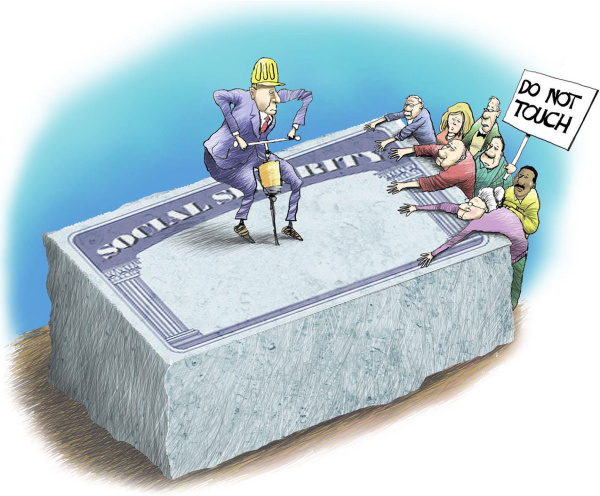
things done, like revisit Social Security, a hot-button issue in George W.'s election that never was addressed due greatly to the 9/11 attacks.  Guys, we could balance the budget!  We could do the things we're supposed to do as a country.  Our leaders might actually lead us forward, and not just collect salaries from our tax dollars. 

I've been thinking a lot about the idea that we can reinvent ourselves lately.  It first came up in a reflection of my life as I wrote a very personal narrative.  I realized that, at certain milestones in life, I've seized the opportunity to reinvent myself; moving to a new state with a new school and new friends to make, starting college, changing jobs, shedding bad relationships.  I've drastically reinvented myself at least a half a dozen times, and my boyfriend and I are now facing another huge opportunity to reinvent ourselves and our way of life as we look towards our move from Arizona to Connecticut.  If you grow up and live your whole life in a small town where everybody knows you and remembers when you popped out of your mother's womb, you can't really do those kinds of drastic makeovers to reinvent who you are, because people's perceptions of you are harder to change when they've been ingrained.  But when you face a whole new audience of people who don't know you, you can practically reinvent yourself in just the first impressions; then you just have to maintain some semblance of the person they think you are, and you effectively become that person.  In the same way, Trump could take this grand opportunity to reinvent himself as an American leader, a hero, an advocate for minorities, an economically-proficient superpower.  In just a couple days after the election, there are no indications he will do so, but one can hope.  With or without Trump, America can reinvent itself.  We already have, in a sense; we are now a country where really, truly, anyone can become President, whether you're a woman no prior political experience required.  The Govenator, I think, may have paved the way for celebrities to get into pretty substantial political offices, and I think most people are impressed with what he's done there.  The fact that Hillary got so close I think already has proven that a woman can become President, we just didn't elect a woman this time around. 
When I reinvent myself, I usually fall short of being perfect, but I strive to become a better version of myself; ridding the things I don't like and keeping or expanding upon the things I do like about myself.  In the same way, our country is far from perfect, but it's pretty damn good to be an American, and this election shows both that we have work to do but that this is a place where anything is possible.  For that reason and the one stated earlier, I am not moving to Canada.  Everyone can reinvent themselves and reinvent and reshape America.  We don't need to scrap the whole thing or bail altogether; we just need to do our part to make America a better version of itself.  Spread love and humor and education and good work, squash hate and anger and drama and judgment, and let's reinvent this great country of ours and make it a better America.