Showing posts with label entrepreneurship. Show all posts

Sunday, January 21, 2018

Using Cialdini's Weapons of Influence to Sell Girl Scout Cookies

Dieters and New Year's Resolutioners and impulse buyers beware!  The season of Girl Scout Cookie sales is upon us once again!  And if those sweet little girls (or their pushy helicopter parents) knew anything about Robert Cialdini's Influence, the authoritative book on influencing people to get your way, we wouldn’t stand a chance at resisting those Thin Mints and Savannah Smiles.  Luckily, most of them don't know the secrets I'm about to reveal below.  But if you are one of those little girls looking to earn your Entrepreneurship Badge, or just get a leg up on the competition, you'll
want to read on.  Below, I outline some of the applicable weapons of influence that you may want to utilize in your selling activities, with some examples of how they would apply to the sales of seasonal, well-loved Girl Scout Cookies.  

If you accidentally found this page while looking to buy Girl Scout cookies rather than sell, check out my niece's page

Reciprocity - Give a Little, Get a Little (but more)
The principle of reciprocity says that when you give something to someone or do something for them, they are inherently put in a place of being indebted to you, and are then more willing to do something nice for you i
n return.  The funny thing about this is that the magnitude of one favor doesn't have to balance with the magnitude of the next.  Monks employ this by presenting a small flower, or bracelet or coin, and in return ask for a sizable donation, which is much greater than the value of whatever trinket they "gave" to you for free. 

The application is pretty straight forward here:  One approach would be to buy a box of cookies yourself, slice them apart if you can, and then offer passers-by "free samples" in hopes that they will buy a full box (or three).  This may be especially useful when you have a new flavor to push, or a flavor that is not selling as well that you may need to get rid of faster. 

If they don't buy, don't worry, there is still a secondary use of your apparent generosity:  You can do them another "favor" by making a concession, and instead asking them to spread the word or share a link to your online store, etc. 

The second approach, if buying cookies for the purpose of free samples is off the table, consider instead making small crafts like bracelets or paper origami you could hand out as free gifts.  The goal of course is to ultimately spend far less on the freebie then you get in return on your sales.  But getting more sales will be addressed in some later tactics. 

Scarcity, or in today's terms, #FOMO
The good news, my Girl Scout friends, is that the wares you're peddling are truly limited-time, at least for the year.  Use this to your advantage!  Long before the notion of the Fear of Missing Out was put to a meme-ified acronym, people have always had a notion of not wanting to miss their chance.  It's what drives our very biology - we prefer rest because we don't know when we'll get more of it, and we like to eat more than we need because the caveman versions of ourselves didn't know when their next meal would come along. 

Anyways, there are two very easily implemented strategies in this category.  A medium-size white board may be the best tool for these strategies.  As you run out of a popular flavor, such as Tagalogs, write on your board, "Only 5 boxes of Tagalogs left!"  The Tagalog lovers will have an increased sense of urgency to buy, buy, BUY!  Then, as you get close to the end of your selling season, make a sign or write on your whiteboard, "Last chance to get your Girl Scout cookies!"

 Make them like you
There are a lot of elements that make a person like another.  To maximize your sales, start with your physical appearance.  Younger Girl Scouts can play up the "cute" factor with pigtails, sweet outfits and lots of energy.  However, the feminist in me cringes a little bit at this, so I will at least offer a more woman-forward alternative: think about dressing up as your future career aspiration.  If you want to be a business woman, wear a sport coat and a classy necklace, and pull your hair back.  If you want to be a scientist, see if you can get your hands on a research lab coat and safety goggles.  Dress as a doctor, or religious leader, or zoologist or whatever it is you may want to be.  This not only addresses the immediate benefit of looking attractive, but it also has a secondary benefit of reminding your customers that they aren't just buying cookies, they're helping you become that amazing woman you aspire to be. 

Next, use compliments on potential customers.  Compliment the shirts or shoes they're wearing, tell them their kids are cute.  If you can figure out what they're making for dinner based on a cursory glance at their purchases outside the grocery store, tell them, "I bet you're a great cook!  Wouldn't you love some Girl Scout cookies for dessert to go with that meal?"  Compliments have a little bit of the reciprocity principle at work as well, but are best utilized to increase your likability. 

You can also be likable by doing something unique in a fun way.  You could advertise "Free Hugs" in big letters, and "Girl Scout Cookies $4 per box" in smaller letters below it.  Use current events in memes or puns in your advertising, or parody a popular song. 

Another idea that utilizes both reciprocity and likability is to throw a "Girl Scout Cookie Kick-off Party".  You can partner with a restaurant as a fundraising event and a cookie pre-sale, which is both charitable and helps to kick-start your selling season. 

Social Proof - "Everyone is doing it"
This principle is another predecessor of #FOMO.  They say that if you stand on the corner of a street and look up at the top of the building nearest you, not much happens.  But if you get a group of 4 or 5 people to stand on the corner looking up at the top of building, then everyone who walks by is going to look up.  Likewise, if possible and if sales are slow, arrange for some of your loyal customers to come physically to your booth to show that people are buying cookies. 
Remember those signs under McDonald's logos that listed the number of millions of burgers sold?  You could also use your handy whiteboard with a "Number of boxes sold" to give social proof that people are buying.  Once you've sold at least 40% of your goal, you could also list what your goal is so that potential customers can see that they can help you reach your goal. 

One final strategy I will leave you with will help you "upsell" your customers, potentially turning a sale of one or two boxes into several.  This will take a little bit more work on your part, but it is also a great way to develop your statistics skills.  What you want to do is collect data on not just how many boxes you sell, but how many each customer buys.  Then calculate (and re-calculate as you get more data) what the average number of boxes is.  For the following examples, I'm going to assume the average is 4 boxes because I don't have data to work with.  When a customer says she wants 3, you could point out that the "typical purchase is 4 boxes."  If a customer just wants 2 boxes, you might say, "The
average customer buys 4 boxes, are you sure you don't want at least 3?"  If a customer asks for 4 boxes and gushes about how she loves those Thin Mints, you could say, "The average customer buys 4 boxes, but I don't think you're an average buyer.  Are you sure you don't want one more for the road?"  You should also calculate the median and the mode and you can use those interchangeably depending on what those numbers are. 

Conclusion
Selling is an art and a skill, and like so many things, you get better with practice.  Hopefully you'll be able to employ some of the above tactics and share with your troop what worked well for you (or not, if you want to secure your spot as the top seller).  You're not just pawning sweet snacks off on unsuspecting passerbys, you're developing valuable skills in selling and influencing that will help you in your life and career. 

Also, this author accepts gifts of gratitude in the form of Thin Mints.


Happy selling! 

Sunday, May 28, 2017

How I Work Full Time and Run a (Mostly) Passive-Income Business on the Side

Spoiler Alert: I am not going to tell you a secret that requires no work and makes you millions, because those kinds of things just aren't real. 

It didn't take me long to learn that there are two ways to increase your wealth: cut your expenses and increase your income. Usually, becoming wealthy takes a lot of both. So while some people spend time "saving" money with coupons and scouring the earth for the best deal which may or may not be for something they actually need, or buying in bulk and having to store their goods for months on end, I focus on increasing my income so that I don't have to be a penny-pincher. And truthfully, a lot of my energy goes towards my day job, because I know if I kick butt there, I will be eligible for raises, promotions and bonuses, and I also regularly look at external jobs that I could interview for. All that being said, if you're still with me, I'm more than happy to share with you what I do as a sort of hobby that also earns me a little bit of "fun money," that also serves as a creative outlet for me.

I've found a little corner of the interwebs where I can design patterns, primarily for fabrics, but also for wallpaper, wrapping paper and decals. I create the designs in the

crude but effective PowerPoint, upload them, proof them (this costs a little bit of money) and then mark them for sale and earn commissions. When a customer orders one of my patterns, they select what fabric or format they want it on, then the website handles the order processing, printing the pattern onto the selected fabric to the specified size the customer ordered, and shipping it. And even before the product is shipped, the commission has dropped into my account, where it accumulates until I either spend it (usually on more proofs) or it gets paid out on a bi-weekly basis into my PayPal account. What's nice is that by using the site I use, my job is "mostly" done once a pattern is for sale. So essentially, there is some basic setup, and then money starts trickling in.
 
The caveat is that the infamous myth of "if you build it, they will come," is rarely true in our hyperconnected, attention-sucking world. I find there is a strong correlation between "driving traffic" through the use of social media posts and word of mouth, and my commissions. In other words, I make more money when I actively drive traffic to my designs, rather than relying on people to seek my designs out. So again, I could call it quits when I complete a design and get it up for sale. But I choose to take a more active approach to drive sales. The good news is that this also requires just a little bit of setup, and then is super simple and quick after that. So let's talk about the actual mechanics and routine of my little fabric design business.

Friday evenings I often have down time, and am exhausted from my work week. If I have noted some ideas for designs, I usually turn on the TV mostly for background noise and start idly playing with the shapes and colors of my design ideas. If I don't have any ideas queued up, I might seek out inspiration via TV, movies, YouTube, design sites and/or by reaching out. Inspiration can come from anywhere! I will often collect several ideas on a Pinterest board before getting started. The creative juices start flowing, and I often feel the sensation of getting a second wind despite being mentally tired from the workweek.

I put all my new designs in a collection, and unless I have an urgent request or feel the need to get out on the market within a week or two, I usually wait until I have at least 12 designs to proof, to reduce the cost of each proof. I usually have some recent income in my account, so the cost of proofing comes out of my income, which I don't consider in my personal budgeting anyways so it's like it's free. Once I receive my proofs, barring any issues with the way they look printed, I put them up for sale and move them into their permanent collections (just a few clicks).
Then I arrange the physical fabrics and take a few pictures, crop the pictures and create social media posts with the pictures and links to the designs. I also add the pictures to the design pages. These social media posts then become part of my rotation of posts. Most weekends, usually on Sunday, while watching TV or riding as a passenger somewhere, getting a pedicure, etc, I will use Hootsuite to schedule posts for the next week or two, to continue driving traffic. The big secret here is that I scroll through my previous posts, select the retweet option, and then remove the part in the message that makes it a retweet, so then it looks like a fresh, new tweet even if I haven't changed up the wording at all. I use the Autoschedule function which makes it super quick to schedule many posts in one sitting. I can do it in bed, while in the bathroom, while waiting for someone, while riding as a passenger, whenever I have internet and a few idle moments. About a week's worth of messages can be scheduled in about 20 or 30 minutes, and then I'm done for the week!

About once a month or so, usually on the weekends, I will respond to customer purchases (I usually wait at least two weeks to give the customer time to receive the fabric and start their project so I'm top of mind when they're working on it, not when they're waiting for it to arrive) and any messages from customers. Every time I get a purchase from a user, (there are guest purchases whom I can't contact) I make sure to do four things: (1) Thank the customer for their purchase, (2) Invite her to share a picture of the finished product with me so I can show off her work, (3) Provide a link to designs they may also be interested in (within my portfolio) based on what they've bought, and (4) Ask the customer to reach out to me if they have requests for similar designs with different colors, or any other ideas we can work on together. When customers send me pictures of their creations (which are way better than what I could make on my own), I get great free marketing material!  Of course, I only share with permission, but using my customers' feedback and pictures is much more fruitful and easier than coming up with my own graphics and content. 

That's it. That's all I do, and it's not really every weekend that I attend to my business other than scheduling social media posts from Hootsuite. It may be once a month, or maybe six weeks go by before I return to design work or responding to customers. I primarily make sure to have social media messages scheduled, and I make money daily. Again, it's not a lot of money, but it's real money I can use for charity or travel, and the little bit of effort it takes is also relaxing, fun and inspiring, so it's good for my soul!

The site I use is called Spoonflower, but before you jump immediately to that site and create your profile, keeping reading, because fabric patterns are not the only way to do this, and there is also a little bit more to think about. 

Find something you enjoy doing and happen to be good at. This may be easier said than done (trust me, I have a ton of passions and have been called unfocused more than once), but it's generally free or cheap to experiment, and failure can teach us as much as success. If you can't think of anything interesting and extraordinary to do, consider (1) taking a class at your local community college, library or arts center, (2) browsing Twitter for trends/topics that interest you, and then do more research to become an expert, (3) perusing fiverr.com for examples of things people do and get inspired, and/or (4) practicing a variety of arts and skills until you find a niche that stands out to you.

Don't quit your dayjob, or endanger it. Seriously, this is not a blog about how to start a business that will make you millions. But just as important, don't start a side business that competes, or can be perceived as competing, with your dayjob. Conflict of interest is a serious issue that can lead to getting a person fired, or at least in trouble, and isn't worth it. Besides, who wants to do more of the same? Variety is the spice of life; I find my work on the side liberates different parts of my brain and personality. My dayjob is somewhat analytical, so my side business is creative, fun and relaxing. Also, it's important not to use company resources, work time or work connections for your side business, to avoid conflict of interest issues again.

List your wares. We live in a global marketplace where the most niche products can find customers and novel ideas and content can go viral with millions of viewers. The first step to getting out there is finding your corner of this marketplace. Etsy is perhaps one of the most well-known marketplaces for crafts and art forms, but there are many other platforms on which you can express yourself. CafePress is another one that comes to mind, but do a Google search for "personalized gifts" and you'll find sites where you can upload designs and sell them pretty readily. I like the Spoonflower model because there's no fee for uploading or listing them for sale. Again, Spoonflower handles the order processing, production and shipment, so for that they get the bulk of the revenue, but I get a little percentage-based commission for every purchase of my fabric.

Promote and drive traffic. Coming back to perhaps the biggest myth of entrepreneurship, the, "If you build it, they will come," mantra. If you make a great product people are looking for, and you do your SEO (keywords & tags) right, you will get some traffic and maybe some sales that way. But for the most part, your work has only begun when you've posted your design. In many ways, people need to know a product is out there before they know they want it. I try to inspire the crafty-minded people with my messaging, and also use hash tags that help non-followers find my posts. I usually post new designs to facebook only once, but I will repeat posts on Twitter.

Here I would advise you to be sensitive to your social networks - many people are turned of by soliciting on facebook, and you may find yourself unfriended if you persist. So for facebook, I tend to make it more about, "Look at this cool thing I did," and less about, "Buy my new design." Customer pictures are a great example of something I feel I can share on facebook, because I give them a shoutout instead of making it about selling my product. Save the hard sales for Twitter, where you can post regularly and many of your posts will get lost in the shuffle until the right people come across the right ones.
Hootsuite is an invaluable tool for scheduling posts across multiple social media platforms and accounts, and it's free for a limited number of accounts, but well worth the upgraded account. At a minimum, try the free version when you are working on starting your business.  I won't get into keywords and SEO here, because that's a huge topic, but if you are unfamiliar with these topics, Google them to understand a little bit better about how to use the right language to get picked up in search in the best way possible. 

One other point on promoting through social media: make sure it's "social" and not just free advertising. Think about trying to inspire people, including creating content such as a how-to or a catalog of inspiration. A good rule of thumb is that you should have at least 3 "soft sell" or helpful content posts for every "hard sell" post (i.e. "Buy my product"). 

Use pictures. This is a no-brainer in social media these days, but for the novice, it must be said. Posts with graphics get way better visibility than plain text or text with links. Make great graphics, drive more traffic. I like to use pictures my customers send me (more on this later) to help inspire new customers and show my admiration of my customers' skill.

Make what customers want. This is another point that may seem easier said than done, but I think you'll find its actually easier than you think. Anyone familiar with the lean startup methodology understands that asking customers upfront can save you time and effort down the road. The trick, I've found, is asking the right questions. If you ask questions that are too generic, you're putting the burden of the creative process on the customer, and I think you'll find, as I have, that most people are not all that creative. If, on the other hand, you ask questions that are too specific, you'll get false positives - that is, you'll get reassurances like "yeah, that's a great idea," but the income won't follow because it's not necessarily what people want. Here's an example from my business: I have found that recreating fabric patterns from popular characters has been profitable, so I will ask facebook friends, fellow nerds, and previous customers, "What is your favorite cartoon character?" Or, "What movie are you looking forward to most this year?" Not all characters have a distinctive fabric pattern associated with them, but the answers to these questions can at least give me leads to look into and get inspired.

Engage your customers. It may be obvious to some people, but it was a major revelation for me when I realized that people who have bought my fabric are the people most likely to buy my fabric in the future. My customers (a) either have some disposable income to spend on fabrics or are using the fabrics for their own business, (b) are obviously interested in fabric crafts, and (c) have access to my fabric store. From a target market perspective it doesn't get much more targeted than that! While some of my best-selling designs were original ideas, many of my top sellers originated with a request from a customer that had bought something else first. Probably my biggest success story was a request from a previous customer that, once completed and listed for sale, she shared with all her friends, and within a week, I had about 5x my normal income, and it quickly became popular among strangers too. When you do something your customer wants and loves, the reciprocity of word of mouth is powerful!

Make a routine. What I've tried to describe here so far are some general guidelines and specific examples of getting your (mostly) passive income business set up. Once you have found something you either have confidence in or are committed to experimenting with, get a routine down. As alluded to before, there may be some truly passive income of people searching for your exact product, but I consider my business less passive than that. 


It's not a lot of work, but with a steady routine of just a little bit of effort, I keep a steady stream of extra "fun money" coming in.  And who doesn't want a little more money every two weeks?  


Want to bring Disney into your home? Check out my book on Amazon Kindle! 

Design Hacks for Disney Themed Rooms

Sunday, October 30, 2016

Your Questions Suck: Why You Don't Get the Answers You Need and How to Fix It

Multiple choice. If you had a question regarding your employee benefits, who would you ask?
a) Your colleague in the cubicle next to yours.
b) HR or the benefits hotline.
c) The Senior Vice President of Supply Chain.
d) Read the website. 

There are really right answers and kinda right answers to this question, but I think logically, nobody would choose c.  However, my workplace has been thrown into a little bit of a stressful situation with the announcement that we'd be relocating across the country.  The announcement has put us into a state of uncertainty, and there are a lot of questions.  Certainly, people are nervous and trying to figure out whether or not they will take the generous relocation package or settle for the severance and stay in the desert.  But I still couldn't believe some of the questions that were being asked of our Senior VP when he offered to have lunch with us and talk through some of the anxiety and concerns.  Some of them were good questions, just directed at the wrong audience; some were very individual questions that should have been addressed one-on-one.  Some questions were just dumb questions.  I'm sorry, but I am a strong believer in stupid questions, and I've heard a ton this past week.

Beyond the relocation, I've felt compelled to discuss the idea of asking the right questions based on questions that have been brought to me and also my own work requiring me to ask questions as I learn my new job and new franchise. 

Provide Context

Sometimes people ask a very general question and don't tell you what they intend to use the information for.  I'm not really sure why people to do this, to be honest, and if someone can enlighten me, please do.  I can only speculate that they either assume they are asking the right question, or that the answer shouldn't change depending on the context.  But when you're asking a question, it is because you probably don't have direct access to the information, and you are not the subject matter expert.  You should direct your question to the subject matter expert (SME), and by providing context, the SME can help clarify the question and get you a better quality answer. 

For example, someone asked me what our launch quantities were for a new product, and added the context that he was planning to add coupons.  If he had not provided the context, I would have given him the total launch quantities.  However, because he mentioned the coupons, a light bulb went off in my head signaling that he probably doesn't want the quantities for items that we don't put coupons on.  So while he probably thought he was asking the right question, I was able to clarify his question to only include those items that were relevant, and give him a more correct answer than I would have otherwise. 

I'd be remiss not to mention that context does not mean the history of the world or your life's story.  It should be concise, one line or one sentence should suffice in most cases.  "I am preparing for Friday's supply chain operations meeting," or "Marketing was concerned about whether inventory levels would be sufficient in Q4," are simple examples of providing context.  The bottom line is that the SME you are asking wants to get you the information you need, so providing context helps to see the underlying need behind the question. 

Ask the Right Audience

Asking the wrong person is a pet peeve of mine, and the pet peeve which has been irritated the most recently, hence partially prompting this blog post.  If person Ashley trained you on topic A, and Bill trained you on topic B, you wouldn't go ask Ashley about topic B, unless you either wanted to test her knowledge or the consistency of the organization's understanding, or get a different viewpoint.  But if Ashley knows that Bill trained you on topic B, she may react to the question negatively.  Either she makes assumptions about why you are asking her (i.e. you are testing her or your training was insufficient), you have forgotten or are incompetent, or she may feel you are bogging her down or annoying.  If you frame it up as a verification, i.e. "Bill said X but that seems to conflict with what you said about topic A..." then she should better understand why you are asking in order to help get you the information you need.  Context helps a ton in this case, but more importantly, if Bill is really the right person to ask, then why are you asking Ashley at all?  You may not get the most correct answer by asking someone other than the subject matter expert, so think about why you are asking a specific person before doing so.

Use Clarity and Specifics

If you find that your e-mailed questions don't get answered in a timely manner, it could be that your questions are vague.  Many people get stuck on questions that are unclear, and put off answering them until they can spend time forming a good response or until they can talk to you in person to get or provide clarification.  To get your answers promptly and avoid putting people in this uncomfortable struggle, add specifics in measurables and scope.  Quantitatively, make sure you specify which unit(s) you are interested in (i.e. gross profits in US dollars versus net sales in Euros, consumer units versus pallet quantities versus batches sizes in pounds).  Also make sure you include which timeframe you are focused on (i.e. inventory as of today, sales month-to-date, actual and projected shipments for the year, last three years of history, etc).  If you are asking for an excessive timeframe, which I'll define as more than 3 times what your business normally covers in weekly or monthly reviews, make sure to include the minimum timeframe you absolutely need, and your preferred timeframe of what you would like, if its available.  Sometimes, it is much easier to provide shorter timeframes, so by providing this flexibility in your question, you will likely get a faster answer on one or the other, and you could always follow up to ask for the longer timeframe, understanding that it may take longer to gather that data.  From a scope perspective, provide parameters that make it easy for the requestee to understand.  If there's a specific forum in which the topic is discussed, reference that forum (i.e. "What was the projected service level in this week's critical item review meeting?").  If you are asking about a specific product or part, make sure to provide a part number or reference number if you have it, or if not, be as descriptive as possible (i.e. "40 oz Original Formula" means a lot more than "small liquid"). 

Write a Good Subject Line

So often, huge email chains are started by forwarding a generic email, and nobody changes the subject.  Five or ten emails in, a recipient needs to scroll all the way down to the first or second email to see what the heck the email is about.  When forwarding an email to ask a specific question, consider changing the subject line or amending it with clarifying details, so that recipients understand context right away.  If you're starting from a blank email, including in the subject line the general topic will again help set the context.  I do not recommend including the actual question in the subject line; this may be another bit of a silly pet peeve, but then every response (without changing the subject) looks like it's asking the question again.  Instead, save the questions for the body, and put a topic that is clear and specific in the subject. 

Determine What Questions to Ask

All of the above assumes that you have a question to ask.  Often, however, good business people are distinguished not because they ask questions well, but because they ask the right questions.  So the crux of the issue is knowing what the right question is, and this cannot be specified by a simple formula.  But I'd like to try to at least describe the thought process that goes into forming the right questions. 

When receiving good or bad news:

  1. Is there a process to handle this situation?  Is the process working?  Process improvement is a great way to set yourself apart from your peers, so understanding first what the process is and then helping to improve it not only helps the immediate situation, but it could help your colleagues and yourself in future similar situations. 
  2. How does this impact my metrics (i.e. timeline, inventory, projected sales, customer fill rate, etc.)?  It all comes down to the bottom line, and often people on the ground are reacting and trying to solve the problem, and not necessarily focusing their attention on quantifying the issue.  Quantifying the impact can help you and your superiors prioritize and have the conversations at the right level in the business. 
  3. What options do we have to resolve the issue?  Think of both the "normal" means of resolving such an issue, and use the specific circumstances to see if there are creative solutions that could be utilized. 
  4. Are the right people involved?  Part of being a good leader is knowing that you don't know everything, and instead, knowing when to delegate and pull the right people in.  Evaluate what you know about the situation, and bounce that off of similar situations or ask a colleague if there are certain people that need to be involved.
  5. What can we learn from this?  Can we apply this learning elsewhere? 

When identifying a trend:

  1. Did we expect this trend?  Even positive changes can be troublesome if you're not prepared for it, i.e. not having sufficient supply chain capacity or customer service representatives or server capacity. 
  2. What is driving it?  Do we have evidence or a control group that indicates the effectiveness of the driving factor?  Look as much as possible at the data, but also consider the qualitative intuitions of the people closest to the trend.  How can we reverse this trend (if negative) or amplify it (if positive)? 
  3. Can we duplicate this trend (if positive) or prevent this trend (if negative) in other areas of the business?

When faced with a disagreement:

  1. What are the core issues of the person you disagree with?  Has he/she been "burned" before?  Look for a way to drive down to a common goal, and then build up from there to a place where you do agree.
  2. What are the metric implications of both sides?  Try to take the personal aspects out of the issue, and present the data. 
  3. Can we proceed with a trial instead of a cart-blanche implementation?  What can be included in the trial that is low-risk or can be monitored more easily?  What are the metrics for success in the trial?
  4. Is there a policy, contractual agreement or precedent you can refer to?  Seek to understand how those things apply and how they differ from the issue at hand, and what that means for risk to metrics.

As with so many things in life, practice makes perfect (or at least better).  Practicing clarity, with context, scope, and units of measure, along with thinking through the impact and paths to follow, will help you ask better questions, get answers that you need faster, and ultimately should improve your leadership ability and career projectory.  A lot of these things seem simple, mundane or obvious, and yet so many people neglect or fail to consider them in their day-to-day work, but it makes a big difference. 

Sunday, January 17, 2016

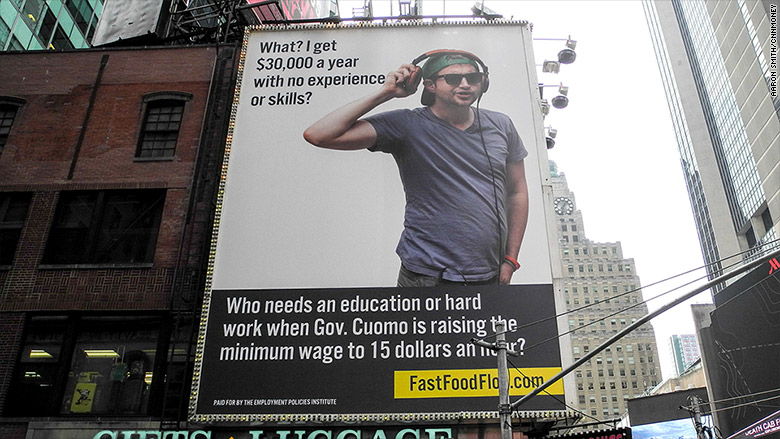
Don't Vote for a $15 Wage - Earn It

I am always a little shocked and appalled when I watch politicians wave around some economic policy that sounds good on the surface as long as you don't consider the implications like it's the silver bullet that is going to fix a crisis that has actually been improved within a historical context.  So naturally, I had a gut check reaction when I heard that all three of the Democratic nominees were blindly supportive of this $15 minimum wage. 

Free market economists argue that the ideal minimum wage is $0, and that the market should be free to determine what the appropriate wage is based on supply and demand of labor.  Maybe that is extreme, assuming that some people would not fight hard enough for a wage they deserve, and that large employers may take advantage of desperate underprivileged populations.  But the opposite of no minimum wage has even more dire consequences.  Corrupt employers already pay below minimum wage under the table, so raising the 
minimum wage to impossibly high levels for unskilled workers would only
lead to more undocumented workers and a black market for labor.  In addition, automation of low-skilled jobs is only kept at bay by the cost, but again, increasing the minimum wage to a level that is no longer economical for companies would encourage non-corrupt companies to simply automate more of the work or remove the need for work whatsoever.  Fortune's article suggests one such solution: "Hotels may reduce their tendency to automatically clean the rooms of their guests, and may charge extra for doing so."  There are plenty of other sound, economically-based arguments again the $15 wage, here are a couple articles for reference.  
All that being said, I want to address a very different aspect of this argument.  Imagine a world where you could make the same amount with an associates degree as if you didn't graduate high school at all.  How many young people are going to strive for a degree at all with that lack of incentive?  Then picture this: you go to the store the day after Thanksgiving for Black Friday shopping, and instead of your usual 1.5 hour wait, you are waiting 10 hours to buy that 50% off game system for your oldest son because every customer has to go through a slow, glitchy self-checkout and the store cannot afford seasonal help to assist customers.  Every police officer on duty is escorting customers out of these stores to ensure they are not shot or robbed of their hard-earned presents, meanwhile there are no officers available to attend to that car that slid off the road due to ice, or to check on the house that is being broken into by an armed robber.  What's worse, your teenage daughter has nothing to put on her resume because she was never able to work until she got her bachelor's degree, since stores and restaurants couldn't afford to higher high school or college kids. 

I believe that young people deserve the right to work for single digit wages.  They deserve the opportunity to get seasonal jobs for while school is out to earn some extra money for the holidays or to save up for a car.  They deserve to learn what it takes to earn money, and to learn the value of the dollar. 

Proponents of the $15 minimum wage are assuming that people making minimum wage are supporting whole families on that, and therefore they need more money to do so.  While the premise may have some truth to it, I think the $15 minimum wage is exactly the WRONG answer to this problem.  What we should be looking to do instead is to figure out why people are trying to support a family without having gotten any useful education or employable skills, how we can reverse this problem, and how we can prepare young people to earn more than minimum wage before they have a family.  For example, programmers make well above minimum wage, and there are literally dozens of free resources already available online that can help individuals learn how to program.  What's more, there is a shortage of programmers and they are only
going to be in increasingly high demand as technology becomes more integrated into everything we have and do. 

In my estimation, it would be far less detrimental to the economy to provide an educational stimulus to allow minimum wage adults to take a paid sabbatical to study programming so that adults that truly need a higher wage to find better paying jobs.  Even this seems like an example of wasteful government spending, since these programs are already free and accessible by anyone with a computer connected to the Internet (which is available for free at the library, if nothing else).  But, this makes more sense to me than the idea of raising the minimum wage to unsustainable levels that will inevitably result in another recession. 

And certainly, programming isn't the only field that could benefit from such an


initiative.  I believe that everyone has potential to excel at something, so if people need more than $8 or $10 per hour, they should seek the kind of help and resources that will get them to the wage they need to support themselves and their families, in whatever field they are passionate about and/or will excel at.  If we start handing out $15 per hour paychecks (or any amount that ensures support for a full family) to people flipping burgers or bagging groceries, what incentives will they have to contribute their deeper, more profound gifts to society? 

Before I belabor my point too much, I will conclude that we should maintain service and labor jobs at wages that make sense for the kind of work being performed, and that we should make the abundant and accessible resources to improve one's financial situation more prevalent.  By doing so, we will lift up the nation and raise the entire productivity of the country, rather than dumbing down our society and pretending that we're spreading wealth to the poor while actually robbing our neediest of the opportunity to work at all. 

Tuesday, June 16, 2015

Creating Pin-able Graphics (Hack)

Pinterest is an amazing home of flowing ideas and viral images perpetuated by self-described addicts.  Known for identifying more recipes and crafty ideas than one could ever conceivably actually create in a lifetime, Pinterest is also a great place to share business ideas, especially for entrepreneurs, and lifestyle ideas.  Pretty much anything with a picture can be pinned, and that's what makes Pinterest so powerful - its a way to organize, keep and refer to ideas, places and things we saw in this insanely overwhelming information overload we call the internet.  I have written previously about how to put Pinterest to better use, because I believe that its potentially has been largely untapped for individual users.  Now I'd like to spend some time on how to drive traffic to places outside of Pinterest by creating awesome graphics that show up well on Pinterest.   

Step 1 - Tools

As with many graphic design requirements, I use PowerPoint to collect images and I want to use and manipulate them into a collage of text, shapes and pictures.  You may also want to check out canva, at least for inspiration or to throw something together quickly, but in my opinion it is not ready as a tool for complete creation yet.  My recommendation for Pin-able graphics is to start with a blank presentation and use the Design ribbon to set the Slide Orientation to Portrait (longer vertically).  

Step 2 - Sizing

Limit yourself to about a third of the page.  If you don't have Guides and Gridlines activated, right click on the background to do so.  Set the vertical guideline to 1.25 to the left of its default center position (drag it to he left until it says about 1.25).  This little box is your working area. 

Step 3 - Search

I use Google images search to find the images I need, or at least inspiration.  If you plan to overlap a few simple images, you may want to use the Search Tools
to limit your search by Color to Transparent.  What this does is essentially filter on images that Google thinks has a transparent background - its not always perfect but it will get you better results in general. 

Step 4 - Crop, Remove Background, Rotate, Manipulate

Once I find an image, I copy it and paste it into my PowerPoint slide.  Then I may want to crop the image or I may need to do some processing to remove the background.  If there is a background that you want to remove, the most recent versions of PowerPoint have a powerful Remove background function under the Picture Tools ribbon (note, you must have the image selected for this ribbon to be visible).  Older versions of PowerPoint have a Set Transparency Color function available, in which you just select the background color and it makes it all transparent.  I'm also a fan of rotating graphics slightly to give them a more exciting look.  Sometimes keeping them straight portrays a more sleak, streamlined look, which may also be what you're trying to accomplish, so play around with rotating and decide which will work best for you. 


Step 5 - Keep Building

I repeat this until I have the images I want to work with.  Then I add text to go along with the graphics.  Consider putting the text at a slight angle with the rotation tool, especially if you left your graphics straight.  Or add shadowing or outlines to the text to make it stand out from the graphics.   

To make really long pins in Pinterest, build down that section we created to the end of the slide.  I caution not to make the graphics much longer than this, as really long pins tend to be annoying to users and will graphically be shortened

so you lose part of the graphic if it gets too long.  Keeping it about the length of the slide ensure that most of your graphic will be seen, and it will take up a nice amount of the screen when viewed on a board or on the home screen of Pinterst users.  

Step 6 - Export, Place it and Pin it

When you are happy with how it looks, you Ctrl+A to select all, and copy, and then open Microsoft Paint and paste it in there.  Be sure to adjust and crop as needed, and then save the graphic.  Place the graphic where you want the Pin to direct users to on your webpage, and then Pin it to one of your boards to get the ball rolling. 

Thursday, January 15, 2015

What Musicals Can Teach Corporate America

I have always found inspiration, encouragement, and wisdom about life in musicals.  But it occurred to me not too long ago, that big companies could also learn a thing or two from the life lessons our on-stage heroes learn through song and dance.  Here are a handful of lessons I came up with.  Please feel free to add your own in the comment section below!
 
Pippin
While every company can dream about being extraordinary, and enter into spaces they know nothing about, only to fail, not everybody can be the next great battle hero (or facebook, or Apple).  Still, it is better to live, to make, and to have, then it is to mount a burning platform and die. 

Music Man
Be wary of the manager who comes along saying that there's something very bad going on here, and he has just the solution.  The manager who commands a reorg is the Music Man of the corporate world.  He need not be accountable for the results, because he will be on the next train, to the next town, before you can reach him with tar and feathers.  Oh, YOU got Trouble with a capital T when the Music Man comes to town.

Wicked
Sometimes perception becomes reality.  Acting on the best intentions can be misunderstood, misinterpreted, and made to look wrong.  However, being popular is also lonely and disappointing.  It's not enough just to do the right thing for the right reasons, or what you believe to be right, and it's certainly not enough to look good on the outside without actually doing good; charisma and presentation are are just as important as the actions.  

Joseph and the Amazing Technicolor Dreamcoat
Even in the face of the most extreme adversity, you can still rise to fulfill your dreams.  Be good and honest and good at what you do, and others will recognize your value.

Shrek the Musical
It doesn't matter what you look like on the outside; it's what's inside that counts.


Pirates of Penzance
When you make a commitment, make sure it's the right one, and that the terms are correct.  Catastrophe can be avoided with a little double checking and due diligence.  

Rent
Treat people right, because you never know when you'll need them to be on your side.  


Sunday, July 13, 2014

My 30 Under 30 List

My closest friends, family and colleagues know that I was really not looking forward to my 30th birthday.  I have made a habit of celebrating big almost every year until now.  The reason for my downtrodden mood is that my "life plan" had me so much further ahead than I am now.  There are many reasons why I'm not where I wanted to be at 30, the housing bubble and subsequent recession having a large part in it, but also my pursuit of other priorities in lieu of focusing on my career, and such.  I have many things to be thankful for and do not want to seem unappreciative; I just wasn't ready to be done with my twenties.  I aspired to be one of those great prodigies listed in the 30 Under 30 lists of 20-somethings doing amazing, world-changing things.  On the other hand, I am told that many people enjoyed their 30's more than their 20's, which is a little reassuring.  Since I can't change the past, I wanted to put my best foot forward as I head into this decade, so I've decided to make my own 30 Under 30 list, but this is a list of the 30 amazing things I accomplished, participated in or experienced before turning 30.  My hope is that this list can inspire, in me and in others, a hope for what can (still) be accomplished! 

30.  I followed my dream of moving back to Arizona
I never expected my family to follow, although I'm thrilled to have them living so close now. When I was in junior high, I decided that I would move back to Arizona as soon as I could.  I was accepted at both UA and ASU, and picked ASU for a number of reasons (including eh hem, my UA alumni parents recommending that the program was better at ASU).  Although it was scary and sad to leave all of my friends and family behind, half a country away, it was a big step in my independence and I started a new and wonderful life here.  I love Arizona, and although I talk about moving elsewhere all the time, I always intend it to be a temporary situation until I move back to Arizona again.  This is home, and I'm glad I made the leap to settle out here. 

29.  I have made an incredibly ambitious Life List, and have knocked off a number of those items every year since
As a planner by nature, I am always thinking of what else I could do to be awesome!  So a 150-item Life List seems like a must to me, and I have enjoyed knocking those things off from time to time.  Sometimes they are planned, like signing up for surf lessons, and some of them just happen to me (although I certainly always try to put myself in the best spot possible to make things happen), like when I rode the cable cars in San Fran, forgetting they were on my list.  As long as I continue knocking things off my list, I feel like my life will never be boring or routine.  


 28.  I have my name up on walls in public places 
There's a very strong ego in me that likes to see my name immortalized.  I love supporting projects on Kickstarter, there are some fantastic ideas out there and great people behind them!  One of my favorite things to do is to back Kickstarter projects for breweries, especially when the reward involves putting my name up on the brewery wall or somewhere in the tasting room.  If you're thirsty in Tucson, I highly recommend Sentinel Peak Brewing Company, not just because my name is up on the wall there, but because the food and beer are unbelievably good!  One of my favorites in Arizona already, and they're just getting started.  Up in more northern Arizona, there's a little brewery serving beer in Camp Verde at an awesome foodie spot called The Horn.  The Camp Verde Brewing Company is right next to The Horn, and I peaked in through the window to find my name on the wall there, too.  Other breweries are opening up around the US all the time, and a select few will have my name on them as well, and I think that's swell. 

27.  I have seen some awesome Broadway musicals, including Wicked actually
on Broadway
Rent, Miss Saigon, Les Miserables, Chicago, Joseph and the Amazing Technicolor Dreamcoat, The Lion King, Fiddler on the Roof, Shrek the Musical, Porgy and Bess are all shows I've had the honor and privilege of seeing live on Broadway tours.  Most of them I watched at Gammage, with a few in Chicago and elsewhere.  Wicked is the only musical I've seen actually in New York on Broadway, and I've seen it there twice as luck would have it.  There's something very special about seeing one of these musicals on Broadway, and I can't wait to go back and see some more!

26.  I have earned multiple professional certifications, including a Six Sigma Black Belt, and an MBA
As someone who was not big on homework or studying or school in general when I was younger, I certainly have changed my tune since graduating with my IE degree.  I earned my Six Sigma Green Belt while interning before my senior year of college, and after a year of working professionally, I got fidgety and wanted more.  So I immediately dived into both the APICS CPIM and a Six Sigma Black Belt program.  One of the most "executive"-like activities of my career thus far was when I was flown out to California for a final Black Belt presentation in front of dozens of Presidents and VPs.  The CEO of the host company, my supplier at the time, was even in my class and I had helped him as an informal tutor throughout the Black Belt training.  My VP recognized my accomplishment by promptly sending me to Texas to fix some warehouse operations, which I did before leaving the company less than a year later.  My Dad and I studied for the APICS CSCP together, which was interesting to say the least, and we both passed the exam and earned that certification at the same time.  I had my Black Belt recognized at Honeywell, which is a major accomplishment in and of itself because of the rigorous requirements of Honeywell Black Belts. 

25.  I composed and arranged music to be performed in a musical
With a theater major as a roommate, it was probably inevitable that I would be pulled into a musical audition in college, especially after she learned that I had been in musicals in high school and junior high.  What I didn't expect was the possibility of writing and arranging the music for said musical.  But shortly after practices started, our director asked if anyone knew a music composition major or other student who would be willing to tackle such a project.  I didn't know any music composition majors, but I had taken a music theory class my senior year of high school, and I was pretty good at it.  I attribute my math skills to that.  I raised my hand timidly (yes, there was a time I wasn't so cocky and bold as I am today), and said so.  My director, looking at mostly theater major and minors and then measuring up the industrial engineering major in the group, certainly had reservations of my musical writing ability, but gave me a shot anyways.  That's all I've ever needed, I find, is a shot.  In writing, in painting, in martial arts, and in dance.  Give me a shot and a reason to succeed, and I can do it.  I came back within a day or two with a full piano and vocal arrangement with three part harmony on the song he gave me to try out, and he was impressed, if not a bit overwhelmed at the complexity of vocal harmonies.  I toned down the harmony at his request, and continued working on the full soundtrack for the musical.  It was a bit of an unconventional theater group, as we didn't have parts assigned to us yet, so I had no idea who would be singing the parts even as I was writing them.  Once the music was complete, I ended up getting the part with the coolest solo in my opinion - an eerie scene where the music goes from minor to major and back again.  I don't think I've met anyone who has written music and performed it in a musical in front of an audience, and certainly nobody with an engineering degree. 

24.  I have hiked "The Wave"... twice!

And I would do it again next chance I get!  "The Wave" is one of the most stunning best kept secrets in the area.  It's right on the border of Utah
and Arizona, and it's restricted to a very difficult permitting process in order to preserve its beauty as best as possible.  It is one of the most photographed areas of Arizona, and yet, few people are in the know about it.  I have had the honor and privilege of hiking there twice, and its beauty never ceases to amaze me! 

23.  I put $100 down on red in Las Vegas, and won! 
A hundred green may not be a fortune, but I'm not a big gambler.  It would have been a little depressing if I had lost, but I hit it at the right time and it was just a neat little bet that turned into a fun little story. 

22.  I inherited the bar my Grandpa built

I'm a pretty modern style girl, and I have very little patience for antique shopping and hand-me-down clothes.  But my late Grandfather was a skilled hobbyist carpenter, and made some beautiful pieces.  I am so glad I had the audacity and insight to ask for the bar, because that piece, now situated happily in my home, is a fantastic memorial to him and my Grandma, who always celebrated life with friends, love and good times.  It was a big part of my childhood, when I would pull myself up on a bar stool and say, "Shirley Temple, please!"  And it is a reminder of their lives and an inspiration to always celebrate and enjoy even the littlest things. 

21.  I have sold commissioned paintings
I mostly paint for myself, but I have made a number of paintings for my family members and friends, and it thrills me to think of my paintings hanging in the homes of the people I love.  I'll reiterate that I don't think I'm an overly creative or talented painter, I'm a hack.  But I can hack some pretty cool stuff, I think, and it confirms it for me when others want it.  One of my sisters' friends liked the painting I did for my sister, so she asked me to make a similar but different one for her, and paid me for my trouble.  That, to me, is a secondary measure of success! 

20.  I *did* Spring Break in Cancun
Before I graduated college, I realized I hadn't yet played the part of the drunkass college kid on spring break in Mexico.  So I would, naturally, not be satisfied with my college career without this opportunity.  Senior year I made it happen.  A couple friends and I booked a trip that lived up to its expectations.  We had very little plans, we were total amateurs, really, when it came to partying for Spring Break.  But luckily, we met up with a threesome from Kentucky who were much better at this, and we piggy backed on many of their excursions and adventures.  It was such a fantastic time, that when we were supposed to be at the airport to go home, we were sitting on the beach relaxing.  Quite a mess we got ourselves into, and such a perfectly typical Spring Break story that everybody just laughed at our stupidity. 

19.  I have tutored and taught classes effectively
I started teaching for APICS as a way to get over my fear of public speaking.  But so much more than that, I always aspired to some day be a teacher of some sort, not for kids, but for adults.  Since I started teaching, I have taught a number of supply chain classes, including my own curriculum for an Excel course geared towards supply chain professionals.  Nothing makes a teacher happier than to hear that her students, who have taken Excel classes before and got little to nothing out of them, finally got it.  While I may also not make a career out of teaching any time soon, I feel empowered to speak in public and to teach, and I have passion for sharing my insights and expertise in all sorts of ways. 

18.  I have made money with my writing
I never expected writing to make me rich, but I have always enjoyed writing.  So to be employed as a freelance writer, and actually make decent money doing it, was a big deal to me for a little while. Now I am mostly blogging and writing articles for various venues on a volunteer basis, but I know I could always do more freelance writing if I ever wanted to go back to it.  I really enjoyed seeing what was popular and what fell on deaf ears, what got reactions (good and bad) and what got the attention of large corporations.  Being able to write is a powerful skill, and I wish everyone would take it seriously in school and in life. 

17.  I have skiied some tough slopes in Arizona
It's been a while since I've gone skiing, and I definitely moved to Arizona because I don't like the cold, but it is pretty awesome that a four hour road trip takes us to some pretty wild ski slopes.  I'm not the best skiier, either, I usually complete a big hill by throwing myself onto the ground and toppling to a stop.  But the thrill of skiing is something that not everyone has or gets to experience in their lifetimes, and I am glad I have had a number of experiences on the slopes. 

16.  I partied hard at Mardi Gras
Not only did I return from Mardi Gras with a black eye and a stitched up eyebrow, I had the stories to back it up!  The very last night I was there, most of my girlfriends were ready to call it a night, but one girl and I wanted to stay out.  The only problem was, we were out of money and the dance club we wanted to go to had a cover charge.  We figured that if we went back to the hotel now (which was in walking distance), we probably wouldn't come back out.  So I told her, very matter-of-factly, okay, we'll find two guys to pay our cover and buy us drinks, and we'll dance with them for the rest of the night and then ditch them.  She trusted me, and not a minute later, a guy approached me admiring one of the white bead necklaces I had on.  I told him he could trade it with me if he could find a Jameson necklace for me.  He found a girl with a Jameson necklace and persuaded her to give it to him, and then came back to me to make the trade.  I may have made him work a little more for it, but you know how it goes.  After talking with him for a few minutes, he told us that he was going to get his buddy over here to meet us, and they would take us somewhere.  The two guys returned and triumphantly announced that they were going to get some more money at the ATM, and then they would take us to the dance club - the same one we had wanted to go to.  We hadn't even told them we wanted to go there, nor did we mention we were out of money.  Just like that, they whisked us away, got us into the club, bought us drinks, and we danced with them until we were just too tired to stand.  Then we hugged them good bye and headed back to the hotel.  When we were out of sight, my friend grabbed my hand and told me in amazement, "It was just like you said!  We'll find two guys, they'll get us in and buy us drinks, we'll dance with them and then we'll ditch them!  How did you do that?"  I was really amazed too, it was quite lucky really, but I had no problem taking the credit.  Then, still holding hands, we skipped back to the hotel joyously!

15.  I (barely) conquered Flat Iron
Only the most advanced hikers in the area have tackled and successfully completed this monstrously difficult hike, and I am neither advanced nor overly athletic.  Needless to say, it was the most physically demanding thing I think I've ever done.  But I never officially gave up, although I wanted to a number of times along the way.  The worst part was, unlike most hikes which are harder on me going up because of my asthma, this hike is severely more difficult coming down and I felt like it nearly killed me after I had already been to the top!  Every step was a huge vertical distance, so it took great leg strength and solid knees and ankles to get down.  My asthma wasn't bothering me on the way down, but I was shaky and weak, and nervous about slipping and falling the rest of the way down.  I do not intend to tackle this hike again anytime soon, but I know what it takes and I will be better prepared for it if I ever decide to head up there again.  The plus side: the view was very rewarding, and I wear that memory as a badge of honor and perseverance.  It's definitely bragging rights among hikers here. 

14.  I have designed something and brought it to life via 3D printer
Programming and writing are both nice, but there is nothing like the experience of seeing something from your mind's imagination become an object you can hold, touch and use!  Even though I am just starting my adventure in 3D printing, already I have made some pretty neat things, and started to understand both the limitations and the awesome power of this new technology that is promising to transform business, space travel, health care, and the culinary arts as we know them.


13.  I painted a bad-ass mural
In fact, I painted a couple pretty cool murals, but the one I'm most proud of is the vibrantly colored circuit design in my project room.  Every wall is a different color, and the pattern changes colors as it moves to the different walls.  It is a huge-scale, large graphic design that just makes me happy.  I was never overly gifted in creating physical art, so I learned how to hack the talent instead.  Guests to my house think I'm a bit of an odd ball in my design style, but I think most people appreciate the artist value and apparent talent. 

12.  I became a "serious" swing dancer 

Its strange how some things evolve throughout your life, even if you don't recognize it until you look back.  Artistic movement seems to have been a part of my life since I was very little and starting in gymnastics (actually I think I had some toddler dance classes before that even).  While I was discouraged to pursue gymnastics due to my height, I found other outlets in show choir and school and church musicals.  In high school, I took gymnastics back up briefly, and then pursued jazz and ballet classes.  In college, I took a swing dance class and that seemed to hit the spot.  But I soon found myself without a dedicated partner, and no friends interested in dancing, and the passion faded.  I got back into it though in my late 20's, and that is where I met my boyfriend, and we have been dancing ever since.  I would say the last two years have been the most dramatic growth for me as a dancer, and I consider myself a real swing dancer now.  Having recently joined and performed with a dance troupe, I feel like my position has been solidified.


11.  I survived a pick pocket alone in the middle of Shanghai
In a world where an American woman could disappear without a trace, I was having a great time until I found myself without friends and colleagues nearby, without money, without an ID, without my hotel key, without a phone, and without a credit card (my phone and ID weren't stolen, I didn't take them out with me that night, but the rest was stolen).  It really killed the mood of an otherwise fantastic evening mingling with the locals while traveling through China with my MBA class.  I quickly used what asset I did still have in tact, my flirtatious personality.  I found a well off local (actually I discovered I had been pick pocketed when I was hanging out with him, so I started out by accusing him), and eventually persuaded him to give me a ride back to my hotel (he had a driver), threatening him the entire time that I knew kung fu and I would kill him if he tried to take me anywhere else but my hotel, and then I used his phone to call my credit card company in America and cancel my card. All in all, it may not have been the smartest move, but it worked out and I came away with a great story to tell.  I ultimately wasn't, going for the pun here, Shanghai'd.

10.  I have programmed some amazing macros and pieces of software
I never wanted to be a programmer, absolutely never.  But, much like how artistic movement has always found a place in my life, programming has cropped up again and again.  It's not a passion that drives me to program; quite the opposite, I despise it sometimes and I rarely want others to know I'm any good at all.  It's the sheer power of it; the possibilities programming unlocks are nearly endless.  And as the gap between the virtual and physical closes with CNC, CAD and 3D printing technologies, I think programming will become all the more important.  Programming hit me early, before I really understood what I was doing.  Since this article is about turning 30, I feel comfortable revealing my age a bit here: the first computer my Dad brought into our home was a Windows 3.1 machine with DOS.  I didn't do much creative work in Windows, but I had some games that ran in DOS that broke.  So at the age of maybe 4 or 5 at the most, I finagled my way into the code of these DOS programs and somehow intuitively identified the bugs.  I poured through probably thousands of lines of code, fixing what I saw was the bug (I have no recollection of how I figured it out, I only remember implementing the fix), and actually got the game to work again.  Once I accomplished that, I figured there was no reason I couldn't just write my own game, so I started on a dog-chases-cat game which never got completed because, well, I was five and had no idea what I was really doing.  But it had the starting essence of a program, i.e., it ran and did some stuff.  I found myself programming again when I was in high school, taking math classes with a programmable calculator.  I got bored and started writing programs for it (some legit and some for cheating purposes, but in the process of programming something to cheat, I actually learned the dang material and didn't end up needing it).  In my freshman year of college, I took two java classes which were required for my major, and also programmed in Basic X for our robot class.  I was the only person in the freshman robot class to create a "learning" robot which had an intelligent decision matrix instead of the general repetitive one.  I would later become a whiz and tutor for programming simulation of stochastic systems in Fortran 77.  My internship at Honeywell is where my programming really took off for the first time, when I challenged myself to create a stand-alone application in Visual Basic to help solve a problem in quality.  Since then, all of my jobs have put me in a position where programming in VBA to make my job easier just makes sense, and I've become known as the Macro Queen.  But again, I'm not a programmer.  I wish I had paid better attention and tried harder in my java classes, and I hope everyone who reads this sees the value of learning programming for themselves.  It's a talent that sets anyone ahead of their peers. 

9.  I created a sanctuary in my bathroom
Working with a fairly tight space due to my house being an older house, I managed to create a bathing sanctuary that few five-star hotels could match.  In so many ways, this shows the perfect duality of my being spoiled and me working hard to get what I want.  With the help of friends, I removed the old tub and all the hideous 70's tile surrounding it, installed a deep tub with water jets, routed the plumbing to the side of the tub to equally distribute the hot water (I always hated it when the water was hot by my feet and cold by my back), and installed a waterfall faucet.  When I decided that the water got too cold in the winter, I installed a heater on the jets.  And when I decided the water then got too hot in the summer, my friend and I rigged a thermostat to turn the heater off at a certain temperature, and turn it back on when it got cooler again.  Princess and Engineer all in one!


 8.  I got to travel to Alaska with my entire immediate family
As my sisters and I entered adulthood, we all became very different people.  So it is unlikely that we will all ever agree on another trip like we did for the Alaskan cruise and roadtrip.  It was a magnificent time, seeing whales, singing karaoke, playing trivia, seeing our Grandma's childhood island, driving around Alaska and seeing wildlife from mooses to bears and bald eagles!  That was probably the trip of a lifetime as far as my family goes.  It had been in planning for many years, and when it finally came to fruition, it lived up to its high expectations and so much more!

7.  I got one of the first 500 Chevrolet Volts
I had been watching the Chevy Volt since early in its inception, and was part of the forum which has now become my go-to resource for all things Volt and EV.  So when GM finally announced which dealers it was going to release the first Volts too, I got to work contacting my closest dealers in California and got myself a number 3 spot on the waiting list!  When I picked my beautiful red Volt up in January 2011, I fell in love with it immediately; it was everything Chevy promised it would be and so much more!  My Volt was the first to be registered in the state of Arizona, and has been put through its paces with the summer heat of Phoenix and my constant road trips and excessive driving. 
 

6.  I studied kung fu at the Shaolin Temple in China with the warrior monks  
I make it sound way more intense than perhaps it deserves, but really, how many people can say the phrase above?  I worked really hard in my kenpo class to be able to test for my purple belt in China, and I succeeded.  The test was intense and had some great moments (like when I knocked my male opponent into the red wall of the temple, so he looked like he was bloody even though he really wasn't, and when I got foot prints all over my opponent's black gii while being evaluated by the 10th degree black belt leader).  Afterwards, even though I was completely drained, physically and emotionally, I allowed myself to be interviewed by a Chinese newscaster via translator, posed in lots of pictures with Chinese tourists (and especially with their babies, they loved that), and was awarded a very special gold Buddha pin by the Abbot of the temple himself - a really big deal! 

5.  I studied abroad in Japan
Looking back, it felt like I was there for a year or more, but it was only about 6 weeks.  But every day felt like a month of learning and new experiences, and I made some incredible memories I will never forget.  If anyone ever has the glimpse of an opportunity to study abroad, I say take it!  That summer made a lasting impression on me that working a summer job or taking classes at home would have paled in comparison to. 

4.  I transformed from a spoiled, finicky eater to an adventurous foodie
I credit my travels to Japan and China for really breaking me of my inability to swallow unfamiliar foods.  My poor Mother coped with 18 years of me requiring separate meals or simple foods like pizza, burgers, and chicken nuggets.  For several years after I had gone out on my own, I astounded her with the foods I had seemingly magically learned to enjoy: potatoes, rice, vegetables.  I still don't like fish or egg, although my director at work makes a quiche that's too good not to have piece. 

3.  I bought my own house
After only a few years suffering through apartment living during college, and greatly as a result of seeing HGTV at my parents' house while visiting, I yearned for a fixer-upper of my own that I could tear down and rebuild and make amazing.  So about two months after graduating college, I had found a house (and inspected it on my 22nd birthday) in Mesa, Arizona, and made the leap into home ownership.  It has definitely been an adventure learning electrical and plumbing, and getting my own tools and a massive tool chest to store and organize it all in.  Early on, every project required a new tool to be purchased.  I felt victorious at the first project for which I had every tool needed to do the job right. 

2.  I earned an Industrial Engineering degree (and in four years)
Perhaps one of the most astonishing feats of my life was the four exhausting and incredible years I spent studying IE at Arizona State University.  I will never forget an advisor telling me how I couldn't possibly take 17 credit hours in one semester, and how I should give up hope on graduating in four years, citing that "nobody gets an engineering degree in four years".  Well, it would certainly be hard without taking enough credit hours per semester, I agreed, but I did both!  I took between 16 and 21 credit hours per semester, plus some summer school and a summer internship, and graduated in four years with an Industrial Engineering degree.  I learned then that the best motivation for me is being told I can't do something!


1.  I started my own company
I knew it wasn't a million dollar idea, but I set out a few years back to start my own company, and I did!  I thought I had reasonable expectations going into it, but it was even harder than I anticipated. Still, it was a fantastic experience, I learned some great business lessons, and I made lifelong friends in the process.  I have considered and pursued additional business ventures to varying degrees, and I do hope to start and run another company again in the near future, but having done it once (and before I was 30) is really quite amazing!


I will make a note here that I had a hard time numbering the "top 10" of this list, because those are the experiences that I've drawn from most in my life, and they are all valuable in different ways.  I thought I might be challenged to come up with 30 experiences and accomplishments that I'm proud of, but it turned out to be pretty darn easy, and that in and of itself makes me feel a lot better.  So, the next time you or someone you know is down about aging, I would definitely recommend this exercise as a way to feel good about getting old!