Showing posts with label economics. Show all posts

Friday, June 5, 2026

Houston, We Have a Valuation Problem: My Flight Plan for the SpaceX IPO

Guys, I don't know if you've been tracking that SpaceX is going public next week, but while that would be newsworthy in and of itself, it's causing a lot more debate and churn for the wrong reasons. Disclaimer: The below was written with AI after quite a bit of investigation and assumptions played with, to summarize my findings. I've edited it lightly as needed. 

The upcoming market debut of SpaceX under ticker SPCX is shaping up to be the ultimate masterclass in financial engineering. With a fixed target price of $135 per share, the company is aiming for a stratospheric $1.75 trillion valuation.

Let’s be down-to-earth for a second: from a pure, traditional fundamentals perspective, this valuation has completely left the atmosphere. Independent analysts are tracking a realistic fundamental baseline closer to $780 billion. 

Under normal laws of market gravity, a heavy payload like that would suffer a "rapid unscheduled disassembly" the moment it hit the secondary market. In the long run, this launch is simply not likely to "take off" on fundamentals alone. In fact, if you strip away the institutional life support and value the company strictly on its actual revenue trajectory and organic growth, my model points to a sobering, unmanipulated fundamental floor of just $45 per share.

But Elon is a master of staging his financial boosters. What makes this IPO fascinating isn't just the rockets—it's how the listing is structurally engineered to defy gravity and keep the stock hovering in a high orbit for an extended period.

The Stage Boosters: How the Price is Being Buoyed

Musk and his underwriting flight crew aren't just letting this stock free-fall. They’ve built an invisible mechanical scaffold to delay the inevitable re-entry burn:

  • The Day 15 Nasdaq-100 Squeeze: SpaceX is on a trajectory for fast-track index inclusion. This creates a tractor beam for passive index funds (like the QQQ). They don't get a choice; they are legally forced to vacuum up millions of shares at the closing bell on Monday, July 6, 2026, creating an artificial spike in buying velocity.

  • The 30-Day Underwriter Thrusters: For the first month, the investment banks act as mission control’s ultimate safety net. If retail selling pressure threatens to drag the stock below the $135 launchpad price, the underwriters fire up their Greenshoe stabilization pool to artificially defend the floor.

  • The 180-Day Supply Air Lock: The biggest threat to a highly hyped tech launch is an immediate flood of insider dumping. By sealing early investors and employees behind a strict 180-day lockup agreement, the available trading float stays restricted all through the summer and autumn.

Because of these sequential boosters, the stock won't just fall like a stone on Day 1. Instead, it’s going to execute a highly managed, jagged descent over the next several months as each safety stage detaches.

My Tactical Flight Plan

I’ve mapped out a two-pronged execution strategy based on my personal assumptions. The mission parameters are simple: ride the momentum wave without getting burned on re-entry.

Stage 1: The Core Allotment (The Anchor)

  • The Action: Confirm an indication of interest on Thursday, June 11, to secure a small number of shares in the allocation at the fixed $135 IPO price.

  • The Logic: This is my pay-to-play, FOMO-buster, not to be left out of history. I’ll be holding these through the turbulence and leaving them completely untouched during the restricted 15-calendar-day flipping window to avoid an immediate ban from the broker

Stage 2: The Open Market Sniper (The Momentum Play)

  • The Action: On Friday morning, June 12, I’m entering a strict Buy Limit Order at $147 for a larger volume of shares (based on my budget and level of risk aversion) to prevent getting filled at a horrific, high-altitude price spike. I validated the number and price based on my assumptions of a potential downside price of $127 and a potential upside price of $185.

  • The Shield: The absolute millisecond those market shares execute (once the Opening Cross finishes around 10:30 AM CT), I am immediately attaching a GTC Stop-Loss at $127. I'll manually isolate that specific open-market lot so the broker doesn't accidentally sell my IPO allotment first.

Adjusting the Trailing Thrusters

If the stock climbs, the playbook switches from static defense to dynamic profit-locking:

  1. The Breakeven Lock (June 22–23): As Nasdaq evaluates the market cap, I'll trail my stop-loss up to my exact entry price of $147. If the engine stalls here, I walk away with zero principal damage.

  2. The 8% Trailing Ratchet (Late June): Once the official index inclusion notice drops, I’ll deploy an 8% Trailing Stop Order. This gives the stock enough oxygen to breathe through minor lulls while automatically locking in paper gains if the market turns toxic.

  3. The Final Ejection: On Monday, July 6, at exactly 2:50 PM CT, I will manually abort the trailing stop and execute a market sell order for any shares I have. This dumps the position directly into the absolute peak of forced passive fund liquidity, right before the mandatory buying pool evaporates.

The 2027 Splashdown: Complete Capitulation

What happens when the artificial atmosphere completely leaks out? According to my extended timeline, the real gravity check arrives on December 10, 2026, when the 180-day insider lockup expires and millions of employee shares hit the open market.

Going into 2027, when the stock is entirely unmanipulated by institutional IPO mechanics, I anticipate a total capitulation down to a fundamental market floor of ~$45. I intend to have my trading capital safely back on the ground long before that hard landing.

What do you think? Am I missing something that justifies a market valuation that has never been seen like this before? Let me know in the comments if you're going to buy and what your strategy is! 


🛑 Ground Control Disclaimer

Let's clear the air: I am an aerospace and business professional who likes playing with numbers and AI, not a licensed financial advisor or investment expert. High-profile, hyper-hyped tech IPOs are financial wildcats. Volatility on Day 1 will be violent, and structural assumptions are never a guarantee of future profits. This flight plan is strictly my personal strategy for managing my own risk capital. Do your own due diligence, evaluate your own risk tolerance, and never risk money you aren't prepared to see vaporize on the launchpad.

Sunday, January 17, 2016

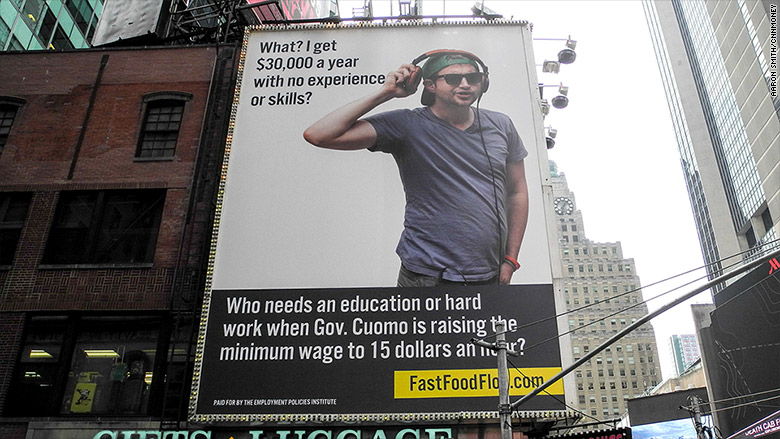
Don't Vote for a $15 Wage - Earn It

I am always a little shocked and appalled when I watch politicians wave around some economic policy that sounds good on the surface as long as you don't consider the implications like it's the silver bullet that is going to fix a crisis that has actually been improved within a historical context.  So naturally, I had a gut check reaction when I heard that all three of the Democratic nominees were blindly supportive of this $15 minimum wage. 

Free market economists argue that the ideal minimum wage is $0, and that the market should be free to determine what the appropriate wage is based on supply and demand of labor.  Maybe that is extreme, assuming that some people would not fight hard enough for a wage they deserve, and that large employers may take advantage of desperate underprivileged populations.  But the opposite of no minimum wage has even more dire consequences.  Corrupt employers already pay below minimum wage under the table, so raising the 
minimum wage to impossibly high levels for unskilled workers would only
lead to more undocumented workers and a black market for labor.  In addition, automation of low-skilled jobs is only kept at bay by the cost, but again, increasing the minimum wage to a level that is no longer economical for companies would encourage non-corrupt companies to simply automate more of the work or remove the need for work whatsoever.  Fortune's article suggests one such solution: "Hotels may reduce their tendency to automatically clean the rooms of their guests, and may charge extra for doing so."  There are plenty of other sound, economically-based arguments again the $15 wage, here are a couple articles for reference.  
All that being said, I want to address a very different aspect of this argument.  Imagine a world where you could make the same amount with an associates degree as if you didn't graduate high school at all.  How many young people are going to strive for a degree at all with that lack of incentive?  Then picture this: you go to the store the day after Thanksgiving for Black Friday shopping, and instead of your usual 1.5 hour wait, you are waiting 10 hours to buy that 50% off game system for your oldest son because every customer has to go through a slow, glitchy self-checkout and the store cannot afford seasonal help to assist customers.  Every police officer on duty is escorting customers out of these stores to ensure they are not shot or robbed of their hard-earned presents, meanwhile there are no officers available to attend to that car that slid off the road due to ice, or to check on the house that is being broken into by an armed robber.  What's worse, your teenage daughter has nothing to put on her resume because she was never able to work until she got her bachelor's degree, since stores and restaurants couldn't afford to higher high school or college kids. 

I believe that young people deserve the right to work for single digit wages.  They deserve the opportunity to get seasonal jobs for while school is out to earn some extra money for the holidays or to save up for a car.  They deserve to learn what it takes to earn money, and to learn the value of the dollar. 

Proponents of the $15 minimum wage are assuming that people making minimum wage are supporting whole families on that, and therefore they need more money to do so.  While the premise may have some truth to it, I think the $15 minimum wage is exactly the WRONG answer to this problem.  What we should be looking to do instead is to figure out why people are trying to support a family without having gotten any useful education or employable skills, how we can reverse this problem, and how we can prepare young people to earn more than minimum wage before they have a family.  For example, programmers make well above minimum wage, and there are literally dozens of free resources already available online that can help individuals learn how to program.  What's more, there is a shortage of programmers and they are only
going to be in increasingly high demand as technology becomes more integrated into everything we have and do. 

In my estimation, it would be far less detrimental to the economy to provide an educational stimulus to allow minimum wage adults to take a paid sabbatical to study programming so that adults that truly need a higher wage to find better paying jobs.  Even this seems like an example of wasteful government spending, since these programs are already free and accessible by anyone with a computer connected to the Internet (which is available for free at the library, if nothing else).  But, this makes more sense to me than the idea of raising the minimum wage to unsustainable levels that will inevitably result in another recession. 

And certainly, programming isn't the only field that could benefit from such an


initiative.  I believe that everyone has potential to excel at something, so if people need more than $8 or $10 per hour, they should seek the kind of help and resources that will get them to the wage they need to support themselves and their families, in whatever field they are passionate about and/or will excel at.  If we start handing out $15 per hour paychecks (or any amount that ensures support for a full family) to people flipping burgers or bagging groceries, what incentives will they have to contribute their deeper, more profound gifts to society? 

Before I belabor my point too much, I will conclude that we should maintain service and labor jobs at wages that make sense for the kind of work being performed, and that we should make the abundant and accessible resources to improve one's financial situation more prevalent.  By doing so, we will lift up the nation and raise the entire productivity of the country, rather than dumbing down our society and pretending that we're spreading wealth to the poor while actually robbing our neediest of the opportunity to work at all.