Showing posts with label Phoenix. Show all posts

Monday, May 8, 2017

Arizona Bucket List

They say you never know what you have until it's gone, and that's true of your home's proximity as it is of anything else in life. So many people live near tourist-drawing attractions and never visit because they keep putting it off (like the guy who has lived in Arizona all his life and never been to the Grand Canyon, or the woman who lived in Chicago for decades but never visited Sears/Willis Tower). With our move to Connecticut drawing closer, we put together a list of things to do and places to visit in Arizona. (Side note: I have a broader Life List, and I usually shy away from the term bucket list because I think it's morbid, and I like to focus on living life. In this case, however, our departure from this great state is not death, so I'm ok with calling it a bucket list.)

Anyways, I thought it'd be helpful to share our list for others visiting, living in or moving to Arizona to share our list and some recommendations so others can get the most out of this place I've called home for most of my life.  Some of these places are things we've only done recently as part of checking off our Arizona Bucket List, but I've also added things that we've done prior to planning to move that I think are important to include on such a list.  


Arcosanti

What is it: An experimental community based on combining ecology and architecture.
Who should go: Architects, futurists, anyone interested in sustainability or looking for inspiration. Really, it's just an interesting place for anyone to visit. Kids may not really get it much.
Why you should care: I am always an advocate for challenging the norm and seeing if there's things we can do better. Arcosanti is the epitome of challenging the norm, and while I'm not planning on moving there anytime soon, I did gain some learnings and inspiration you can read about on this blog post.
What to do: The main thing is the walking guided tour. The food isn't very good, but if you're willing to lower your standards for accommodations, I thought it was kind of neat to stay the night and be able to wander around; as a guest you are granted more freedom than a tour participant. We didn't get the Skysuite like I wanted, but it looks really cool.
Getting there: The turn off the freeway just north of Phoenix is well marked, but there is a dirt road to the parking lot. If you plan on staying over night, the road to the rooms is even rockier so I'd recommend an SUV or a vehicle with high clearance if one is readily available, although my Chevy Volt made it ok.
What to bring: Sunblock, insecticide, fly swatter, dress for light hiking.
When to go: We went on the weekend and the community seemed pretty dormant. Our tour guide recommended that people come during the week so you can see the ceramics and metal being worked. I would recommend going in early spring or late fall, since the rooms don't have A/C.
Warning: Food was very ordinary, and there really wasn't much to drink besides water. Accommodations are just marginally better than camping, must have an open mind!


Grand Canyon Skywalk

What is it: The Skywalk is a glass walkway hanging off the cliff and hovering above the Grand Canyon, offering views straight down the sheer rock. It's part of a self-paced kind of bus tour, get off and get on as you please, consisting of three stops. You can't do the Skywalk by itself.
Who should go: Every resident of Arizona should visit the Grand Canyon, and this is a great way to do it, honestly. Great for families.
Why you should care: Definitely not the only way to see the Grand Canyon, but this tour offers some good educational opportunities and the Skywalk itself is pretty unique.

What to do: There were actually a lot of family-friendly activities at the first stop, from horse-drawn hay rides to lasso lessons, and the chance to shoot at someone. We skipped the activities there, but we did go the Restaurant for the ribs meal included with the tour package. It included the meat, two sides, cornbread, a cookie and a founding drink. Based on reviews I've read, I'd speculate that this was the best value. The second stop is the main attraction, but there are also great views on the ledge leading up to the Skywalk, as well as some mockups of various native homes that you can enter and explore. The third stop has more breathtaking views and some hiking/climbing opportunities.
Getting there: Google GPS was very accurate getting us there, nothing special needed to get there.
What to bring: You can take pictures everywhere except on the Skywalk itself, so bring a camera for sure. Good hiking shoes are recommended but not required, I did it in flipflops.
When to go: Don't go if there is adverse weather in the forecast, because they don't refund your tour money if they close the Skywalk.
Warnings: Keep your expectations in check, and it's a great experience. If you recognize who it is run by, and that it's not like a fancy resort or amusement park, you'll be fine. Give yourself time to enjoy all three stops, make the best of it, and the pricetag is more reasonable. The second and I think the third stops had only outdoor seating for your meal, and it is windy out there pretty much all the time, all the more reason to go to the first stop for food.
Other recommendations: I'd also recommend sitting near the front of the bus if possible, because many of the drivers point out rock formations and tell you about the place, and we couldn't hear in the back. Also, since you can't bring cameras on the Skywalk, you can have your picture taken by them, and you can always decide later if you want to buy them or not. Just be patient with the process and enjoy the views!


Organ Stop Pizza
What is it: Silly eatery with a giant organ that is played while you eat. It's much more then just the organ, though, drums and cymbals and marimbas
hang from the ceiling and all around the room, and they get played by the organ somehow, and there's lights and silly puppets and bubbles and such.Who should go: Families and visitors, anyone who wants to be entertained. Good for birthdays and anniversaries, you'll get your name called out.
Why you should care: It's very popular with the snowbirds, so it must be worth a visit.
What to do: Pretty straightforward, order your food, get a table with a decent view.
Cheesy garlic bread was awesome. I wasn't a fan of the pizza.
Getting there: It's easy to find in Mesa, but if there's no parking, realize that it's going to be packed inside.
What to bring: Cash, an appetite and a sense of humor.
When to go: Since it is popular in the winter, you're probably better off going in the summer months, or at least on a weekday so you don't have a long line to wade through. The place gets PACKED!
Warnings: Cash only, bring plenty because the only ATM is one of those generic ones.
Other recommendations: Rather than ordering the nasty pizza, you could just get a few beers here, or ice cream, and still be highly entertained.


Lake Havasu City & London Bridge

What is it: Cute drinking town on the water, surrounding the actual London Bridge.
Who should go: This would be a great place for a group to party.
Why you should care: There's an ounce of history or so.
What to do: I loved our room at The Heat (we booked the Inferno Suite with a view of the London Bridge). There was a bar upstairs, and other bars within very short walking distance, as well as a beer store like 30 ft from our room. You can play corn hole and dance to the dj'ed music at the hotel bar.
Warnings: Don't stay near the London Bridge if you plan to go to sleep early and need silence because the party is a little loud. After one drink each, however, we managed to pass out, so it's not that loud.  If you like to party, then disregard this advice and have a blast!


Low Key Dueling Piano Bar
Who should go: Seems great for birthday celebrations, fun for anyone who likes pop music (of old and current)
Why you should care: Far from an ordinary bar with live music, these artists are catering the show on the fly and adapting to different instruments as needed.
What to do: Get a reserved table upfront if you can. If you're feeling generous, buy the musicians a shot!
Getting there: I prefer taking the light rail into Tempe because parking sucks and then you don't have to drive away from the bars (which cops look for).
What to bring: Cash for tipping... these musicians are awesome and they are happy to take requests... if there's a bill accommodating it. :-D You may want to bring ear plugs, it was really loud in the front and our ears were ringing for hours after.
When to go: Thursday nights were the most fun on Mill Ave back in my college days, I assume that's still a good night to go out. Weekends are fine too.


Spring Training Game

Who should go: Sports fans, Chicago transplants, and people who like to eat and drink and have fun!
Why you should care: Even if you don't love baseball, these are professional athletes playing here in Arizona, and the opportunity to see them so up close should not be squandered.
What to do: Come hungry, there's so much to eat and drink!
Getting there: Light rail is a good alternative to driving and parking, but our tickets came with a parking pass so we used it. 
What to bring: Hats and sunblock. If you're sitting in the grass area, bring blankets and folding chairs if you can.
When to go: Spring, duh! 


Biosphere 2
What is it: At one time, it was a fully-enclosed environment in which eight people tried to prove the feasibility of a self-sustaining ecosystem.  Now, it is (obviously) open to the public for tours and also hosts a number of interesting, albeit less captivating, experiments, in partnership with local schools.
Who should go: Everyone!  This is especially interesting for people interested in things like space colonization.
Why you should care:  Because science!
What to do:  Take a tour.
Getting there: It's just outside of the north side of Tucson, no special vehicle needed. 
What to bring: Sunscreen and a camera
When to go:  They are open most days of the year, just be cognizant of weather when you go, because you will be walking outside quite a bit.
Warnings: In my singular experience, the tour guide wasn't all that informative, so it's good to have knowledge about Biosphere 2 and the experiment before going. 
Other recommendations:  Well before your trip, I recommend you get a copy of The Human Experiment by biospherian Jane Poynter.  This first-person narrative provides much more context and insight into the mindset of the cult-like organization that made Biosphere 2 possible than what can be gained on the tour.  The places within Biosphere 2 have been transformed and re-purposed, but the tour guides will tell you what it was, and you will be able to put the pieces together better when you are already familiar with the whole concept.  


Taliesin West
What is it: Frank Lloyd Wright's winter home and school which his students built from materials primarily found right there in the desert landscape.
Who should go: Everyone, and specifically anyone interested in architecture, retro home furnishings or life in the desert. 
Why you should care: Frank Lloyd Wright was not only a prolific and famous architect, he is credited with inventing ideas such as path lighting and sunlights.  This little school-commune estate was his own architectural lab where he experimented with different ideas and reshaped the landscape of architecture itself. 
What to do: Take a tour (book online early because those tours fill up fast).  Also, give yourself plenty of time to visit the giftshop, there are a lot of interesting pieces and literature in there.
Getting there: Get off the 101 on Cactus and head east, and you'll run right into it.  No special cars needed, no fees for parking.
What to bring: Camera, sunscreen, sunglasses, water
When to go: There is a standard tour that runs daily, but there are also special tours you may want to consider if you're especially interested in his life, architecture or just like cool special effects (like the fire breathing dragon at night). 
Warnings: Tours book up fast, and they do take a while so give yourself plenty of time to visit. 
Other recommendations: There is only so much that can be relayed on a tour, and Frank Lloyd Wright had a devastating and absolutely crazy life and career, so I'd highly recommend educating yourself prior to your visit to give your tour that much more context.  I thought the documentary aptly titled "Frank LLoyd Wright" from PBS did a really good job and was something easy to watch together prior to our visit (versus having to read a book).  If you are from out of town and not familiar with some of Wright's other work in Arizona, you may want to make your own city tour as discussed here

Fossil Creek

What is it: A moderately challenging hike near Pine, AZ that brings you to a rushing waterfall, natural rock springs and water caves you can swim in. 
Who should go: Fit hikers
Why you should care: Of all the places I've hiked in Arizona, this one looks like none other.  With almost no signs of desert, this area is a green oasis teeming with beauty and adventure.
What to do: There used to be overnight camping available near the waterfall, but I've heard that is no longer an option.  However, it is totally manageable as a day hike, but be sure to leave Phoenix early in the morning to give yourself sufficient time to enjoy the watery paradise before the moderate climb back up to civilization.  It is about 7 miles roundtrip, and entering is downhill, which means you have to climb uphill coming back out.  Wear your bathing suit underneath your hiking clothes so you can take a dip. 
Getting there: Set your sights on Strawberry, AZ (which is near Pine) and you'll know just about where you're headed, but use better GPS as you get there.
What to bring: At least 3 liters of water per person, sunscreen, bathing suit, sunglasses, good hiking shoes, a towel, maybe water shoes, protein and carb-rich snacks, a flashlight, hat, camera and general hiking gear. 
When to go: September is just about the perfect time to go.
Warnings:  There are very dangerous parts of the water, so be very cautious.  The rocks and even branches in the water are mineralized, which means they are incredibly slick, and the current can be very strong in places.  I was personally dragged about 70 feet downstream and got severely bruised and battered, but luckily escaped with no major injuries.  There are also leeches in the water, so that was fun too (pro tip: if you see tiny things that look like leaves on your skin, wipe them off immediately, discern if they were leeches afterwards). 

Rock Springs Cafe
What is it: An unassuming roadside cafe that serves the best pie in the world. 
Who should go: Pie eaters (or people who like chocolate, because I'm not a big pie person, but this place is delicious)!
Why you should care: This place has been featured on a number of food shows and is world famous, right here just north of Arizona!
What to do: Try the chocolate creme pie, it's amazing! 
Getting there: It's just north of Phoenix, actually on the way home from Arcosanti if you want to combine the two bucket list items like we did!
What to bring: Money and an appetite!  They do take credit card, so no need for cash.
When to go: Try to go as early in the day as possible, as they tend to sell out of their better pies pretty quickly.  Also, around Pi Day (3/14) is a very busy time.
Warnings: No other pie will ever be the same after you've tasted a Rock Springs Pie. 

Tombstone & Bisbee
What are they: Tombstone is a legit city, but it is better known for its touristy Wild West town, where fake gun battles are staged in the street and in private shows.  Bisbee is a cute little mining town just a little bit past Tombstone. 
Who should go: Everyone!  Great for families!
Why you should care: A little bit of history, and a lot of silliness, these two little towns are a big part of the Arizona tourism scene, and a can't miss if you haven't been yet. 
What to do: Make sure to stop at Boot Hill in Tombstone and read the spooky and hilarious epitaphs.  In Bisbee, the Queen Mine Tour is highly recommended.  In both towns you can walk around and enjoy a taste of the wild west.  Stay the night at the Copper Queen Hotel if you dare - it is haunted by a number of ghosts!  Bisbee Brewery has great beer and decent food, and makes for a lovely sitting place if the weather is decent. 
What to bring: Money, a camera and a sense of humor.  Also, if you plan to do some shopping in Bisbee, bring your own reusable bags, as some places charge for plastic as part of a conservation effort.
When to go: Pretty much any time except summer is great. 
Warnings:  Don't count on much cell phone reception.  Instead, turn the phones off and enjoy real experiences, and share your selfies when you get back. 

Kartchner Caverns

What is it: One of the largest caverns of living stalactites and stalagmites open to the public.
Who should go: Everyone!
Why you should care: Because nature!
What to do: There are a couple of tours to take, you can choose to do just one or both. 
Getting there: It's actually also on the way to Tombstone and Bisbee, so consider combining the trip somehow. 
When to go: If you plan to do both tours, check the website before planning your trip, because bats inhabit some of the rooms and the tour for that area is closed when the bats are in there. 

Musical Instrument Museum
What is it: Exactly what it sounds like!
Who should go: People interested in music, culture, history, etc.
Why you should care: It's really interesting to see the similarities and amazing varieties of instruments and types of music developed by different cultures through time. There are amazing pieces that you wouldn't expect. 
What to do: Normally in museums I would just read the descriptions of things, but since music is such a strong component of this museum, I think the audio tour is an obvious add-on here that is totally worth it. 
Getting there: It's in Scottsdale just off the 101. 
Other recommendations: Don't be afraid to spend some time in the play area at the end; you can go a little wild playing on the instruments in that section.  It's probably meant for the kids, but hey, we're all kids at heart, right? 

First Friday
What is it: It's a little bit beyond words, but I'll try.  It's something of a street festival of arts, ice cream vendors, and general crazies. 
Who should go: Everyone! Especially people who enjoy people-watching like me!
Why you should care: Phoenix is often ridiculed (rightfully so) for the lack of culture, but if there's one thing it has, it's this. 
What to do: Keep an open mind about the kinds of people out there, and just walk around wherever you hear music until you've had enough.  Stop and watch artists work, argue with the religious screaming people, and listen to the local streetperformers' music. 
Getting there: Light rail is a good option for transportation since parking can be challenging. 
What to bring: An open mind and some cash for art or ice cream or whatnot. 
When to go: First Friday of every month!  Obviously, summer is hot, so I would recommend avoiding those months.  


Antelope Canyons
What are they: Deep cracks in the earth that cast the most amazing shadows and sun light effects.
Who should go: Everyone, and especially amateur photographers.
Why you should care: These canyons are some of the most photographed parts of Arizona, and with good reason, they are absolutely stunning!  Photos really don't do them justice, but you can try. 
What to do: Tour either Lower Antelope Canyon or Upper Antelope Canyon, or both, but make sure you leave yourself sufficient time because tours only leave so often and take a while. 
What to bring: Bring a lot of cash - credit card was not accepted - and figure about $50 per person for each tour. Bring your camera, but no tripod unless you want to pay an upcharge for the photographer's tour. 
When to go: Any time the forecast is not showing rain - these canyons are impassable when it's raining and tours will not run if there's a risk. 
Warnings:  It's sad that people don't realize this on their own, but I feel compelled to say: These tours are run by the natives, and they have a monopoly on the tours because the canyons are on their land.  Keep that in mind, and be patient.  They do a great job, but not if you get fussy or nasty or expect them to kiss your ass. 


Montezuma's Castle and Toozigut
What are they: Very short hikes to and around Native American ruins.  Toozigut is regularly maintained, so you can walk all over it and around it.  Montezuma's Castle is up on the side of the mountain so you can only view it from a distance.
Who should go: Everyone!
Why you should care: These two sites are rich in Arizona history and help us understand how the native people lived so many years ago.
What to do: You can buy tickets for multiple sites to save money.  Bring picnic food and hang out at Montezuma's Castle to take in the view and enjoy the babbling brook and nature all around you. 
What to bring: Sunscreen, hats and cameras. 
When to go: Anytime is fine, just be cognizant of weather as always. 


and finally, no Arizona Bucket List would be complete without...
Coyote Buttes North "The Wave"
What is it: THE most photographed part of Arizona, this is a moderately challenging hike with breathtaking rewards unlike any other hike I've ever known of.  If you work with Windows computers, you've probably seen it on one of the backgrounds - a beautiful sandstone structure carved by years of wind tearing through it. 
Who should go: Fit hikers with permits.
Why you should care: I mean, if you don't care about this place, I don't think we can be friends.  Also, there are dino tracks. 
What to do: The most challenging part of The Wave is not the hike or even the challenging drive in, but getting permits.  When I first learned about The Wave several years ago, it was much easier to get permits, but it is has become seemingly impossible lately.  But if it's of interest to you, keep trying!  The park issues 10 permits per day four months in advance through a lottery system; you

apply for the lottery online anytime the month prior to the drawing, and it's a small $5 fee that goes towards maintaining this beautiful park.  If you are selected, you will be notified on the 1st of the month, and have a few days to accept the permits at pay for them, $7 per person.  There's a trick, though, if you're a good planner and tech-savvy: All the unclaimed permits are released to the public on the website's calendar precisely at noon Utah time on the 15th of the month (note, it's not necessarily Arizona time - a mistake I realized when it was too late one month).  Those permits are literally available for seconds and snatched up by sneaky people who have figured out the system like I did so many years ago (it used to be easier to obtain permits this way, it's been much harder lately).  If you fail to get the advance permits, they also issue 10 permits per day in-person through a similar lottery drawing daily (permits are for the following day) but there is a large probability you won't get them, so make alternative plans if you choose this route. 
Getting there: Assuming you've passed the first challenge, the permit system, the next challenge you'll face is a rocky 8 mile road that absolutely requires 4WD and high clearance and could easily flood and become too muddy to get through if its raining or if there's snow on the ground.  Proceed with great caution!  There is also a "shortcut" to and from Phoenix that equates to about 40 miles of bumpy terrain that will lead to even the strongest bladder wanting to do the pee-pee dance.  I've been fortunate to go to The Wave three times, but I've only made this mistake once. 
What to bring: Standard hiking things, 3 liters of water per person minimum, snacks, a compass, flashlight, whistle, your permit (must be attached to your pack), hat, sunscreen, etc.  The permits come with an invaluable map that you can't replace with GPS or a store-bought map, so protect it and bring it.  Also, bring your camera and tripod, you do not want to miss out on these shots!  Goggles or some kind of eye protection may have been good, because the wind whips the sand up like crazy and it gets all up in your eyes, nose, mouth, ears, everything. 
When to go: January was a bit cold, but makes for some unique snowbank shots on The Wave.  The best times to get permits are late Feb through early April, but these will also be the hardest times to get permits. 
Warnings:  Unlike many hikes, the trails aren't really marked here and there aren't a lot of people roaming about to help.  Make sure you or someone in your party is confident in their navigating skills (and preferably survival skills also).  People die out here, so be cautious of the weather, give yourself plenty of time to get our before sunset, and prepare appropriately.  The sand is a bitch here - friends of mine know that I hate sand and so they assumed I was overexaggerating the sand here, but learned when we did the hike that I was serious - you end up skating down hills of sand, and it fills your shoes, and the wind blows it into every crevasse of your body, and your skin is raw from being sandblasted.  But even yours truly with a sand-phobia will say it is worth it! 


So that's it (at least for now) - that's my list!  How many have you visited?  Have I missed any?  Leave your comments below!

Sunday, May 7, 2017

Phoenix Frank Lloyd Wright Tour - Taliesen West and Beyond

Exit the 101 on Cactus and head east far enough and you'll stumble upon a working architecture school founded and designed by Frank Lloyd Wright and built by the labor of his apprentices.  Taliesin West served as summer home for the elderly Wright and his last wife, who was not so elderly when they were wed.  An experimental playground for Wright's architecture ideas and the basis for many of his greatest creations, Taliesin West is teeming with interesting history and is still a working school at the same time.  Tours run daily, but to make the most of your visit, I recommend you make a day (or weekend) of it. 

Start by acquiring or borrowing a copy of PBS's "Frank Lloyd Wright" documentary and watching it together.  Warning, it is a bit long, so grab some snacks and drinks and settle in.  You'll learn of his scandalous life, including a tale of cold-blooded murder, his either cocky or genius opinions, and about his career which really didn't accelerate until he was well past the age of 80 and had founded Taliesin West. 
Book your tour of Taliesin West online and early - this saves money and ensures you will get the tour time you want, as they do sell out quickly (we arrived at 10:35 and they were selling tickets for the 12:30 tour at that time, by the time our tour had concluded around 1, they were sold out for the rest of the day).  Before you do your tour, if you haven't seen or paid much attention to the Frank Lloyd Wright Spire, take a quick detour to Scottsdale and Frank Lloyd Wright Blvd to see it, then proceed to Taliesin West.  Plan to get there at least 15 minutes prior to your tour - you may want even more time because the giftshop/bookstore had a lot of neat things and books in it.  The tour allows pictures, so bring your camera and don't forget to take a few selfies - you can find pictures (that are probably better than yours) online or in the giftshop, but
selfies are cool because they are part of your experience.  Bonus points if you know how to play the piano - you'll get an opportunity to entertain guests just like they did when Wright was running the school.  If you have little ones, try engaging them with this scavenger hunt I put together. 

After your tour, pick up whatever mementos you wish at the gift shop (I mean really, there's a sticker for $0.75, cool bookmarks, ornaments, fun books - it's worth bringing something home).  Head over to Butterfield's for brunch.  This has nothing to do with Frank Lloyd Wright, but it's in the perfect location between Taliesin and the Biltmore area where many of the houses he designed are, and it's amazing food.  Next up, plug the following addresses into your GPS and let it guide you past the private residences just long enough for you to peak in.  More info can be found here: http://franklloydwrightsites.com/arizona/

  • 6442 E Cheney Dr, Paradise Valley - This is called the Pieper House and was constructed in 1952.
  • 5802 N 30th St, Phoenix - This is called the Benjamin Adelman House and was constructed in 1950. The next location is just next door...
  • 5808 N 30th St, Phoenix - This is called Boomer Cottage and was constructed in 1953.
  • 6636 N 36th St, Phoenix - This is the Norman Lykes House, constructed in 1959.  There are other really neat houses in the area, but if you're familiar with Gammage, you'll recognize the earth-toned curves of Frank Lloyd Wright. 
  • 2701 E Arizona Biltmore Cir, Phoenix - Optional stop if you aren't familiar with the Arizona Biltmore Hotel - this was another one of Wright's works and also makes for a pretty drive with impressive non-Wright houses. 
  • 1123 W Palo Verde Dr, Phoenix - This is called the Raymond Carlson House and was constructed in 1950. 
  • 6750 N 7th Ave, Phoenix - This is a church Wright designed, and you'll probably recognize the style of the spire and the sprawling roof. 
  • 5212 Exeter Blvd, Phoenix - I saved this one for last intentionally.  This is the David and Gladys Wright House, designed for Frank Lloyd Wright's son, David, and has an impressive Gammage-like structure you can see well from the street.  Tours are currently closed, but watch the website as they may open back up for public tours, which would make a great finale for your Frank Lloyd Wright Extravaganza. 

I've somehow managed to live in the Phoenix area for 13+ years without

realizing the substantial presence of Frank Lloyd Wright's works until very recently.  Of course, I knew Gammage was his design, and maybe I had realized at one time that the Biltmore was also his, and we have that street I pass every day called Frank Lloyd Wright Blvd.  To my amazement, he had this whole school that he planted out in the desert in the Scottsdale area, as well as a number of private houses he had designed.  I came upon this discovery just two months before I moved away, and totally by happenstance and curiosity.  I was reading an article in some travel magazine I got subscribed to for free and usually ignore, and the article was about a midwestern roadtrip one could take to see some of the many sites of Frank Lloyd Wright.  I really couldn't even say what made me wonder if there were such sites in Arizona, but I googled it, and found a full page of sites credited to the great architect.  A few were familiar, but most were totally new to me.  Anyways, I took on a minor obsession, looking for documentaries on Frank Lloyd Wright and resorted to YouTube videos, including tours of Taliesin West and David Wright's house.  I borrowed the above-mentioned documentary from the library, and convinced Jaiman to watch it with me so we could go tour Taliesin West afterward.  Without really a lot of planning, after the tour, we landed at a great brunch place we've been meaning to check out, and then I realized we were very near some of the houses Wright had designed and thought it might be worthwhile to round off our little trip with a few drive-bys.  Ironically, when we got home, we popped in Bye Bye Birdie (because Jaiman hopes to meet Dick Van Dyke at the upcoming Phoenix Comicon, so that's been his minor obsession lately) and the opening seen shows the Guggenheim, which we will be visiting soon after move to CT in June.  Again, I hadn't really planned this, but it worked out magically, and I wanted to share because we really made a nice day of it. 

Whether you live in Arizona or are planning a visit, if you want some other day-trip excursion ideas, check out my Arizona Bucket List. 

Sunday, March 12, 2017

Arcosanti for Today

Just about an hour north of Phoenix, Arizona, is a little aspirational community known as Arcosanti.  The self-proclaimed urban experiment is, among people who do know of it, generally a bucket list item, something to do at some point in time.  Having lived in the Phoenix area for over 14 years, and knowing I'd be moving to the east coast in June, my visit to the place was long overdue.  Jaiman and I stayed overnight in the modest accommodations, where frugality is not only the name of the game, it's a point of pride.  The community, made up of about 100 residents and seminar students at any given point in time, survives on the sale of their products, namely the Soleil Bells, as well as tours, experiences and donations.  Having broken ground in 1970 in the hopes of building a community of 5000, their own film admitted that the experiment had barely scratched the surface of its original intent.  A proof of concept it is not, but that doesn't mean we can't learn from it. 

To give you an idea of how the community works, I'd like to share our experience.  I booked our stay via phone; I was hoping for the Sky Suite but that had already been booked for the date I wanted, so I settled for a small room with a shared bathroom.  The turn off the freeway was clearly marked, and soon we were on a dirt road headed to Arcosanti.  Being the Pokemon Go players we are, our phones were grabbing for signal and showing us what Pokemon sites awaited us - a gym at the fork in the dirt road, and a one Pokestop.  We checked in at about 4:30, just before the Visitor's Center closed at 5.  Since we missed the tours for the day, we didn't know much about the place, but the resident welcoming us at the Visitor's Center was warm and welcoming, and told us everything we needed to know for our stay.  Our room was a whopping $40, and she took my payment via credit card.  We were directed to drive further down the dirt road to the guest rooms, a road that my low-clearance Chevy Volt did not love, but ultimately handled sufficiently.  Our key was clearly marked with "E" for our room, and once we parked, we faced a

large auditorium-style structure cascading down from the rooms, each level having different things like plants, water features, etc.  An easier staircase was on the side, but we initially walked straight up the structure to our room.  Before even opening the door, Jaiman noticed a wasp on the inside of the window.  We managed to shoo the first one, but there were actually three more.  While trying to figure out what to do, I took stock of the room.  A small bed took up the majority of the space, with a small desk, a small wardrobe, and a small sink taking up most of the rest.  The door to the bathroom was open, so I initially didn't think it was a shared bathroom as I had thought, but then noticed another door going into the bathroom.  The bathroom was tiny as well, with just a curtain separating the shower from the toilet, and just soap in the shower.  There were towels on the bed for us.  I looked for a fly swatter, or a decent analog, but nothing suitable was to be found.  I decided that there wasn't much for us to do about the wasps, so we got ready to go to dinner.  As I was locking up, a resident/staff member came by and asked if everything was okay.  I pointed out our unwanted visitors, and he jumped into action, grabbing toilet paper from the bathroom and snatching the little buggers like nothing.  We learned that he was the head chef, which was a great example of how people at Arcosanti take on multiple tasks. 

Feeling relieved of our wasp problem, we headed towards dinner, and wandered around a bit since we got to the cafe early.  Dinner was an "honor code" $10 per person, so I placed a $20 in the honor box as we took our place in line at the
buffet.  Dinner was potroast tacos with rice, beans and lettuce.  It wasn't terrible, but I've definitely had better $10 meals.  There wasn't much in the way of drinks, but the water was fine and hydration is a good thing, especially since we had spent some time earlier in the day in the scorching sun.  There was wifi in the whole community, but it was definitely strongest in the cafe.  I noticed several people on laptops and phones, differentiating Arcosanti from the Amish-style perspective I had in at least this one way.  


One of the girls on a longer-term stay with a large group was celebrating a birthday, so the staff brought out "lemon lemony brownies" and we sang Happy Birthday to her.  As we cleared our plates, there was relatively clear directions to put napkins and food in the compost bucket, and then separate dishes and silverware into their own buckets for expeditious collecting and cleaning.  Very little actual "garbage" was generated, because the napkins are compostable.  Pretty cool!  But, while we were clearing our plates, Jaiman was questioned about paying, and he said that we had already paid.  So much for the honor system; there were definitely times when I felt like this place is just asking for money because it's clearly not getting enough to sustain itself. 

After dinner, we caught a few rare Pokemon and then went back to our room for a little down time.  No wasps this time around, but there was a spider and a few small gnats, as well as rolly pollies in the bathroom.  Ah well, "better than

camping" I always say, even if just marginally so.  While laying on the bed, I could better examine the custom roof pattern produced by painting the sand prior to laying the concrete, or something like that.  We walked around a bit more, and attempted some stargazing, although the moon was actually too bright to get a good view of stars.  I was struck by something I couldn't quite put my finger on, but my tour guide the next day described aptly: "You get a sense of both ancient ruins and space-age architecture."  Indeed, while the giant circular and spherical structures are so unique and modern-esque, there is something very sexy and inspiring about them, parts of Arcosanti seem to be crumbling and decaying. 

As we walked around, we encountered an animal noise that wasn't immediately familiar, and soon found the source: small frogs were singing noisily to one another.  I think that was Jaiman's favorite part.  We caught a few more Pokemon, then went back to our spider- and bug-infested room, where Jaiman, uncomfortable, never really settled in. 

A rough night of sleep past, and we got up to go to breakfast.  Though it was just a short hike up the hill to the cafe, I was a bit winded, which I blame on the high altitude combined with my allergies.  The food was minimal: toast, cereal, bagels, and OJ.  Jaiman noted that there was a fee and asked if we needed to pay or show our room key.  I figure, unless someone questions us, I'm not going to offer, because breakfast was included with our stay and I shouldn't have to justify getting breakfast.  Luckily, nobody questioned us this time.  We went back to our room, and opted out of showering in that awful little bathroom, but instead got ready and packed up.  Jaiman drove us back up the long, nasty dirt road to the Visitor's Center.  Handing my key to the gentleman at the front desk, I checked us out and inquired about the tour.  Now, again, I was pretty sure that the tour was included with a stay, but he emphasized that there's a "suggested donation" of $10 per person for the tour, which pretty much seemed like a requirement. 
The tour started with a 13-minute video about the architect, the theologies and the construction of Arcosanti.  Then we met our tour guide, Coleen, who works in ceramics and has lived there for 9 years, raising her 6 year-old-son and home schooling him here at Arcosanti.  Throughout the tour, it was clear that she was passionate about the philosophy and lifestyle embedded in Arcosanti, and was excited that "things are happening" - improvements are being made and new life is being breathed into the place.  There wasn't a lot on the tour that I didn't already know, but I did find some funny contradictions.  Having just raved about the great way the architecture cools itself during the summer and warms itself during the winter, she pointed out that the archived room did have an air conditioner because it was necessary to keep it at a temperature that could not be achieved with the Arcosanti ways.  She showed us the multi-use areas, where there would be store-fronts on the base floor, residential on the second floor, all around the ampitheater, but pointed out that the store-fronts were not completed.  The iconic apse, a quarter-sphere hollowed out to create a self-regulating climate, was actually much less effective than the vaults, so much so that temporary shade was added to the iron apse because it must just get too hot in that workspace otherwise.  I loved her passion, but she kept emphasizing frugality, and it just made me think that they were living like they were poor for the sake of being novel in their minimalism, rather than proving a practical, successful lifestyle. 

I was surprised to learn that employees / residents are required to work 40 hours towards Arcosanti, and then can spend their spare time on their own creative projects.  I realize that, with the lack of a commute, these people do, in theory, have more time, but the work here is generally much harder work, and it is a small hike to and from your residence, workplace and the cafe, so I would think it would be a pretty exhausting lifestyle.  I guess I was thinking that this place should be more efficient and have a higher quality of life, so work would be less than a typical daily grind in the city, but alas, it seems pretty brutal.  I've been moderately obsessed with the idea of using technology efficiencies to reduce the workweek, both in number of hours per day and in workdays. 

After the tour completed, we were pretty much over this place, and headed to our next destination: Rock Springs Cafe for amazing pie! 

I had several observations while staying and on the tour.  Our tourguide emphasized frugality in their lifestyles, but I don't think of urban life as a frugal
life.  In fact, urban life in my mind is quite the opposite: it's eating out at fancy places, going to the theater, taking taxis, and living in expensive properties.  At Arcosanti, they focused on recycling, composting, farming, using gray water, collecting rain water, and using solar techniques to warm and cool living spaces, in addition to using solar panels for electricity.  While most of those things aren't mutually exclusive from typical urban living, I don't think they exemplify the goal of the urban experiment.  Alternatively, I would propose that you use these things to subsidize a luxury life to make luxury living affordable to more people.  For example, if our city buildings could heat and cool themselves using techniques similar to those deployed at Arcosanti, with zero or minimal use of electricity, gas and firewood, then your high-end downtown apartment becomes that much more affordable.  Growing a few things at home could help subsidize groceries or meals out on the town.  You don't have to have goats, chickens and large agricultural fields to survive in an urban environment.  In fact, I'm motivated to grow herbs, lettuce and peppers at home mainly because when I buy those things at the grocery store, most of it goes bad before I use it.  That doesn't mean I'm going to settle for 40-year-old sofas and chairs that have been sliced up. 

One of the great benefits of this little community is that, because travel by car is discouraged by the infrastructure, we ended up walking a lot, up and down inclines and stair cases.  This is a great way to essentially force ourselves to increase our activity level without the need for FitBit competitions.  Indeed, I got more steps before breakfast than during a typical work day if I'm not intentionally getting up to walk.  By creating an environment that is accessible by foot, we naturally walked more, which is generally a very good thing. 
Another aspect that I liked about Arcosanti was the mixed-use buildings.  I think the best example was the ceramics apse, where obviously ceramics is the primary use, but the pit could be covered up and it could instantly transform into an ampitheater for performances.  The rooms immediately surrounding the ceramics studio were related to the ceramic making process, but the next level up was living quarters.  I would love to live where I could look down unto a theater and/or workshop of some sort, not to mention the great landscape beyond the immediate foreground. 

As life has it, there was a moment the day of our Arcosanti stay that was unrelated to Arcosanti - we were leaving the Aloha Festival at Tempe Town Lake, where my sunblocked skin was burning under the piercing sun (and it's only March!!).  As we were leaving, a lady behind us was commenting positively on the festival, with the caveat of that, "I'm convinced that the whole state of Arizona needs to invest in a giant sunshade over the state."  Obviously, it's an impractical recommendation, but the idea behind it is fair.  Here I was, having slathered on sunblock not two hours ago, and feeling my skin burning so bad that I needed aloe later that night.  The setting of the Aloha Festival just had too little shade, making it incredibly uncomfortable for thousands of people who
would have probably otherwise stayed longer, spent more money, enjoyed themselves more fully, etc.  What was probably the most novel aspect of Arcosanti were the vaults, which shaded the open-air, concrete-floored area in the summer and allowed sun light to penetrate the concrete and warm the space in the winter.  In fact, the lines on the ground showed where the sun reaches during the winter, summer, spring and fall solstices.  The advantage was immediately clear - we could get out of the sun when we need to, and soak up its warmth when we'd be chilly otherwise.  Tempe Town Lake could definitely use a structure like this, or at least, a massive shade to emulate it's effects.
Given that Arcosanti funds its construction primarily through its sales, and this obviously is not a prosperous means of funding given the lack of progress that has been made since 1970, it's easy to think of the experiment as a failed one.  But many of the ideas, primarily the fight against urban sprawl, are picking up steam in other places.  Fittingly, I had just watched this TedTalk about how to make our cities more walkable the day before our visit to Arcosanti.  This doesn't show signs of the frugality and hippie-esque culture of Arcosanti, but it does make for a better, more livable, safer and happier type of urban living. 

All of these ideas are giving me great inspiration for our move to Connecticut, where I am considering a car-less commute and day-to-day lifestyle, either taking the train to work or biking/walking (Jaiman will keep his car for his commute and/or road trips).  In this way, I plan to make my own, far less extreme, Arcosanti for Today, my own little utopia approximation. 

Saturday, January 4, 2014

What the (Maker) World Needs Now

Is Love.  Newbie Love.  It's the only thing that there's just too little of.  


I've been involved on a pretty remotely basis in the maker world for a couple years; knowing about events, visiting little shows, taking TechShop classes, and even trying a few times to make something myself with tools outside my comfort zone.  Many of my friends and family have seen me build things like headboards and hamper benches, and create presents like glass etched ornaments, and they probably see me as more creative and wacky than most people they know.  Yet to me, I have barely skimmed the surface of what it is to be a maker, and in some ways am paralyzed by the overwhelming slurry of things to learn and what to do first and who to talk to.  I envy the people with a single passion, because they know what they want and can throw themselves into it.  I have such an eclectic variety of interests that I tend to lack focus and accomplish nothing while I aspire to do so much. 


Within the context of that background, here is my perspective on the maker world today. 

  1. The maker community is strong and vibrant, especially in major hubs like San Fran and Orange County, but even here in the Phoenix area.  
  2.  There are lots of hackerspaces, fab labs and makerspaces open and available to the public.  You don't need to own a single tool to make something amazing.
  3. New makers tend to be paralyzed by the unknown, the overplanning and the fear of looking stupid. 
  4. There is a lot of advice out there (books, lectures, articles, you name it) saying that the best thing to do is just start.  This is really key to the move from dreamer to maker; if you know what you want to do, just start. 
  5. There are a lot of entrepreneurial resources available, if you know where to look. 
  6. Dreamers have a lot of ideas, and technology is enabling all of us to come out with new ideas, vet them out, and experiment without ever pouring money into them.
  7. Websites like etsy enable a global marketplace to purchase homemade products.
All of this spells out a fantastic, nearly ideal, environment for makers, and its only getting better.  However, there are some pretty big hurdles to overcome as a new maker, and I think there are things the maker community could do better to ease those hurdles and create more makers (which is good for everybody).  Here are the hurdles I see, and how to address them:
#1:  More (or ANY) Marketing!!
In a world in which we're practically inundated with advertisements, I see next to nothing promoting makerspaces, hackerspaces, fab labs, co-working spaces or MakerFaires.  I travelled to San Fran to visit TechShop a couple years ago; they had three facilities in the area and were well established, yet I met tinkerers at the local breweries that had never heard of TechShop.  Most people I talk to in Arizona haven't heard of TechShop, either, which is less surprising I suppose because they are new, but they should have made a big deal about their national chain opening a place in Arizona.  When Ikea opened, people were literally camping outside for days to be the first to enter the new store.  When In-n-Out opened in Tucson, there was a five hour wait in the drive-thru line; Tucsonians could literally drive to Phoenix, buy the In-n-Out there which had only a normal line, drive home, and eat their food before getting through the line at Tucson.  I'm picking on TechShop a bit here, but it's the tough love kind of picking on:  I wrote countless emails begging them to give me more information about the opening, with the promise that I would help promote the heck out of it.  Yet I first learned it was open when I just so happened to visit their website one day to check on the status.  I'm on the subscriber list of their newsletters, and I didn't even see the Chandler opening announced in those.  Come on guys, you could do better.  I know marketing isn't one of the typical primary strengths of inventors and tinkerers, so hire someone to do it for you if needed.  Heck, I'd do it part-time in exchange for a free membership, and still do a better job. 

TechShop aside, I think all of the events and various spaces could and really SHOULD do a better job in this department.  When there's a hot new chain restaurant in town, the earliest people to go in are the people who are familiar with it from another location.  Many more people will hear about it four or five times from various people before going in themselves.   Recommendations from multiple sources make the unfamiliar less daunting, and gives people assurance that it will be a good experience.  But let's say someone heard of HeatSync or Gangplank just once, and thought it was a cool concept and wanted to check it out, if they don't hear about it again, you've probably lost them. 

To me, all of these places exist in a secret underworld that I am privy to the knowledge of.  That's not the right place to be.  To foster and grow the Maker community, we need Making to be a normal activity.  Maybe not as everyday as grocery shopping, but certainly as common as going to a football game or musical.  It needs to be something that people are aware of, so that people who take interest in making will actually get up and go.

#2:  Make Your Own _______  Workshops

A lot of people are crafty in nature, but need ideas and support to do the "doing".  These are perhaps not the target audience to transform into makers, but I think a subset of them are wanna-be makers paralyzed in the first stages of starting, and this would offer a comfortable environment to bloom in.  Look at As You Wish, which is more of a commercialized, formulated making process, but is so mainstream I'd guess that everyone around knows what they are.  They have strategic placing near movie theaters, and the window displays are so fun, relevant and inviting that it gets people going in.  People know that if they want to make a ceramic dish or ornament, they can go there and do it with confidence.  I've taken glass blowing workshops in which we made flowers and Christmas ornaments.  They were short time commitments, just a couple hours, and had a definitive end result: a piece of glass art that I created that can be picked up in a day or two after it cools down.  I think that is the key to drawing in a greater population, and some of those will "stick" and become truly independent makers, freed from the initial paralyzing move and armed with confidence, contacts and a tiny bit of know-how. 

#3:  Formalized Volunteer Mentoring Programs
Let's walk a day in the life of a wanna-be maker: she heard about a cool hackerspace, has a basic understanding of what materials could be manipulated with which tools, and perhaps has done some crafty projects at home or at a workshop.  She still has no idea what project to dive into, but wants to dive into something.  She walks into the hackerspace she heard about, and nobody looks up.  There is no front desk to sign into or ask for help, and there are no clear directions.  There are groups of people working on various things together, and their energy is exciting, but she does not want to interrupt them.  She looks in awe at a Makerbot whizzing away on a part, but doesn't want to linger too long.  She assumes she should sit and work on something, and maybe someone will come talk to her.  So she finds an empty chair and sets up her laptop, and starts programming, or attempting to anyways.  She's stuck.  She continues to look around and nobody even seems to know she's there.  An hour goes by.  She packs up and leaves.  Where was that collaborative maker community?  What was it that she was supposed to do?  How can she get involved?  She thought she would find these questions by coming, and now they are even bigger question marks.  This was me not too long ago, and it might have turned me off completely if I wasn't so freaking determined to get out of my job any way possible. 

Now let's imagine a mentor or leader was there on her first day.  She walks in, and the leader was working on something, but sees her as a new face and hops over to greet her.  He asks her what she is interested in doing, and she explains little bit of her skill set but that she has no specific project in mind and would like to help.  He says that's great, and introduces her to a mentor who is working on a project.  The mentor then explains his project and what's left to be done on it, and asks if she would be interested in helping.  She is excited, and accepts, and he starts going over the project in more detail, and then shows her what he's working on next.  They spend an hour or two together, then he asks her if she would be willing to attend an upcoming class or do some research on a particular subject that will be needed for the next phase.  She agrees, and now has something to focus on that is contributing to someone else's project.  Her hands-on experience will help her start her own project soon after, and she eventually becomes a mentor herself. 

It doesn't have to be a grandiose system; in fact it would be silly for such a thing to exist in the Maker world, what with its grass-roots hacking kind of culture.  But I think there should be someone who greets newbies, and helps them get going in the right direction.  And there should be a list somewhere of mentors around the shop that are willing to take someone on.  And I think all of this should be free.  Some places have Dream Coaches or Dream Consultants that are paid to walk you through the steps of your project, and those are fantastic for the right application, but that shouldn't be the only means of gaining supervised experienced. 

#4 Maker Showcases
There are art galleries and craft fairs today, but they hold a kind of folksy feel to them.  And yes, I know there are MakerFaires and MiniMakerFaires, but those are big blowout type events and only happen once a year in a given location.  Maybe I need to go to a few to know for sure, but I think there's something missing that is somewhere in between craft fairs and MakerFaires, and perhaps it does exist but I don't know about it therefore it has failed in my #1 issue and thus doesn't exist to me.  It can be a bit like an open house from gradeschool, where the parents come in and see what the students have done so far.  Or like a science fair or robot competition.  There were these cool opportunities for some kids growing up, and I wish I had more of those opportunities myself, but once we become adults those things seem to disappear.  I would love to have a showcase that ran every night for a week, where all the makers who wanted to participate could show off their projects, in whatever state they are in, and people could come and talk with them and learn more.  It would be a great way for my family to come visit and see what I'm up to, as well as to inspire dreamers to become new makers.  It's a local thing, not a giant convention, and it's more tech-driven than a craft fair.


#5 Full Circle Processes
One of the fabulous classes I took at TechShop during my San Fran trip was the injection molding class.  We each got a turn to load the plastic beads, and shoot the mold full of hot, gooey plastic and see the results in the form of a cute little plastic gear emulating TechShop's logo.  However, I learned in the class that making a mold is really complex, and I knew from past entrepreneurial aspirations that having a mold made is quite expensive, to the tune of $2000 or more.  What I felt was missing, and still to this day, was a mold design class.  I mean, we have all of these neat CNC machines and 3D printers, why no teach us proper mold design so that we can put them to use to make our own molds, and then allow us to cast or use injection molding from that?  What's more, I've had a terribly difficult time finding resources or classes on moldmaking, and so I've made it a personal goal to learn everything I can from the limited resources that exist.  And I think this speaks to a greater problem, that we have all of these individual tools but there isn't a lot of coherent connections between each skill. I'm sure I have long since forgotten how to use the injection molding machine, but even if I practiced for weeks with that cute little gear mold, it wouldn't help me make anything else. 


All in all, I see the Maker world teeming with potential, but it is still an underground, secret society to most people.  That intimidation paired with the how-to-start paralyzing effect on wanna-be's will probably keep it that way.  And maybe that's what they want, deep down; maybe they want a community comprised only of die-hards who were persistent enough to break through those barriers.  But my guess is that they want the community to grow, to be more accessible, the excite and inspire more people who are not as persistent, and I think the major steps above would get them(/us?) there. 

Wednesday, December 4, 2013

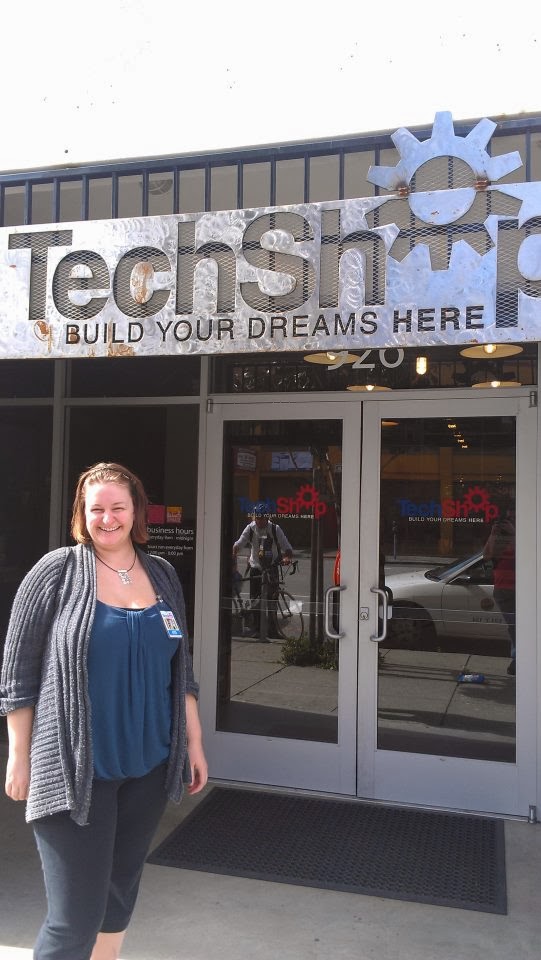
TechShop Comes to Chandler, Arizona!

The East Valley is already home to entrepreneurial powerhouse Gangplank and maker heaven HeatSync.  A couple weeks ago, one of the most fascinating companies I've watched over the last several years opened its newest location right here in the Phoenix area.  I had even gone to San Fran to see if it was as amazing as I thought it would be, and it was and so much more.  I wrote about my account here: http://easilythrilled.blogspot.com/2013/02/my-techshop-experience.html

Around the same time, I was so hyped up (and at the time there were no publicly announced plans to come to Arizona), that I started formulating a business case to present to the good people at TechShop in hopes of influencing them to set up shop here.  As part of my research, I issued a survey, but remember that this was long before I understood marketing or social media utilization, so my survey didn't get enough responses to be worthwhile.  However, I am still amazed and excited about the possibilities TechShop brings with it, so I thought I'd spill out some of the benefits I saw back then:

I believe TechShop appeals to several markets in the Phoenix area:
- student organizations can take classes and get hands-on experience with things like injection-molding and prototyping
- professional societies can hold events there to explore fields that the individuals may not otherwise have exposure to
- entrepreneurs and the organizations that support them can utilize the facility for prototyping and low-volume fabrication
- car and motorcycle enthusiasts can design and fabricate custom parts and work on their vehicles with the equipment available
- manufacturing companies can utilize the facility to turn a part quickly instead of having to send it back if something was wrong
- individuals can expand their knowledge base with classes and practice
- engineering courses can utilize the equipment for better fabrication of their projects
- crafters, sewers and quilters will love the quality of sewing and quilting machines available
- architecture courses can utilize the large workspaces to build their projects

The benefits to Phoenix would be:
- entrepreneurs are enabled to start companies and create jobs
- more dreamers can become entrepreneurs
- individuals can enhance their skills and be better prepared for their next job interview
- TechShop provides a unique venue to host company parties and organization events
Now that TechShop is here, I thought I'd add some tidbits and ideas to get you as excited as I am.  

Ideas to get you going
  • Getting married?  Consider using the laser cutter to etch a design into champagne glasses instead of paying for the same customization.
  • Expecting a grandchild or nephew or niece?  The CNC quilting and sewing machines make it easy to embroider beautiful designs.
  • Play board games?  You could actually design and print unique game pieces using the MakerBot II.  
  • Need to advertise something in a really BIG way?  TechShop has a huge printer.  Depending on what you need, it may be worthwhile to print your own instead of going to an office store. 
Did you know?
  • Almost all of the signage, wall hardware and decorations of TechShop were made at TechShop.
  • TechShop has Dream Consultants to help the less-than-mechanically-savvy inventor make what it is they drew on their napkins.
  • TechShop tradition is for the most recently opened facility to train the staff of the next facility to open.  So, our Chandler employees were trained in Pittsburgh, and they will soon be training the DC employees.  
  • Many of the products coming out of the classes are gear-shaped, to remind you of the TechShop logo.