Showing posts with label weight loss. Show all posts

Sunday, February 9, 2025

Sleep Apnea, Vegetable-based Ramen and the Milan Diet

Today I want to share some thoughts and reflections about my health. Weight has been an issue for me dating all the way back to high school - I yearn to be as skinny as I was then, even as I recall feeling fat compared to my peers at the time. But the major weight gain happened in a couple of waves.

My first year in college, I had a meal pass to school buffet, which meant I could eat multiple slices of pizza every day - and that is exactly what I did! Freshman 15? More like the freshman 40. I put on a lot of weight quickly while indulging. I'm sure weekend drinking didn't help, and the food I ate when I was hungover was just as bad. My period cramps
got really bad, and so while I wasn't sexually active, I decided to go on birth control. The problem was that I couldn't swallow pills - even the tiniest birth control pill. So I did the 12-week injection instead. I was fine with the shot and the soreness that came with it, and it solved my period problems. Wonderful, right? Well, not exactly. The drug was known to cause depression and even suicidal thoughts, as well as significant weight gain. I do think I may have been a little depressed, which naturally turned into eating my emotions. I gained a lot of weight in a very short period of time.

During that time, I had another issue and had to
swallow a pill for it. After years of getting advice from others and trying to practice swallowing pills, I figured out a method that worked for me. While the advice I got was usually, "Just don't think about it," what I learned was that I actually had to consciously think about it. My gag reflex would react to the foreign object if I pretended I was just drinking water, so I had to convince myself that I know what I'm doing and I needed to swallow this thing. But that wasn't all. I had to shove the pill into the back of my throat, almost choking on it, and then I threw back about a gallon of water, almost drowning myself until the pill went down. Dramatic, right? And it made a mess; I'd throw back so much water at once, basically flooding myself, that I'd spill a lot of water. But, the pill went down.

Learning that I could kind of swallow pills, I decided to switch my birth control method to the pill. Practice makes perfect, and over time I got better at swallowing without having to choke and drown myself. Although from time to time I still gag or a pill won't go down, and I definitely cannot swallow pills without water. Regardless, problem solved, right? Getting off the thing that caused weight gain (and maybe depressing leading to emotional eating) would allow me to lose weight, right?

Of course it wasn't that easy. Eating like I normally did, I still gained weight. I got into kenpo, started dancing again, started running again, but still gaining or at best staying flat. I tried various diets, Atkins and the like. As so many others, I'd see an initial drop and then it would lose its effectivity, and I'd gain the weight back and then some. And so the yo-yo dieting continued for years and years. I eventually became convinced that my metabolism was broken from all the dieting, and did the metabolism reset diet. I lost 12 pounds which is great, and I do think it "reset' my metabolism to an extent, but without constant maintenance it feels like it slipped back to being broken. I could eat well all week and have two slices of pizza and gain 5 pounds overnight. And that wasn't temporary, that became my new normal and I had to slowly work that off. I'd lose 2 of those pounds and then have another cheat meat and gain another 5. It was maddening. All that hard work to lose a couple pounds and one indulgence caused me to gain double.

In health, all things are connected. When I started running again, I also started coughing at night. It got so bad I finally went to the doctor three days before a race. I did a breathing test and was informed that I was using 25% of my lung capacity. I had asthma. I got an inhaler and was warned that the inhaler's positive effects would take many days to totally work, but I took it when I needed it. I ran my race but it was terrible because I felt personally defeated by having labeled my condition. The diagnosis of asthma seemed to change my identity as a runner to a sick person. I finished the race and had class afterwards, and I'll never forget that class because I sat in the back and hacked through it. But the damage was done. How could I lose weight running if I'm an asthmatic?

I gave it up for a while and sought out other activities. But walking, for one, was never as satisfying or beneficial. I have never been a speed walker, and in fact, I walk slower than anyone I know who isn't slowed by old age. I can tell myself to speed up, and I will a little, but not for long and not that much faster. I would joke that I have two speeds, running and ambling. So I'd get back into running for a time, and then stop, yo-yoing my running as I was my diets.

Then I read a book, "Rest," which really stuck with me. It talked about how active, rigorous exercise was actually good for being productive and creative in our work, among other things. I decided my half-ass running a half mile was insufficient, and I aimed to run a 5k, or 3.1, miles multiple times a week. I knew I had to work myself up to that, but to my surprise, my progress went faster than I expected, and I was regularly running 3.1 to 3.7 miles every day. This was when I was living in San Diego during the pandemic, so I got to run through Balboa Park and breathe in the ocean air from the nearby beach. My "wall" was around 1.5 to 2 miles, but once I pushed through that, I'd get a runner's high and didn't want to stop running most days. The only reason I stopped was because I knew I had to get to work. It felt great! I was losing weight and felt like I was getting stronger. One morning, just before leaving for a weekend in Yosemite, I went for my morning run. But within .4 miles, my hip started hurting. I had disciplined myself to push through the various aches and pains I sometimes felt while running. But this pain was different and persistent. I got to the point of tears and decided I had to take it seriously and stop running. I stretched and walked for a bit, trying to shake it off, but the moment I tried running again, there it was. I did a total of about 2 miles, mostly walking, before calling it quits. Later, I researched the issue and it seemed like it was related to being overweight and putting too much pressure and overuse on the joint. Once again, I felt defeated. Here I was trying to lose weight and really pushing myself, and my body just wouldn't have it.

With Ozempic and related treatments being all the rage, I looked into them on my own. Everything I've read indicates that they work by suppressing appetites. I had gotten to the point in recent years where I feel like I can control my portions and my appetite. I'm not a late-night snacker (usually, anyways), I don't obsess over sweets, and I've learned to cut my carbs. I can eat healthy, but I can't lose weight. It doesn't appear to me to be an appetite problem. In fact, I worry that I eat so little on a regular basis, if I suppressed my appetite, my body would go into starvation mode. The problem, I continued to feel, is still my metabolism. But I HATED the metabolism reset diet and couldn't get myself to do that again. I'd been considering buying a Lumen for a long time, which is supposed to tell you what your metabolism is doing and when to eat what. 


After a lot of consideration, I decided to pull the trigger on it, and it was interesting but didn't inform me very much. Virtually every day it told me it was a low carb day, with a handful of medium carb days sprinkled in, based on the fact that my body wasn't burning fat. Well no crap! I also found it super challenging to even do the breathing the Lumen wanted. It has you breathe in for 10 seconds, which was fine, then hold your breath, which was fine, then exhale for 10 seconds while it counted down. I struggled to make it to 2 seconds remaining, and often would run out of air by 3 or 4 seconds remaining. This meant that my reading was incomplete and I'd have to do it again, which was exhausting.

Separately, I had seen a couple documentaries and am convinced that the production of food how we're doing it now is unsustainable and bad for us. While our ancestors and people living in Blue Zones might consume meat once a week, we were largely using meat as the center of every meal. Raising enough livestock to keep feeding the world in this way meant more and more forests were chopped down to grow the grains and foods needed just to feed our meat animals. And the idea that protein only comes from meat and can't be found in plants somehow is accepted but untrue. Where do the animals get the protein, anyways? One of my long-time-ago ex's was really into sustainability and explained to me that he tried to eat more chicken than beef since the amount of water and food needed to raise one pound of chicken meat was substantially less than one pound of beef, which made sense to me. So I tried to keep that in mind to craft my intake towards poultry instead of beef.

Sam has a philosophical aversion to eating anything that comes from a pig, which has been a difficult consideration in practice for me. He has never asked me not to eat pig in front of him or anything like that, but knowing he doesn't like it means I'm not going to order it for us. It turns out, I eat a lot of pig! Bacon and sausage for luxurious breakfasts, pepperoni on my pizza, salami in my sandwiches, barbecue pulled pork for a Texas dinner. In addition to never eating pig meat, Sam also tried to minimize how much other meat and poultry he ate. His influence paired with my understanding of the sustainability of our food chain has made me again reconsider my preference for meat. An ad on facebook about a plant-based instant ramen that was high in protein intrigued me, and I ordered a sampler on Amazon. For the most part, it was somewhere between good and bland. But adding a heap of garlic chili sauce made it addicting! I started eating it once (and sometimes twice) a day, and suddenly, I started losing weight with minimal exercise and no other change to my habits. The warm broth and feeling of satiation, paired with the weight loss results, made me an addict to something completely plant-based.(Not that I'm selling anything, but the brand is Immi if you're interested.)

Another fun dieting "trick" I had picked up from a long-ago-ex was "the pickle diet." The premise being that pickles are tasty, filling and relatively low in calories. Snacking on pickles instead of, say, chips, or eating a pickle before a meal, would help get that full, satiated feeling with fewer calories. While unproven, there is also a notion that pickles and pickle juice help athletic recovery from sore and stiff muscles - something I feel I can attest to. Often when I go out dancing, I drink some water but clearly not enough, because despite not having an ounce of alcohol, I wake up the next morning feeling depleted and hung over. Pickle juice, I've found, has helped that, as well as just chugging water for the entire following day.

Somewhere along the line I developed a snoring problem. My family pointed it out to me but it always felt like a judgey, lecturing way. I didn't want to hear it. The connection to not getting good sleep and not being able to lose weight was not yet apparent to me and I dismissed it as nonsense. I knew I was overweight - I ate too much and moved too little. Calories in, calories out, right? It got so bad on our family Christmas vacation in Hawaii that nobody would sleep in the same room as me and everyone was going to extraordinary lengths to get away from me. I was annoyed at my family - how bad could it be, really? I had slept with a snoring boyfriend and eventually just got used to it. They could do the same.

It was Sam who really reframed my thinking on this. He wasn't judgmental or condescending, but curious. The problem wasn't just that I snored, but that I wasn't getting sufficient rest. So, I'd fall asleep during the day. He caught me sleeping in the car in Scotland while he was driving. He noticed me nodding off during the Taylor Swift concert at Wembly Stadium. I was apparently quite the spectacle when I was snoring on the bus coming back from Stonehenge. He got a kick out of me sleeping in the rowdy crowd at a soccer match near Richmond. And most shocking to me was when I passed out on the boat part of the London tour, because I love boats!

I was also sleepy at home. It wasn't frequent but I would fall asleep in front of the TV. The most disturbing though was that I'd start nodding off in the car on my morning commute. Just a couple hours after waking, the 15 minute commute would lull me to sleep and I had to fight with myself to keep my eyes open. It was worst at red lights, and once I got honked at for not being alert when the light changed. Often, I'd be so groggy and exhausted by the time I reached my office parking lot that I'd park and allow myself a power nap that would last 20 or 30 minutes.

I knew the jig was up. I had to see a doctor and get my diagnosis which I knew from what people told me would likely be sleep apnea and I'd have to get a CPAP and that would suck. I was not looking forward to it. My Mom had had a CPAP and she ended up stopping her usage because it was too annoying to her and my Dad. I was determined that if that's what I had to do, I would get it my all. I first had to get a referral from a general doctor. So I went in to see her.

Besides daytime sleepiness and nighttime snoring, not being able to lose weight, being asthmatic and having year-round allergies, there was still another issue I had. My ability to regulate my emotions, or more correctly, my physiological responses that looked like emotions, aka crying, seemed to have greatly diminished. I'm not saying I never cried when I was younger, many boyfriends had been frustrated with me when we'd fight and I'd cry. I think it started with anger issues when I was a child and I learned that I could not unleash my fury so I bottled it up inside and that became tears. When I was mad, I didn't get violent or yell, I'd cry. Even when other people were mad, I'd cry. That was true for years. But it had gotten so bad that the littlest thing could set me off - good or bad. I'd get a compliment from my boss and I'd cry. Sam would pinch me a little too hard and I'd cry. I'd see stranger propose at the Taylor Swift concert and I'd cry.

So when I talked to my doctor, she connected a lot of the dots for me. My symptoms sounded like I had sleep apnea. Of course I wasn't losing weight: I had no energy to work out, no willpower to eat the right things, and my body wasn't metabolizing like it should in deep sleep at night. Having felt heard and relieved it wasn't "my fault", I started to cry. And she asked what was wrong and I said, well, this sucks too. I can't control my tears. And she told me, interestingly, that assuming I had sleep apnea, that meant my body was in a constant fight or flight state and never recovered from that. So little triggers could cause crazy emotional responses. That made sense to me. I asked her if I'd have to get a CPAP and she said likely yes, but reassured me that people who use it regularly say it's life changing.

It's actually a little crazy how all these conditions are connected. My asthma, allergies and presumed sleep apnea are all conditions caused by, or contributed to, and made more likely by being overweight. But losing the weight is made difficult (to impossible) by having asthma and sleep apnea. A death spiral that started with overeating and weight-inducing medications that cannot seem to be reversed. I had to get to the root of it. If better quality sleep will help me to have more energy and better emotions and potentially improve my metabolism, then I had to address the sleep problem.

Completely full of conviction now, I went to my sleep doctor and told him my symptoms. He agreed it was likely sleep apnea and checked the size of my throat hole or whatever. He showed me a chart with 6 shapes of throat holes and said mine was the tightest of them all, which made me physically prone to sleep apnea. He'd have to do a sleep study to confirm, but he was pretty confident. I had the option of doing an at-home study or in-clinic study. The at-home study was lighter, had fewer diagnostics, and sometimes could be inconclusive which would result in the need to do the in-clinic study anyways. I wanted the full gambit. I wanted to be as close to 100% sure as we could be. I wanted to give my doctor all the information possible so he could get this right. If it was sleep apnea or something else, I wanted to know and get the treatment I needed.

I found the sleep study a little hilarious. To be fair, it was quite comfortable, I had my own room with an attached bathroom, which I was grateful for because I tended to have to use the bathroom multiple times at night - another symptom apparently of sleep apnea - the body doesn't turn off the mechanism causing you to have to pee. But being connected to a million sensors meant that when I had to use the bathroom, I'd have to signal my nurse to disconnect me. Instead of disconnecting all the individual things, they plugged into a master machine and she would disconnect that and hang it around my neck while I did my thing, and then reconnect me when I was done.
The goop in my hair and the suction marks on my body were funny to me, as was the way I looked when I was all connected up. When I was up for another bathroom break early in the morning, my nurse informed me that it was close enough time to the end of the sleep study anyways, so after using the bathroom, we could take the things off and I could get dressed to go home. As she was disconnecting me, I was concerned that my discomfort had prevented me from sleeping enough and asked her if they had gotten sufficient data. "Oooooh yeaaaah," she said, snorting a little, "we got LOTS of good readings on you." I thought that was a little funny even though I wasn't quite sure what it meant.

When I got my results back, they were absolutely stunning. Most notably, I had 98 "events" per hour. PER HOUR! That meant that 98 times per hour, I would choke or stop breathing. Fight or flight indeed. When I talked to my doctor about the results, he was concerned that the CPAP wouldn't be enough, and I might have to move to a bi-PAP which is more intense. But he said we should start with the CPAP and he assured me that even if it wasn't enough, it would still help greatly. But it would take a couple weeks, and I was nearing my trip to Milan for two weeks. So the CPAP would have to wait.
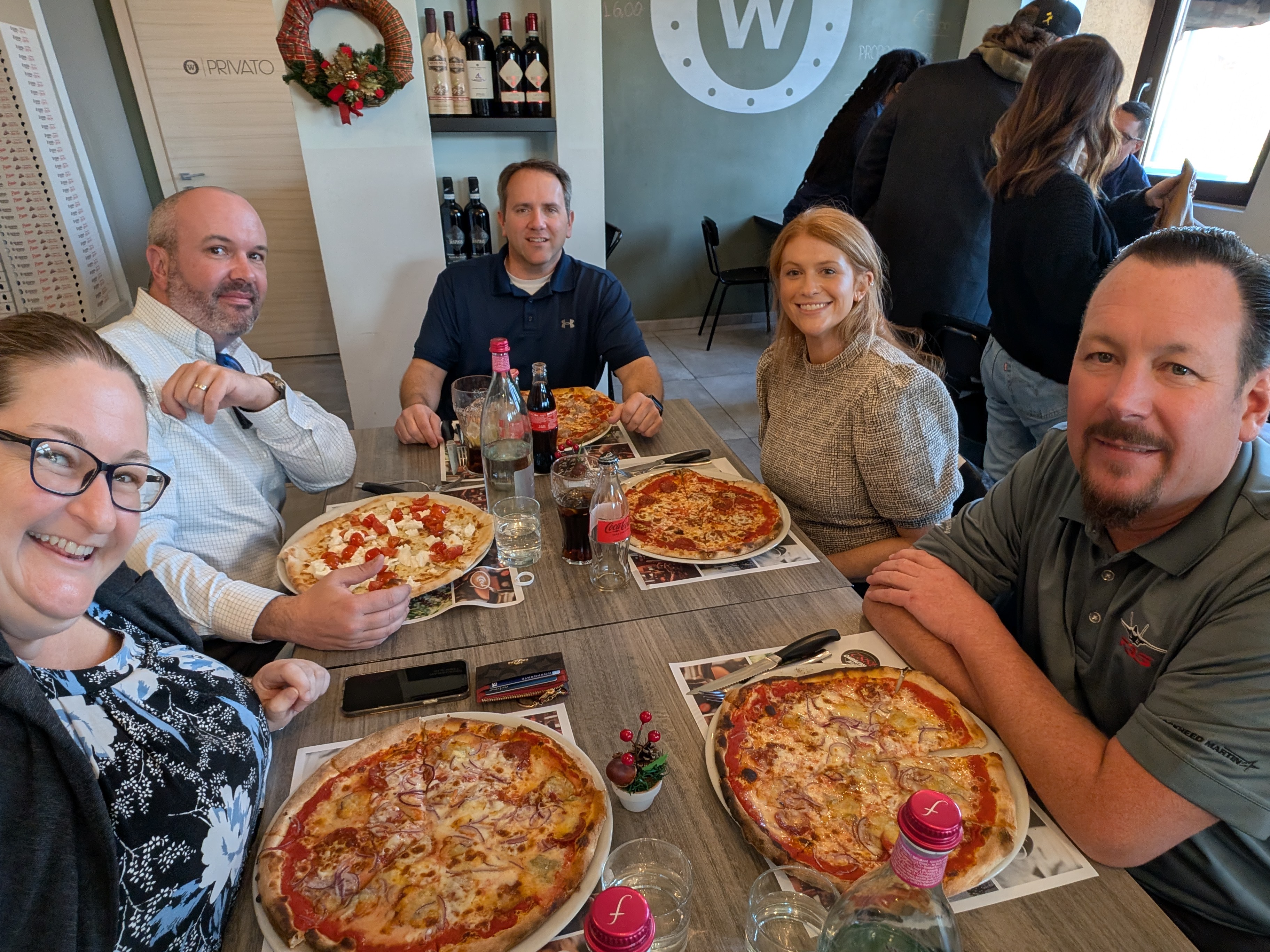

Knowing that it was very easy to gain weight on a business trip, I had bought a travel scale with me to monitor my weight for the two weeks in Italy. I knew I'd be tempted with all the pasta and pizza to overindulge in carbs, and so much as looking at pizza caused me to gain weight, so I wanted to give myself real-time feedback. To my surprise, however, while I gorged on the hotel breakfast buffet, polished whole individual pizzas at lunch, and ate a full meal of pasta or similar for dinner, I lost weight every day. I missed my plant-based ramen a little bit, but I was eating so good and so well in Italy, and losing weight, so I didn't mind too much.

My asthma, however,  was aggravated by the smog of Milan, the second hand smoke on campus at my work site, and probably the cold weather to an extent. I was using my inhaler multiple times per day but it got worse and worse. I knew from recent experience with something similar, and having been seen by a doctor back then, that as long as I didn't have a fever, I could rest assured I wasn't sick. But my asthma would need to be treated with something more intense than an inhaler.


I picked up my CPAP when I was back home, and didn't have time between returning and leaving for Tucson and then to Australia to see a doctor about a more intense treatment for my asthma. So I hacked through my holiday in Tucson with my family and in the ICU where my sister was beating the odds in her own medical issues. When I got to Tasmania, Sam told me what I could already sense, that the ocean air on our beach in Howrah was some of the cleanest air in the world. He
walked me through a breathing exercise which I felt was unnecessary, but I liked that he cared so much. I gulped in all the fresh ocean air I could while I was there, and I could tell my aggravated asthma was subsiding a little every day. We went north for a two day mini trip, and the mountain air up there was equally refreshing. Even in Sydney, walking out to Darling Harbor, I felt like my breathing was improving day over day.

I have been religious about using and maintaining my CPAP. I got the distilled water needed and changed it daily, I sanitized the tubes with apple vinegar, I got baby wipes and wiped down my mask every day. I had to use it for a minimum of 4 hours every night. The average didn't matter, so even if I used it 6 hours one night, I still had to use it for at least 4 hours the next. So I tracked my usage and made sure I got my 4 hours. The app had instant feedback and the results were telling and felt very accurate to what I could remember. That is, when I was struggling with my mask fit, the app would say I needed to correct it, and when I felt like my mask was good, the app would confirm.

But the most shocking result was that the events were now in the single digits per hour, around 5 typically. From 98 events per hour down to 5 is a 1960% improvement! Almost instantaneously, too, I had stopped dozing off during the day. It was no longer a struggle to stay awake in the car. And, I was still losing weight even after returning from Milan. I also feel less stuffed up from allergies, which could be seasonal but I suspect the humidifier effect on the CPAP is contributing at least.

Over the course of a several weeks, I felt healthier and healthier. I still puff on my asthma inhaler before dancing, but I no longer felt as winded or in need of another inhaler puff after dances. One night, I was waiting for my inhaler refill to come in but went dancing anyways. I was sure my current inhaler was completely out of dosage, but I sucked on whatever fumes I could grasp. And I didn't cough at all that night, despite not having a real dosage of inhaler. I am feeling healthier now than I have in a long time. I feel happier, too, and have emoted less. I've felt more in control of my tears and my ability to get things done. It has been quite a change. I'm not sure I'm ready to call it "life changing," but I can see how all these things are connected and relieved that I am working on the root of the issue, or at least one major contributor.

Recently, however, my weight has started to tick up again even though I'm doing the same things - eating my plant-based ramen, dancing, eating salads or lean meals when I'm not eating my ramen, drinking my water, etc. As such, I renewed my subscription for Lumen and am trying to use it more to figure out what's going on and what I need. To my surprise, I have been finding it easier to make it through the breath recording - I can now exhale all the way to 10 where I wasn't able to do that before. Something has improved, even if my weight is waffling.

I recently listened to "The Dorito Effect" which confirmed what I kind of suspected - the processed food wasn't as good for us as the food in, say, Milan, which wasn't packed with preservatives and artificial flavoring. I really do think there is something to that. The book also talks about how the "good" food has been "dumbed down" and made to taste worse and carry less nutrients - chicken, tomatoes, lettuce, for example. Chicken used to taste good on its own apparently, but the way commercial farms feed them to get fatter quicker is causing a loss of the taste and nutritional value, leading to use not only getting less out of the chicken itself but also having to smother it in sauces to make it taste good. It makes me just want to get a piece of land, raise my own chickens, grow my own crops and make my own sourdough at home. That sounds like a lot of work, but my goodness, this feels like a bad situation, doesn't it? What else are we to do?

Well for now, I'm looking forward to a full month in Milan, knowing that I was losing weight while gorging my appetite there. In the meantime and after that trip, I will have to focus back on eating pickles and plant-based ramen and other good things and drinking more water, getting the sleep I need, dancing and exercising, and so on and so forth…. and the health journey continues.

Oh yeah, and here's a vid of my dance group performing last night!


Sunday, September 15, 2024

Sleep Deprived or Depressed

 I have been in a lull with my work and my recent review was a pretty strong testament to that. My boss was amazingly crafty in delivering an appreciative message while expressing the things I need to work on, and I felt like I had disappointed him and let myself down. I've known that I likely have sleep apnea for quite a while, but in Hawaii having my family reject even sleeping in the same room as me kind of irritated me to the point of deciding I have to deal with it. Well, life has been busy, but I finally decided to pursue a sleep study.

I have this weird anxiety about making phone calls or answering the phone, so it takes me some mental energy to prepare for making phone calls. So this process is a little hard for me. First, I tried calling the sleep center directly, but they said I would need a referral from a primary care doctor - which I don't have. So then I tried Teledoc, thinking that there wasn't anything a doctor would need to examine me physically for, so I hoped I could get the referral that way. I was very frustrated to find out that the doctor took the appointment knowing that's what I wanted but couldn't give me a referral. So I ended up turning it into renewing my asthma inhaler so at least I'd get something out of the fact that I had to pay for the Teladoc appointment. So, I finally researched a good doctor and made an appointment.

I have to say, not only was I seen quickly which is always nice, but the doctor immediately made me feel like she cared and was going to help me get the care I needed. When I explained to her both my sleep issues and my emotional challenges, she connected the two and explained how the lack of sleep puts my body into fight or flight mode and constantly stresses out my body even if I don't feel stressed. It was such a relief to know that maybe there's nothing wrong with me mentally, it's just a health condition which I have no control over. I even brought up being overweight and she said that when you're suffering from lack of sleep then it's much harder to make good eating choices and have the energy to work out. Not only that, but that stress on your body puts you into starvation mode and conserves fat, which could relate to why I've felt that my metabolism is broken. So, it seems like maybe this sleep problem is more than just annoying my family - it's been making my life much harder and hurting my health. I felt so seen and heard.

The doctor did ask me a number of pointed questions relating to mental illness to determine if I was depressed, and she asked directly if I was depressed. I wasn't totally truthful in my answers, knowing that affirmative answers may lead to a depression diagnosis or suspicion or whatever. I didn't want to go down that path because I don't believe it's true of me. But afterwards, it made me wonder why I was so guarded about it. Is it the stigma? Or denial? I mean, I have been in a rut lately and disengaged with my work which I usually love. On paper, my life is pretty damn great, and I'm still discontent. Maybe I am depressed? But I think it's easy to feel like that if I'm tired, too, and it's taken me this long to get to pursuing a sleep study, I think I'll see if that solves some problems and go from there.

Saturday, January 23, 2021

Exercise Programs Based on Strengths

It's that time of the year again when people kick off their weight loss resolutions and so-called "Diet Culture" is promoted. I've put less and less significance on the start of a new year, but have continued to struggle with diet and exercise, and the biggest symptom - my weight.

My sister does a really good job losing weight with Biggest Loser, FitBit competitions and Weight Watchers. I see her success and think, wow, I wish those things worked for me as well as they work for her. But they don't. I'm too prideful, and not competitive enough, or so I thought. When I'm in a Fitbit competition, sure I'll look at it and try to keep up and/or stay ahead, but a couple bad days and I easily give up, or if someone is just killing it, then I stop caring. I make excuses that satisfy me - I'm really busy with work right now, I need more sleep, I have other things to attend to. Diet programs only work for me when I choose and craft them myself. But even those are only as good as my ongoing commitment, which tends to suck. I've tried using reminders on my phone, print out plans to mark off everyday, and just plain "do your best everyday". Turns out, I hate routines and I'm terrible at sticking to them on my own.

So what does work for me? Well, for a while, I was sharing in the exercise experience remotely with my sister - I'd text her my exercise regimen for the day, and then I felt obligated
to complete them myself. When I dissected this, I realized it came down to two of my strengths in Gallup's Strength Finders test - a tool most often used for career development and team building. The first aspect is Responsibility - by texting my sister, I instantly felt a burden of responsibility on myself that is far more motivating then competitions or peer pressure - I was accountable for doing what I was making her do. The other aspect is Communication - I don't want to be "that person" who posts on social media about every workout and every good meal and every ounce of water drank. But, sharing my story helps motivate me in some way. Getting positive feedback, too, helps, but it's more the communication than anything else for me. As I dug more into this idea, I realized that I choose programs that work for me because I have the strength of Individualization, meaning I don't believe in a one-size-fits-all approach.

My other top-five strengths are Activator and Achiever. Interestingly enough, you might think these would help me succeed in diet programs, but they actually work against me in some ways. My Activator strength helps me start a program, but not necessarily finish it. If you find that you jump into things and start with a ton of vigor, only to flame out after a while, you may be an Activator. The Achiever in me likes ticking boxes, but when I see unticked boxes, I'm disappointed in myself and become demotivated. Now, I'm a big believer in the Strength Finder exercise and results, but I recognize not everyone sees it as helpful or even realistic that answering a few questions can tell you so much about a person. So I say it is as useful as you make it. And why not make it about our personal weight loss journeys, too?

Based on my personal analysis, my theory is that losing weight or getting fit, or any other type of personal goal for that matter - reading more, getting financially healthy, etc - could be done better by utilizing your Strengths. I bet my sister has Competition as one of her strengths, and that's why those programs work for her but not for me. If you haven't done it, I strongly encourage you to take the test here. You can even make a date night out of it with your significant other, as talked about in my friend's blog here. 


Daniel Lieberman, author of "Exercised: Why Something We Never Evolved to Do is Healthy and Rewarding," talks about how we are biologically programmed to (a) conserve energy (i.e., be lazy and not exercise unnecessarily) and (b) consume food in an unrestricted way (aka not dieting). This has been known and discussed in other articles and publications I've seen throughout the years as well. What Lieberman has done, though, is take it a step further and suggest that because of those biological programmings, we need to think about exercise in a different way, to make it a necessary part of life, much like it was necessary for our ancestors. I've been thinking along the same lines for several years, as well.

This was why, when relocating to Connecticut for work, I chose to live within walking distance of the downtown restaurants and to my office, so that I'd walk to work, and we'd walk to dinner or lunch on the weekends. Parking wasso expensive and hard to come by downtown and the traffic was even worse - so we were discouraged from driving because it would take longer than walking and would cost money. We
My winter commute in CT
even saw a few shows at the theater which we walked to. There were months I didn't get in the car at all, and when I did get in the car, it was just to go to the grocery store, which was too far to walk. Jaiman, too, took advantage of our population density in the downtown Stamford area by walking dogs; he rarely had to drive to  an appointment, he usually walked to the residence, picked up the dog, walked for a half hour or an hour, returned the dog and walked home or to his next appointment. His long legs and quick, long stride, meant that his customers loved how far he could walk their dogs in the given timeframe, and he had a recurring customer base that loved him.


I didn't really have the same option in Florida, as there was no housing within 15 miles of my office by the airport, although I did consider mapping out a bike path to get to work - unfortunately, I never got around to seeing if I could actually bike to work before we had to shutter the plant. Moving to the San Diego area, I thought about living close to work again in order to encourage walking or biking, but I opted to live near downtown San Diego instead, thinking we'd walk to restaurants and such. Most things have been closed due to COVID pretty much since we moved here, but when things were open, we did walk to some nearby places to eat several times before they got shut down again. However, it's still a bit far to walk to the major areas like Little Italy, home to my favorite brewery, Ballast Point.  In the

Morning run in Balboa Park
meantime while things are still closed for COVID, I've taken full advantage of walking and running around Balboa Park, right across the street from my condo. This, however, is more forced exercise rather than the necessary embedding I was aiming for. Still, it's quite a pleasant area to walk or run, even if I recognize I am doing it for the sheer purpose of exercise rather than transportation.

The other method I've used to get us walking is the Pokemon Go game that was all the rage when it first released. Yes, yes, I know,
Mr. Mime in Cannes, France
we still play. But it's true that it had us chasing Pokemons (especially on Community Day - gotta get those shinies!) and walking from gym to gym during Raid Hours to get those Legendaries, and quite often we can walk much further doing this than we would have if we had elected to simply go for a walk. Now, I appreciate what Niantic has done during the age of COVID, to allow us to raid from the comfort of our homes (at a small cost) in order toprevent gathering, and to improve incense spawns so that we don't have to be and about to catch Pokemon, but these COVID-prevention enhancements have proven to make it easier to be lazy and not walk around during Community Day or Raid Hour, which means, even though I'm still playing, I'm not seeing the same benefits as I was. Not to say that all is lost, indeed we do still get up to go to nearby raids so we can use our normal free passes instead of the not-free remote passes, and I have found myself heading towards stops I normally wouldn't go to when there's a particular Pokemon I'm chasing sighted there. But for the most part, I can play Pokemon Go from my recliner sofa while watching TV, and that defeats the point. The biggest motivator I'm getting from Pokemon Go these days is hatching eggs, because that requires walking (or driving reeeeaaalllllllly slow, which is often too impractical to do much of).

In addition, I just finished the book "Rest: Why You Get More Done When You Work Less" by Alex Soojung-Kim Pang, and I think one of the biggest breakthrough ideas I learned from it was that strenuous activity or activities requiring a lot of creativity and brain power are actually forms of rest, especially for those in more intellectual jobs. These activities can improve your work while becoming an integral part of your life that feels required to do your best work, rather than taking away from your work.

Anyways, I think there's something to this idea of making the exercise necessary, and I think it very much goes hand-in-hand with the Gallup Strength Finder strengths.  I did a quick google search and found that one of the Gallup Strength Finders coaches actually thought of this exact thing - she had 100 pounds to use and applied her Strengths to actually, finally, lose the weight. Her story sounds so similar to mine, and her results - 100 pounds lost in 6 months - is very encouraging. Read her story here. 

Based on that, I wanted to give it a shot to see what ways people with different strengths could use to make exercise specifically a more necessary part of their lives. Here are the themes and strengths with my ideas and recommendations for each.

STRATEGIC THINKING


    Analytical - People exceptionally talented in the Analytical theme search for reasons and causes. They have the ability to think about all of the factors that might affect a situation.
I would imagine FitBit or other such trackers would be useful if you're Analytical, because you can get all sorts of data and trends to see what is working and what is not working. Calorie counting or macro counting may also be helpful for dieting.

    Context - People exceptionally talented in the Context theme enjoy thinking about the past. They understand the present by researching its history.

Vision boards including pictures of yourself from when you were thinner or more fit may help people with the Context strength.

    Futuristic - People exceptionally talented in the Futuristic theme are inspired by the future and what could be. They energize others with their visions of the future.
I think Futuristic people benefit from having specific goals in their near future - running a 5k or a half marathon, for example. When my sister and I did pair up virtually to lose weight together, it was for a summer vacation we had planned in Europe, and we wanted to make sure we could partake in all the fun activities without having to worry about our weight being a problem. While not in my top five, Futuristic is my #7 and so this experience is a great example of utilizing my Futuristic strength for weight loss.

    Ideation - People exceptionally talented in the Ideation theme are fascinated by ideas. They are able to find connections between seemingly disparate phenomena.
This strength is also in my top ten, and I think when it comes to dieting and exercise, it works hand-in-hand with my Individualization strength when I want programs that are catered to me. I take all the different ideas that are out there, and create something that makes sense to me and that I think I can stick to. Fellow Ideators can follow suit - read the varied advice and ideas and then come up with your own program.

    Input - People exceptionally talented in the Input theme have a need to collect and archive. They may accumulate information, ideas, artifacts or even relationships.
The author of the article I found had Input as a top strength, and as such, she said that she had "collected immense amounts of information about dieting and healthy eating over the last 20 years…" but that "having information wasn't enough to help me consistently make good food choices." Instead, she utilized her Input strength by actually sharing her goals with others; their interest piqued her input them to share more. So, finding support groups or accountability partners may help those with Input as a strength.

    Intellection - People exceptionally talented in the Intellection theme are characterized by their intellectual activity. They are introspective and appreciate intellectual discussions.
The author of thee "Rest" book mentioned earlier talks about many top-performing scientists who regularly climb summits or train for marathons. And it doesn't seem to be a coincidence - similar graduates tracked over their careers have excelled or not excelled with a direct correlation to their exercise activities. It was a really interesting perspective that I don't I can do justice here, so if Intellection is your strength, I highly recommend you read the compelling arguments in that book and that may be sufficient to get you motivated.

    Learner - People exceptionally talented in the Learner theme have a great desire to learn and want to continuously improve. The process of learning, rather than the outcome, excites them.
Clearly, learners won't be enticed by the same old things. For learners, taking martial arts classes or dance classes would perhaps be the best route. Practicing and honing new skills that involve movement will help them exercise without thinking of it as exercise. I loved the social aspect of my kenpo class more than the material itself, and what I learned through that process was actually how much I liked choreography (of course, it's not called that in martial arts, but that's essentially what all the katas and forms are) and so it drew me back to dance. For dance, I'm a little biased but I'd recommend east coast swing dance or Lindy hop. If you want to work on upper body strength, pole dancing is incredibly powerful and challenging to learn. Another way of utilizing your Learner strength is to listen to audio books while walking (either on a treadmill or outside). The focus is on the audio book learning, but it will keep you moving and actually helps your mind focus more on what you're hearing.

    Strategic - People exceptionally talented in the Strategic theme create alternative ways to proceed. Faced with any given scenario, they can quickly spot the relevant patterns and
issues.
I think Strategic thinkers will naturally do some of the Ideation and Learner behaviors as it applies to exercise. People with the Strategic strength may also benefit from fitness trackers and regular weight check-ins to determine what is working and what's not.


 The dance troupe I was a founding member of, Gypsy Jitterbugs, performing to Rosie the Riveter!

RELATIONSHIP BUILDING

Adaptability - People exceptionally talented in the Adaptability theme prefer to go with the flow. They tend to be “now” people who take things as they come and discover the future one day at a time.
This one is hard for me to relate to because it is one of the lowest on my own strengths. I think what failed for me may work for those with strong Adaptability - either an app like Noom or reminders at various intervals on your phone to exercise. For example, I used a simple "to do" app to schedule 100 crunches every 2 days, 3 sets of 3 arm workouts every 3 days, lunges every 4 days, Thigh Master every 4 days (offset by two days from the lunges), etc. By doing this, every day had a slightly different workout regime but at the macro level I would achieve all the workout activities I wanted to do. But, like I said, this didn't work for me because it didn't play to my strengths, however, this may work well for people with Adaptability.

    Connectedness - People exceptionally talented in the Connectedness theme have faith in the links among all things. They believe there are few coincidences and that almost every
event has meaning.
People with Connectedness also may benefit from calorie trackers, water trackers and fitness trackers. In addition, the advice in the "Rest" book mentioned above may apply, as even something as simple as a walk can help spur ideas for what you're working on, so exercise could become a part of your work, in that way. You may also benefit from the relationship-forming aspects of groups like Weight Watchers, gyms or fitness clubs, or even dancing groups.

    Developer - People exceptionally talented in the Developer theme recognize and cultivate the potential in others. They spot the signs of each small improvement and derive
satisfaction from evidence of progress.
If Developer is one of your strengths, then I'd suggest you definitely need to get a workout partner or accountability partner, or a dancing partner. Being there for your partner and helping them succeed will likely drive success in your exercise goals without even really noticing it. Pokemon Go, too, or other similar AR games, may help because your focus is on the game progress rather than the exercise itself.

    Empathy - People exceptionally talented in the Empathy theme can sense other people’s feelings by imagining themselves in others’ lives or situations.
Empathy is a hard one to directly apply to exercise, but I think the best thing for someone with this strength would be is to join a group like Weight Watchers or Biggest Loser challenges. Relating to others and seeing their journeys, and hopefully their successes, will motivate and encourage you to do the same. You could also apply your strength towards walking or biking for a cause - there are many races that go towards support research and prevention for cancer or other chronic conditions, for example.

    Harmony - People exceptionally talented in the Harmony theme look for consensus. They don’t enjoy conflict; rather, they seek areas of agreement.
Like many of the other strengths in the Relationship Building category, for those with Harmony as a strength, having a workout partner or a group will greatly benefit. A personal coach may also help, since they will be the ones telling you what you need to do and you'll want to avoid going against their advice.

Practicing kung fu with the Warrior Monks at the Shaolin Temple


    Includer - People exceptionally talented in the Includer theme accept others. They show awareness of those who feel left out and make an effort to include them.
Includers are likely going to feel success in social dancing circles or martial arts classes. By partnering up with people and focusing on inclusion in these physical activities, the exercise will be secondary and come naturally from the primary goal.

    Individualization - People exceptionally talented in the Individualization theme are intrigued with the unique qualities of each person. They have a gift for figuring out how different people can work together productively.
This is my assertion that the one-size-fits-all model doesn't work for exercise. Instead, people with this strength do indeed have to personalize their own exercise regimen in order to be successful. The "Rest" book may help provide some additional perspective and insight to help in your journey.

    Positivity - People exceptionally talented in the Positivity theme have contagious enthusiasm. They are upbeat and can get others excited about what they are going to do.

For Positivity people, again, having support groups or social activities like martial arts or swing dancing, is going to be a major aid in your exercise goals. Having people share in your success and cheering you on, and doing the same for others, is the focus for this strength.

    Relator - People exceptionally talented in the Relator theme enjoy close relationships with others. They find deep satisfaction in working hard with friends to achieve a goal.
Relators go beyond the social groups to more deep-knit relationships. As such, being on a team for an extended period of time is probably the best approach for a Relator. I think of crew teams or dance troupes when I think of Relators in terms of exercise.

INFLUENCING


    Activator - People exceptionally talented in the Activator theme can make things happen by turning thoughts into action. They want to do things now, rather than simply talk about them.
As I mentioned earlier, Activators actually really struggle with ongoing exercise routines, although starting them comes easily. If you're an Activator like me, I think the most crucial thing is to make exercise a required part of your life, like having to walk or bike to work or putting in a standing desk so you're not sitting all day.

    Command - People exceptionally talented in the Command theme have presence. They can take control of a situation and make decisions.
If you're naturally a commander, then consider leading a group or team. Pick an activity you like, practice at it, and work towards becoming the coach, choreographer, sensei, instructor or whatever kind of leader applies. By aiming for this goal, you'll inherently exercise in the process.

    Communication - People exceptionally talented in the Communication theme generally find it easy to put their thoughts into words. They are good conversationalists and presenters.
Communicators should share their experiences with the world. Start a blog or a private group on facebook, or just share photos and highlights on your main social media platform from time to time. You can also join groups or teams, of course, or use long walks to call or spend time with your favorite relative or best friend.

    Competition - People exceptionally talented in the Competition theme measure their progress against the performance of others. They strive to win first place and revel in contests.

This one is pretty easy to see how it applies to exercise - there are all sorts of competitions big or small, races, weight loss challenges, FitBit challenges, martial arts tournaments, dance competitions, sports playoffs, you name it. So rather than go into more detail on those obvious options, I'll challenge you to also consider some less obvious options. Set a reading goal for yourself and listen to audio books while walking, for example. Or a goal such as hiking every mountain summit trail in a given area. Pokemon GO can help those with a competitive nature as well.

    Maximizer - People exceptionally talented in the Maximizer theme focus on strengths as a way to stimulate personal and group excellence. They seek to transform something strong into something superb.
The Maximizer strength is another one that can actually be detrimental to an exercise routine - flawed performance or missed days can be demotivating. My recommendation is to set small goals such as running for at least 1 minute each day, it's super easy to achieve but often will result in longer runs. Also, the author of the Gallup article suggests focusing on efficiency rather than perfection.

    Self-Assurance - People exceptionally talented in the Self-Assurance theme feel confident in their ability to take risks and manage their own lives. They have an inner compass that gives them certainty in their decisions.
Self-assurance, too, can work against you in the ways I've talked about previously, like when I make excuses for myself - "Work has been crazy this week so that's why I haven't…"  For Self-assured people using the small goals as I mentioned in Maximizer may be one good tactic. My other suggestion would be to make the exercise part of your life by walking or biking to work or to other places for errand, etc.

    Significance - People exceptionally talented in the Significance theme want to make a big impact. They are independent and prioritize projects based on how much influence they will have on their organization or people around them.
If you have a strong Significance theme, you want to heed the advice of the author of the Gallup article, that keeping your exercise goals a secret actually prohibits the Significance of it and leads to failure. Thus, "Putting my fear of failure out in the world actually made me want to succeed that much more," as the author explains. Be excited about it, share it with your colleagues and friends and family. It will be come more important because you have put it out there.

    Woo - People exceptionally talented in the Woo theme love the challenge of meeting new people and winning them over. They derive satisfaction from breaking the ice and making a connection with someone.
When thinking about Woo, I will always think of my employee and his great disappointment when he discovered his top strength was Woo. He thought it was soft, but I convinced him how it was an enviable strength - his charming over-the-top personality and humility made his smile contagious in the toughest of times and he could make friends with the harshest of people. If you're a Wooer, you will be energized by sharing your story and playing with others in whatever sport or activity you choose. The author of the Gallup article was also a Wooer, and she said, "Woo allowed me to socialize what I was doing with people I wasn't as close to and my ability to quickly connect with others served me well."

EXECUTING


    Achiever - People exceptionally talented in the Achiever theme work hard and possess a great deal of stamina. They take immense satisfaction in being busy and productive.
With my Achiever strength, I thought that ticking the boxes off my plan every day would be enough, but it wasn't. I think Achievers need additional motivation, whether that's aiming for a big goal like a race or competition, or utilizing exercise to achieve other things like the insights talked about in the "Rest" book or something as simple as listening to audio books. As an Achiever, I do like seeing my information on my FitBit app, everything including steps, heart rate zones and resting heart rate, active minutes and even how well and long I slept. These are good rewards for after the achievement, but getting to the achievement needs additional pushes.

    Arranger - People exceptionally talented in the Arranger theme can organize, but they also have a flexibility that complements this ability. They like to determine how all of the pieces and resources can be arranged for maximum productivity.
For Arrangers, I think tools like paper charts or whiteboards set up for tracking can be useful. Also, focus on your schedule and incorporating whatever exercise you choose into your schedule so it's regularly planned in.

    Belief - People exceptionally talented in the Belief theme have certain core values that are unchanging. Out of these values emerges a defined purpose for their lives.
People with a high Belief strength should read the literature that is most compelling about why and how they should exercise. In addition to the books mentioned above, I might also recommend "The Blue Zones" by Dan Buettner. You could also consider taking up a martial art, since there are core beliefs that may align well with yours and they promote self-defense abilities.

    Consistency - People exceptionally talented in the Consistency theme are keenly aware of the need to treat people the same. They crave stable routines and clear rules and procedures that everyone can follow.
The fact that I'm so terrible at routines is so well aligned with how low consistency is in my strengths. People who excel here will thrive on a good routine, which I wish I could do. Preparing the same meals, running the same route at the same time every morning (even on weekends or off-days), going to the gym or whatever else you have planned will be amplified when you form and keep the routine. It not only will help in your exercise goals, but it helps free your mind from making decisions and allows you to work better and be more creative, as the "Rest" book talks in depth about.

    Deliberative - People exceptionally talented in the Deliberative theme are best described by the serious care they take in making decisions or choices. They anticipate obstacles.
I had two employees who were both high in Deliberative and they happened to sit right next to each other. They made a pact that each time one of them stood up for any reason, they both had to do 10 push ups. This went on for weeks and weeks and they kept at it, taking it very seriously. They were also both very serious military veterans and saw exercise as a required discipline. I think if you're Deliberative, you'd do well to choose what you're going to go after with careful consideration and commit to it fully.

    Discipline - People exceptionally talented in the Discipline theme enjoy routine and structure. Their world is best described by the order they create.
Setting up a solid routine will empower and inspire people high in Discipline, much like Consistency. Using "to do" apps or workout apps can aide your goals, but aren't necessarily required. Keeping to a stable routine even on weekends will strengthen your resolve.

    Focus - People exceptionally talented in the Focus theme can take a direction, follow through and make the corrections necessary to stay on track. They prioritize, then act.
I think people with Focus strengths would do well reading the "Rest" book to help them set their priorities. If Focus is one of your strengths, having clear goals with deadlines, and having a coach or leader to get you there will likely help.

    Responsibility - People exceptionally talented in the Responsibility theme take psychological ownership of what they say they will do. They are committed to stable values such as honesty and loyalty
The heavy burden of Responsibility is a powerful that can be used as I described earlier - simply communicating the workout plan to my sister compelled me to complete it because I felt responsible for both of our successes. If you have a high Responsibility strength, getting into leadership or coaching roles in a team or dance troupe or martial arts dojo may magnify the effect for you.

    Restorative - People exceptionally talented in the Restorative theme are adept at dealing with problems. They are good at figuring out what is wrong and resolving it.
Restorative people again may benefit from fitness trackers to help them figure out what is working, but should also read the "Rest" book to learn how active pursuits can actually solve more problems than we think it does.


Of course, nobody has just one strength, so your unique combination of strengths, whether you focus on your top five or your top ten strengths, will help guide which tactics will work best for you and which pitfalls you need to actively work to avoid. 

Another thing I think is important to mention that Lieberman also discusses is that exercise alone is not all that efficient for the purpose of weight loss, so when setting weight loss goals through exercise, we're kind of putting too much hope into one thing. Instead, dieting is a much better way to lose weight, and exercise is great for preventing weight gain and all sorts of other diseases and conditions. Diet and exercise together, of course, are a winning combo, but exercise alone should not be expected for significant weight loss achievements.

Saturday, January 2, 2016

Re-dream: 2016 Resolutions

I am listening to an audio book in which a fortune teller tells the main character, "When your dreams all come true, you must re-dream."  She went on to say that you can't live in the past or settle for being content.  You need something to work towards, a new dream of what your life can be.  I can't think of a more appropriate way for me to look forward to the new year and 4 - 5 year outlook than that. 

I sometimes have anxiety over setting goals and making resolutions, because I am so ambitious that I want to set lofty goals, and then I am hard on myself when I fail to achieve those goals in the given amount of time.  But coming out of 2015, I have a renewed energy, because perhaps for the first time in my life, I kept all of my New Year's Resolutions.  In 2014 I accomplished most of my resolutions, with the exception of leaving the country, and getting down to a size 10.  In 2013, my resolutions were pretty much just whack-a-doodle, and in 2012 I had far too many and clearly lost focus.  I set 8 resolutions in 2011 and accomplished none of them.  From this trend, I suppose one could deduce that I have either gotten better about keeping my resolutions, or setting better ones. 
The weight goal is always tricky; its the most common resolution and perhaps the hardest one to keep.  Many of my resolutions are fairly finite: do this one thing and it's complete.  But getting down to a certain size or weight takes continued, renewed effort, and can be un-checked faster than it can be checked.  I didn't set one last year, and if I had, I most certainly would have failed it as I am about the same size and shape as I was a year ago.  So, I am very cautious to set such a goal, but part of me wants to.  Hey, if I was able to commit and accomplish the 8 goals I set in 2015, why not? 

Well, there's the catch.  I didn't do a great job of accomplishing all of my New Year's resolutions last year.  Some of them were barely checking the box.  Part of me wants to believe that if I set goals and resolutions that encourage me to be healthier, like working out every day or make good choices in food, that the weight loss will come.  Part of me thinks that I will get to a point where I've decided it can't be done, and will give up and feel defeated.  Part of me thinks that my other goals run contrary to weight loss - like learning programming. 

The truth is that, despite my success (or maybe just luck) in 2015, I am not really sure how to set goals that I will commit to and achieve.  Sure, we've all heard of the SMART goals, Specific, Measurable, Achievable, blah blah blah.  But I am not convinced those work.  Same with vision boards, where you are supposed to choose images that inspire you and hang them where you will see them every day.  I've had inspirational quotes around my house for years, and they've done nothing to stir my energy.  Accountability partners have failed me too.  And more importantly, I think we should be able to keep ourselves accountable.  We should be able to set out to achieve something, and then achieve it.  A year is a long time.  In fact, we have a little more time in 2016, with it being Leap Year.  I should be able to accomplish just about anything in a year.  But, losing weight won't happen on its own just by setting a goal or sitting down one night to knock it out.  I think to lose weight, you have to set smaller goals.  Eat a salad twice a week.  Work out four times per week.  Walk 10,000 steps a day.  Something that you can strive for in a much shorter term. 

My other problem is that I like variety.  I thrive on it.  Sometimes it bothers me that I lack focus; I don't have that one burning passion in my soul that I would quit my job for and work at day and night.  But I think I've just about decided that that's just me, and that's okay.  So, I'm not going to say that I'm going to write every day of 2016.  Hell, I didn't write at all yesterday, so that boat has already sunk anyways.  In September, I wrote a blog about "A Kinda Really Sorta Perfect Day," in which things didn't really go my way and I wasn't perfect, but I persevered and got things done.  Since then, I've been tinkering with the idea of what makes a "good" day or a "perfect" day.  What I've come up with in the last several weeks is a better formula for success for people like me.  Rather than a strict checklist of things to do every day or every week, I have developed a buffet of sorts.  Here's how it works: I've grouped activities into 6 areas of life.  Each area is something we can all probably improve on.  A good day is completing 3 of those activities, covering at least 2 of the areas.  A perfect day is completing 6 or more of those activities, with at least one in every area. 

Something for the mind:

  • Practice a language
  • Read / listen to an audiobook
  • Take a lesson in programming
  • Do coursework
  • Take a quiet, hot bath; breathe and let your mind rest

Something for the body:

  • Stretch
  • Dance
  • Go for a run / walk
  • Hike
  • Ab workout
  • Lift weights
  • Thighmaster
  • Other form of exercise

Something for the soul:

  • Write
  • Cook a new or tricky dish
  • Build a Lego model or Lego sculpture
  • Design something
  • Paint
  • Craft
  • Create something else

Something for the heart:
  • Pay a colleague a sincere compliment
  • Have a real conversation with someone
  • Call a friend or family member on the phone
  • Have lunch, dinner or drinks with someone
  • Send a card or letter (via real snail mail)
  • Volunteer or do charity work
  • Help a stranger with something

Something for the wallet:
  • Apply for a job
  • Schedule / post on social media for business
  • Eat in
  • Create a graphic, blog or tool for business

Something practical:
  • Empty dishwasher / load and start dishwasher
  • Take trash out / take recycling out
  • Do laundry
  • Clean the bathroom / kitchen
  • Get oil change / tire rotation
  • Pull weeds
  • Other chore

So now, I've made one of my resolutions to have 366 "good" days. In theory, this means that most days I will be doing something good for my body, and the days I'm not doing good for my body, I am doing good for my mind, heart and soul, which are ultimately good holistically anyways.  Also, I believe firmly in making good habits by doing something consistently for a number of days.  I've heard both 21 and 90 days, so I like how this graphic puts it: It takes 21 days to create a habit, it takes 90 days to create a lifestyle.  Imagine what would happen if you succeed in being "good" for 366 days! 

The first resolution I made was around learning programming.  I know a bit of HTML, and I regularly program in VB for work.  But I do not consider myself a good programmer, or really a programmer at all.  It's like how most people know how to write, but that doesn't make them writers; I know how to program, but I am not a programmer.  I have a lot of entrepreneurial ambition that is wasted week after week and month after month because my lack of programming skill prevents me from doing the things that require programming.  I dream of collaborating with a talented, brilliant programmer and partnering with him or her to create this massively successful company.  The problem with that dream is that most programmers are in so high demand they are not really willing to work with a business person like me on my idea, and if they were willing to work on such an idea, they would just as soon start their own company without said business person.  I preach that programming is such a powerful tool that I believe everyone should learn it to a degree, so I've had to swallow the pill that I, too, could use some work developing my skills.  


I have an idea for a better social media management tool that I've been toying
with, and of all my brilliant ideas, this is the one I'm most sold on at the moment.  Of course, a competitor could sweep in and build it before I even learn to program, but that's the risk I suppose I have to take.  And, learning programming will only help me with my next brilliant idea, if that happens.  So after a bit of research, I've settled on HTML, CSS and the Twitter API as my focus for this year, and I'm going to use Codecademy.  It shouldn't take a year to get pretty good at those things, especially because I already know some HTML and CSS, but I want to keep my scope small and get really good at them.  If I am successful, I can then start programming my dreams, and can learn new languages as needed in the coming years.

I won't go into detail now about my motivation for the rest of my resolutions.  I am excited, though, that if I am as successful in 2016 at checking off these boxes as I was in 2015, that great things will happen.  So, with that, here they are.

New Year's Resolutions for 2016

  • Learn HTML & CSS & Twitter API
  • Spend a Weekend Disconnected
  • Design & 3D print something
  • Make a video with Jaiman - performing music, dancing, audition for a reality show or something silly
  • Improve my home in some way
  • Learn Thriller choreography
  • Have 366 "Good" Days

These aren't terribly ambitious for a 366-day year (except making a video with Jaiman, that will take some effort since he is SO camera shy).  They are vague enough that if something specific doesn't happen, I can still check off the boxes, but they are specific enough that I will know when I've accomplished them.  Maybe that is the trick to setting goals, being just specific enough. 

If I've inspired you to make your own New Year's Resolutions, please comment below and let me know!  Also, check out my post from last year, where I provide ideas for tangible, achievable resolutions ideas.