Showing posts with label skills. Show all posts

Saturday, August 6, 2016

The Future, Brought to You By Pokémon Go

It's just a game, critics say. They're right, too, in the sense that it's not worth going to jail for trespassing or risking life and limb playing it while driving. But this is not the Pokémon from before, and that's where they are wrong.

I jumped on the Pokemon Go bandwagon on day 3, after reading a compelling article about how it's application of Augmented Reality is the first application that nailed it. I called it an instant addiction; I had to go to the library anyways and saw that there were stops there, so I went and collected my first items and Pokémon. I went home, because it was far too hot outside, but found myself anxiously awaiting my boyfriend coming home from work so I could get him (the gamer and former Pokémon player) to download it so we could go play it.  In an ironic turn of events, he had been avoiding it for fear of life-ruining addiction, and I was the one who convinced him to play.  We ended up finding a bunch of Pokemon in the mall, and later joined thousands playing on Mill Ave.

The game has not only gone viral itself, but the virality of it has sprung new Twitter accounts and hilarious memes, new business models (i.e. sponsoring lures to attract customers), new crimes (i.e. using lures to attract victims, then robbing them), and new vocabularies (I read Pokeconomy earlier this week).

From my viewpoint, it's great to finally see an intersection between gaming and physical activity, something the Wii and specifically the Wii Fit seemed to promise but failed to deliver in mass; the games didn't have an addictive nature to them that kept users coming back or using it as their primary exercise. FitBit incorporated a social and competitive element to its otherwise essentially glorified pedometer, but that motivation only goes so far. One of the hilarious memes circulating the Twitterverse early on noted, "It took Michele Obama 8 years to get America active, and Nintendo 2 days." Another

showed a surge in FitBit steps and noted that "My FitBit doesn't know what happened 3 days ago." Increasing activity is always a good thing in my book. But as at least one tweeter pointed out, it seems like a partnership with FitBit and Pokémon Go is inevitable. Maybe not a direct partnership, but it does feel like the game needs to better acknowledge active movement versus driving, and active movement in a small area, so a FitBit - like technology would fit better than the GPS tracking currently used. It's unfortunate that walking around the house or on a treadmill doesn't help my eggs hatch in Pokémon Go.  It's really too dang hot in Phoenix in the summer to exercise outside during "normal hours", so Phoenicians specifically are doing more driving and playing, which is probably not good for anyone but gas companies. We may have a great time come winter here, but I'm not sure the phenomenon will still be a predominant use of leisure time by then.

For as much as the media is raving about the social interaction Pokémon Go encourages, I was a little surprised there was no way to add or see friends in the game. We went to a Pokehunt that first Saturday night, and one of my boyfriend's friends had been there, but we didn't run into him physically, and weren't checking facebook because our screens were dedicated to the game, and so we had no idea until later. Maybe it would be too stalkerish or Big Brother - like, but I think the game should tell you when your friends are nearby (on a permission basis). At the very least, I thought the old Pokémon
had a trading function, yet sitting next to my boyfriend and nephew, the game doesn't acknowledge they are there playing with me, and we can't trade.  We did bump into some people who recognized Jaiman at last night's hunt along Tempe Town Lake (looking for water creatures, a rare find here in the desert), but it still felt more like an exception than part of the phenomenon.

What I think the media has gotten right is the amazing impact the game has had on local and small businesses.  Take my own personal experience, for example.  I've been meaning to try this restaurant just down the street for a while - it's a Scandinavian place, so the food was a little intimidating to me - and it happens to be one of those lucky(?) businesses marked as a Pokestop.  So, when Jaiman and I were debating what to do for lunch one lazy Saturday, I suggested we go there and load up on Pokeballs and other goodies from the stop, while finally trying the place out.  The food was wonderful, we got a lot of balls, and that restaurant got our business for the first time (and probably repeat customers in us).  Later, a specific game store announced it was a stop and was luring Pokemon to the stop, inviting players to come and hang out in the A/C.  I would not have been too excited to go to such a store normally, but I ended up buying a used Wii steering wheel for a good price, something that I've half-heartedly wanted for a long time.  So again, they got business they wouldn't have gotten otherwise, and I got a new toy at a good price.  From the news reports, it appears my anecdotes aren't far from the general idea.  Local businesses are booming in unexpected ways.  And that's just for the existing businesses.
There was definitely a step change in the Pokehunting events we went to that first Saturday compared to the following weekend.  The first Saturday of Pokemon Go, people were out in mass, playing the game.  One week later, people were out in mass, but there were also street vendors peddling Pokemon-styled hats, shirts, and water bottles (hey, we're still in the desert).  People had set up tables and were blasting the audio of the Pokemon shows being displayed on their laptops, I guess to attract Pokemon fans to their table to buy their wares.  While most were looking to turn a profit, one lady was handing out free glow bracelets and necklaces to represent our team colors, and another group was handing out free bottles of water.

A quick search online will show that there are people making all sorts of unauthorized merchandise for Pokemon Go.  The most stand-out one to me were the team decal pre-orders for the Pokemon Go Watch - the watch isn't even out yet and this guy is ready to sell you a pre-order for a decal to go on top of it.  It's brilliant, really, because only time will tell if Pokemon Go will be a big thing in a month or two, so he's trying to capture sales now while it is a big thing.

I've even seen evidence of churches getting in on the Pokecraze, inviting trainers in to play in the A/C.  I'm not sure if any Pokemon trainers will find Christ through this effort, but it certainly couldn't hurt.

One thing is for sure: the world has fundamentally changed in some way.  But to me the nagging question is, what's next?  Between server crashes, some Pokemon trainers spending far too much time hunting and evolving for the rest of us to catch up, and just the nature of fads in general, I really don't see the obsession being sustainable.  Pokemon Go proved that Augmented Reality can be done well - so what other applications of AR could be as appealing?  One blog post suggested AR killed virtual reality by the sheer ease of adoption - I'm not sure I'm convinced of that yet, I just think VR is still early in its life cycle and hasn't found the right applications yet.

Copycat games are an inevitability, if they haven't already started, (I'm already seeing requests going out into the social media world for a Harry Potter version, because, you know, Pokémon isn't nerdy enough for some people in my friends list) but I am confident that straight copycat or even slightly improved ideas won't catch like Pokémon Go. The difference is that Pokémon Go is a disruptor.  But capturing what makes it such a viral disruptor is what is critical for the enterprising thinker looking to capitalize on this technology.

One article I read attributes the virality of Pokemon Go to what the author called FOMO, fear of missing out.  I would agree if, after my first jaunt around the library, I was satisfied that now I know what it is and I can move on with my life.  But that's not what happened.  I was addicted, and couldn't wait for my boyfriend to come home so I could make him download it and start playing with me.  So it may be a FOMO that causes some to start, but the world would be bored with it by now if that was all there was to it.  There's definitely something to the personal victory and elation one feels when catching a rare breed of Pokemon; something akin to bragging rights.  There's also a level of complexity to the game - you can visit stops to get things, including eggs that you have to walk in order to hatch, you can hunt lots of little Pokemon to evolve your bigger ones, and the battling at the gyms is a whole different level. 

I think there's also an appeal that Pokemon Go is good for you - in the sense that it gets you moving about, and exploring your town.  I was a little disturbed that Pokehunting now seems to be a predominant Saturday night activity for Jaiman and I, and was basically too embarrassed to even post about it on facebook.  But the truth is, it's better than sitting on the couch watching TV or playing a game at home, because of the activity level (albeit limited), and it's better than going to a movie because of the (also somewhat limited) social interactions.  It's something we can do together, outdoors, involving physical activity and meeting up with other people.  I think those attributes should trump the nerd factor. 

Here's the question I would pose to trainers: If you weren't looking for Pokemon, what would you want to be looking for?  The answers would most certainly be different for many people.  For some, the answer is finding a girlfriend.  For some, the answer is simply looking for a good conversation.  Some may need help with a project or want to find a partner to work on a startup with.  Some people are new in town and want to know what the cool things to do are.  So I am imagining an sharing economy app that could help link like interests and match people up based on proximity.  Put another way, it could be a AR-based dating app, professional networking app, startup incubating app, educational app, and life list assisting app, all in one.  This essentially would assist or automatically create the serendipity that so often aids us in pursuing our goals normally. 

For example, I am not single so I am not seeking a mate.  But I am interested in learning more about 3D printing applications and the future of the technology, as well as self-driving cars, sustainable energy, personal robotic assistants, and health and diet.  I want to have a great conversation with a smart person, and am especially interested in those topics, but open to others.  I also have on my Life List, among other things, the desires to try pole vaulting, ride a penny-farthing bicycle, and be an extra in a movie.  I am a supply chain expert (with specialization in kanban and SAP implementation), enjoy designing / painting large graphical murals, own a 3D printer, have over 100,000 miles on my electric car, am really good at Microsoft Excel, I know a lot of good hikes and breweries in the area, and am okay at swing dancing.  I walk into a bar and turn my app on, indicating to the AR world that I am open to conversation.  Ideally, the app connects me with someone who knows a lot about 3D printing but doesn't have access to one, or a person who is a track coach and can help me with pole vaulting, and wants to learn about Microsoft Excel.  Maybe there isn't someone who is mutually beneficial to me, but the app may direct someone wanting to know about electric cars my way, or may direct me to the person in the bar who owns a penny-farthing bicycle. 

Maybe some of the services we provide, we would put a price tag on, like fiverr.com's model.  We could also say how much we're willing to pay for something, i.e. I will pay someone $100 to get my 3D printer working.  Having great conversation or seeking a mate are certainly things we would not put a price tag on.  In this way, it's like airbnb or uber, but for more abstract things.

One of the challenges I see is, where airbnb and uber are "sharing" things that are tangible, a living space or a car, and can be rated as such, the quality of work or even the quality of a conversation cannot be judged as objectively.  I think we'd want to have some sort of IQ test for intelligent conversations, samples of work for artists or service providers, and other qualifications.  The other challenge I would worry about is that the app would attract creepers and awkward socialists, much like I saw predominantly at Events and Adventures when I was single and looking for a man.  The kinds of people I would want to socialize would think, "I don't need an app to help me socialize," and wouldn't join, so I would need a way to incentivize them to get good results.  The question, then, is, does enabling goals provide enough incentive for the target people to join? 

This is just one idea of how Pokemon Go could lead the way for innovative new ideas.  I could also imagine brick-and-mortar shopping models getting in on the ideas, as well as health & nutritional applications (eat this, not that).  One thing is for sure, the world has had a paradigm shift in the way we use our phones to interact with the environment around us. 

Thursday, September 3, 2015

DIY: Cinch Bags

Cinch bags are super easy-to-make accessories that are surprisingly handy.  I keep my small beauty care items, like chapstick, tweezers, and hair bands, in my cinch bag so they don't get lost in my purse.  Cinch bags can be made for gifts with a personal touch, or for easy fundraisers that also develop sewing skills.  I like to make my cinch bags with different but complementary fabric patterns.  You can make them with as much personality, or as simple, as you want. 


Materials needed:

Four (4) 8" x 8" pieces of fabric
1 1/2' parachute string or thin ropes
Pins, thread, scissors and general sewing supplies


 Instructions:

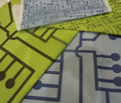
1.  Start with four pieces of fabric cut to 8" x 8".  Test swatches from Spoonflower are great for this purpose.  You can also pick up small cuts of fabrics at your local craft or sewing supply store. 

2.  Decide which pieces you want to go on the outside and which you want to go on the inside.  Put one inside fabric and one outside fabric back to back and line them up. 

3.  Pin the two fabrics together.   


4.  Start sewing the first edge starting about 1 1/2" down from the top.  Sew the complete bottom edge, and the back up the other side up to the same point (about 1 1/2" from the top).  


5.  Sew two lines across the top, leaving about 1/2" in between and some room on the top.  This is where the string or rope will go through later, and the fabric on top will be the ruffles.  

6.  Repeat steps 2 - 5 with your other pair of fabrics.  

7.  Now, pair up the fabrics so that the patterns you want on the outside are on the inside and vice-versa.  You will sew the bag inside out and then flip it so that the seams are on the inside.  

8.  Sew around the two sides and the bottom, but not the top.  Then turn the bag inside out.  

9.  Tape the end of the string to the end of a pencil, and use it to thread the string through the channels you made at the top.  You'll want one string to connect on each side.  


10.  When both strings are through both sides of the bag, tie the loose ends together.  Pull the knots in opposite directions, and check out your work!  


Get the guide!

Sign up with your email below to join my writing journey, and I'll instantly send a printable guide for this project straight to your inbox:

Get inspired!

Here are some combinations of fabrics to inspire you!  


Pumpkin carving 


Thanksgiving and football


Technically Speaking
My circuit patterns are very popular, with lots of sizes and colors to choose from!


Jurassic Patterns


Check out my other fabric patterns for even more!


Want more neat crafts and easy hacks? Check out my book on Amazon Kindle! 

Design Hacks for Disney Themed Rooms


Sunday, March 29, 2015

The Three Things Everyone Should Learn: Number One

Programming

I am not a college professor, nor a professional programmer, but from time to time, I get to impart some of my computer-related knowledge and skills to students of varying levels of ineptness.  I structure my classes in a way that everyone in the class learns something useful that can be applied in their own lives.  This is not so easy, because some of my students

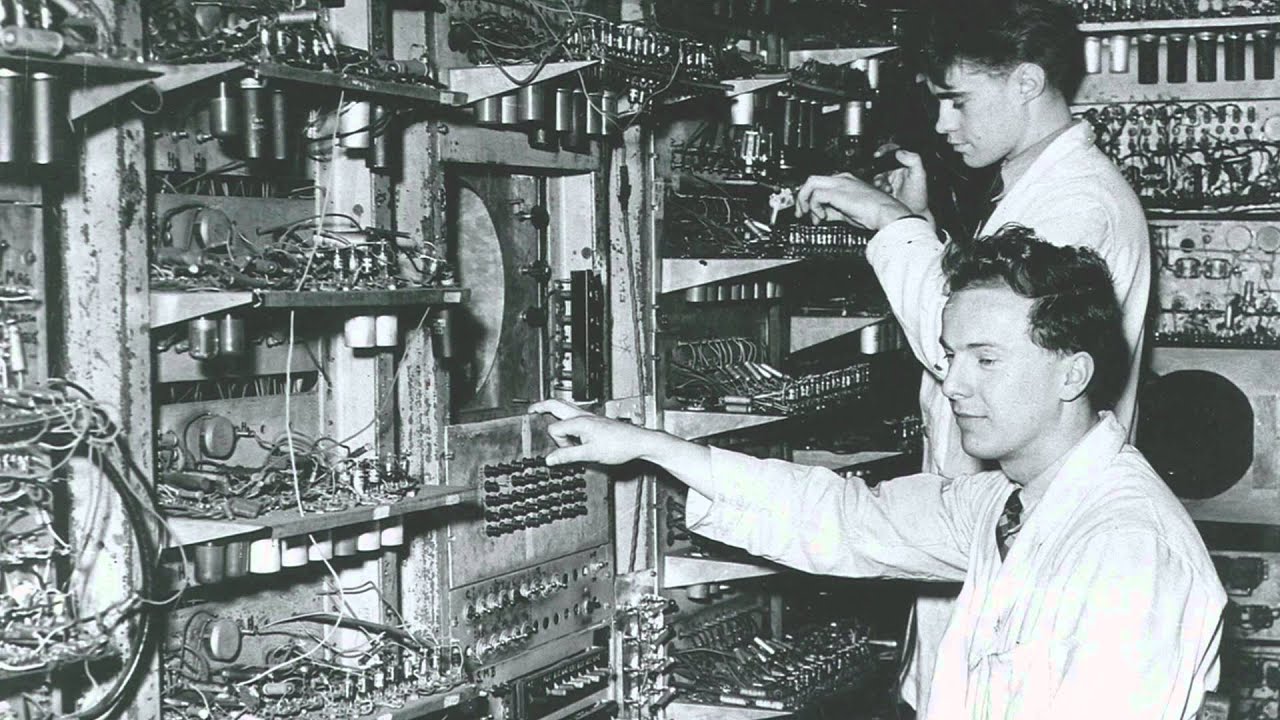
have taken classes on the exact same topics as I am teaching, some are very skilled at those topics already, and a handful of my students don't know the difference between a right-click and a double-click.  But I start off every class with one key point: computers were created to be programmed to make our lives easier.  Computers were not invented so that we could check email, post selfies to facebook or play games, although these are all clever and arguably beneficial resultants of the age of computers.  No, computers were made to solve problems that we could not solve efficiently by any other means.  Therefore, when I think of programming, I do not think of it as a field of study, nor do I think of it as a thing for only the geekiest smart people in our society.  I've been programming all my life, often without realizing it, without connecting the dots in my path of development as a programmer, and when the option to study programming was presented to me, I ran for the hills.  Hell no, I don't want to be a "programmer."  But the power of programming is so compelling that, despite resisting programming as a profession, I cannot turn my back on it.  The truth is that I'm lazy when it comes to work.  I like to think big thoughts, taste fantastic food and drink, travel, experience neat things, but I don't particularly like working.  I like my profession, actually, but I don't like the tactical day-to-day tasks.  I have always taken exception to the mantra that if you love what you do, then you'll never work a day in your life.  I call shenanigans on that: every person I know has had to work, even if they love what they do.  There are just some aspects of having a job or running a business that are less pleasant but necessary.  So I've developed a mantra for my work that has soaked into the culture around me: if you do something the same way, repeatedly, following the same exact steps, then it should be automated.  This mantra is especially true for tasks that take an extensive amount of time, require instructions to do manually because there are so many steps, or are prone to mistakes when the steps aren't followed.  Imagine if every tedious task you had to do on a daily, weekly, or monthly basis was automated and completed within, say, 30 seconds.  How much time would you have to think strategically and creatively?  How many hours would you spend with your family or doing things for yourself instead of putting time in at the office to finish that report?  At its highest level, this is called exception-based management.  Spend your time on the exceptions, then oddities, the things that were so unforeseen that you wouldn't have known to program a computer to answer it, or you wouldn't want a computer to answer it.  Let the computer handle the rest of the monotony.  

Programming is, in my opinion, one of the most important, and overlooked, skills in today's society.  If you sit at a computer all day, I believe you probably could use some automation in your life.  If you have to email, post, learn, stay on top of, practice, sell, buy, look up, research, or write anything, you probably could use some automation in your life.  I may be a little biased from my own point of view, but my hope was to basically cover everyone who gets paid to do something, in the scope of "needing automation in your life".  I am positive that everyone could use automation, in their work, in their education, in their personal lives.  And we are living in a very exciting time of rapid growth and development in this area - a simple search on your favorite app store proves that for any generic task you can think of, there's an app for that!  Awesome!  
So if people are already writing apps for things, why does everyone need to learn programming?  Developers only write apps for one of two reasons: they see a need and believe that they can make money from it, or, they have a need in their own lives, and don't mind sharing it with others who also have that need.  But developers aren't the only people who have needs, right?  Heck, developers I know are the least needy people in my life: they have no need for clean clothes, showers, a neat home.  Just give them a cot, food and a computer and they're happy.  I kid, of course, I love my developer friends, they are some of the smartest and most interesting people I know.  But why should non-programmers sit around and wait for some developer to come along and write an app to solve our problems?  What if they never do?  Don't we have needs that are unique to our professions and situations?  Might there be novel needs that could be automated without a college degree in computer science?  My answer is yes: we all need to know how to program because we can all improve the world around us, make our lives simpler and easier with automation, so that we can get back to doing what we enjoy faster.  

I say that everyone should learn how to program, because I know that if I just said, "some people should learn how to program" or "one person in your organization should learn how to program," the very laziness that drives me to program would drive you to say, "she's
probably right, we need to get someone else to learn how to program."  Or in terms from our playground days, "Not it!"  I say everyone needs to learn how to program because some of you will not try, some of you will try and fail, and some of you will try and succeed.  And yes, having a few people on a team be very good at programming is awesome, because they can usually carry the automation needs of the whole team.  But I will caution this: when I write some piece of code to help answer a problem in someone else's work, I can only program what they tell me it should do.  When I write code for my own work, it not only is better logic because I have more insight into the problem and solution, it gets better with time as I use it and think of ways to make it faster, more helpful and more accurate.  In fact, I've written code for people who were in a position higher than my own, they have used it and were appreciative of my automation, but down the road, I took over their responsibility.  Managers are so funny when they give you more responsibility, aren't they?  They can rationalize it in such clever ways, in this case, "You're already familiar with the report because you automated it, so this isn't too much more than what you already know."  But inevitably, when I take over responsibility for something that I had previously automated for someone else, I find that they missed a lot of opportunities for further, better automation.  

Early in my career, I often found myself thinking, "If I only had a programmer to partner with, we could do so much..." As I've grown, I've realized that working with programmers is complex, because you have to be able to correctly identify your problem and describe the desired solution.  It is much harder to do this if you do not understand the logic of
programming.  It is also difficult to troubleshoot the inevitable problems that arise, if you don't understand for yourself what the code is doing.  All too often people blame the code, "it must be broken," rather than realizing that their inputs were incorrect.  The best-written code will solve for the more common possible human error, but once a macro is involved, any and all problems are blamed on the code, rather than on the user.  For this reason, people who are not in the profession of programming often are reluctant to help others because they are then liable for troubleshooting and fixing any and all problems that come up.  It is so much more empowering for individuals to write and own their code; you can customize it and tailor it to your own needs, you can rapidly develop and test improvements, you can troubleshoot (and find your own errors instead of having that angry developer rub your nose in your mistake), you can adapt it to changes in the inputs and output requirements, and you get a sense of pride from creating such a work of artful automation.  Putting the responsibility of programming on someone else's shoulders can be hurtful to them, less-than-optimal for you, and dangerous for both of you.  So, learn how to program.  Everyone.  

Having hopefully made my point, I will get off my pedestal and give you some practical, actionable advice on how to get started.  If you use Microsoft Excel or Access a lot in your job, I would recommend learning VBA, Visual Basic for Applications.  It is a modified version of VB, Visual Basic, so taking a VB course or getting a VB book would help familiarize yourself with the syntax and logic.  Start by Recording Macros in Excel or Access, and then examine the code.  Use the Internet, a class, or a book, to learn some basic concepts: declaring and using variables, "If" and "Select Case" statements, "For" and "While" loops.  Modify the macro you recorded using these concepts.  Bam!  You can solve a ton of automation needs in Excel and Access.  If you need to monitor a specific website for certain changes, or interact with a website to gather certain information, learn VB.  In both cases, you may also want to learn how to write CMD script to automatically run the macros and programs that you've programmed.  Learning basic programming of any kind, like Java, will help you better query search engines on Google, Amazon, and ebay.  Google Alerts is very helpful, but only if you set it up correctly using the best search syntax, for example.  For writing SmartPhone apps, I believe Java is still the best place to start, and there are several websites that offer free, yes, FREE, classes on how to program.  MIT offers open courseware for introductory classes, Coursera also has free college classes, Treehouse, Codecademy, Udacity, and Khan Academy are just a few of the available resources offering free training on programming topics.  The only problem with this approach to learning how to program is, well, you.  Until we develop the technology to download knowledge into your brain directly and immediately, you are going to have to set aside time to take these courses, go through the examples, and try programming.  And, if you're like me, you're lazy, so it is not easy to do.  If you go this route, I would recommend having a fairly simple, but useful, application idea in your mind; you want something to work towards and achieve that will give you immediate feedback on the usefulness of programming.  Learning to write, "Hello world," and sorting fruit by color are hardly helpful, but courseware has to provide generic, easy-to-understand examples for you to work through.  Having a project in mind will help solidify concepts that you can immediately apply to your idea.  If motivation and willpower to continue is a particular problem for you, then you may want to seek out a community college course or another class with regularly scheduled meetings that you pay for, to incentivize you to go and continue going and to get the most out of it.  

Learning to program, like most things in life, takes initiative to do.  But since not everyone in your office is going to do it, I can almost guarantee it will make you stand out among your peers.  Just be cautious not to be pigeon-holed as the programmer, if that's not the career path you want to take.  Take it from a non-expert expert, I can put code together but I am by no means a programmer, but the power to automate simple tasks has been a key driver in my ability to succeed in my field.  With great power comes great responsibility, and programming is the closest thing I can think of to a real-life attainable super-power.  Besides, computers were meant to be programmed.