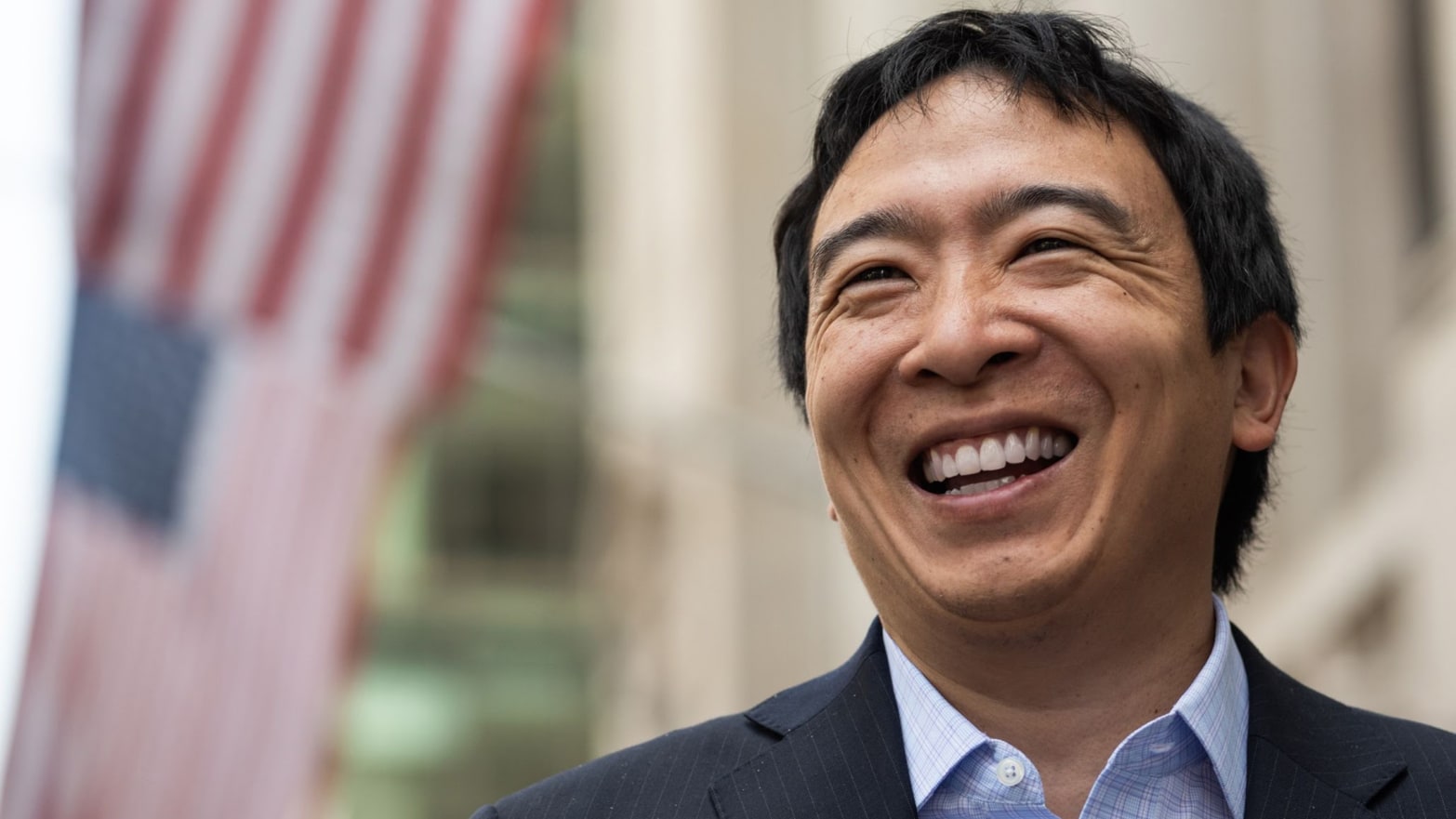
You've seen the headlines. This crazy Asian entrepreneur wants to run for President so he can give everyone in the US $1000 per month. It's crazy, right? Nothing is free. It can't work. It's just a headline.
But actually, the concept of UBI is older than our great nation. And it's not just a crazy theory, it actually has some teeth and solid evidence behind it. Below are some of the biggest arguments I've heard against UBI, and what the evidence and experts actually say about those arguments. My intention here is not to necessarily convince you that UBI is the right solution, because there's actually a lot more content out there to do that. My intention is to show that it's not just some crazy idea that will never work in reality, to prompt further questions and challenges, and to ultimately learn together if this is a feasible idea to implement in the US.
Landlords will just increase rent by $1000 per month / UBI will cause inflation and the number will just have to keep increasing
Actually, we're in a deflationary period in terms of consumer goods. Technology has delivered the goods on improving our lives and making things more affordable. Remember, there was a time when only the richest households could afford a refrigerator or a car. Those things are much more commonplace now, taken for granted by most households. Clothes are cheaper, you can buy fruits and vegetables from all over the world instead of just what is in season in your local area, and the list goes on. The reason these things have become more affordable is competition. Housing is also subject to competition; if one apartment complex, or let's say even most apartment complexes in a given area, decide to increase the rent because their renters now have $1000 more in their pockets, the prices will go up initially. But all it takes is one complex to not price gouge, or even undercut the price gouging by just enough, and that introduces competition. Then the other complexes would eventually need to lower prices until they are once again at a place where they are competitive. With an additional $12000 per year, renters can choose to live further away if that makes sense to them, perhaps spending a little more on their commute but saving substantially more on their rent. Or, they could choose to just get up and move to a more affordable place and get a different job altogether. Yang calls his UBI the "Freedom Dividend" because it gives people the freedom of choice. People will be "less stuck" and more free to make the decisions that want to make about their lives. Ultimately, UBI is capitalism where the bottom isn't zero. So no, there is no evidence or logical argument that supports a long term rise in rent increases that would negate the UBI.
The two bills in our lives that are most shielded from competition are college education and healthcare. These are also the two places where we see inflationary growth in prices. These are big hairy issues, so I'm only going to scrape the surface here and go in a couple different directions.
First of all, college is overprescribed in this country. We have been telling the last few generations that they have to go to college to be successful. That may have been good advice when college was more affordable and college graduates were more rare, but now students are racking up 2.5 times more debt in student loans, and graduating with fewer job prospects. This idea that everyone can and should go to college is toxic, and creates a stigma around the good work done by mechanics and technicians and other high-skilled labor fields. The irony is that some of the highest-paid college graduate jobs are some of those being targeted first for automation: legal work, examining x-rays, even surgical operations are seeing technology excel beyond human capability. Even journalism (yikes!!) is being automated. Hey, as a college grad, I will say that college was great - it was fun, I learned a lot, I expanded my mind and horizons, had valuable experiences - but I also saw a lot of my peers fall by the wayside; it was tough and it's not for everyone. Bernie Sanders came up with this free college scheme, and that sounds great if you believe that college is the way to a better life. Unfortunately, it's just not the right path for 100% of our people, so sure, maybe a free a college education would benefit some really smart but underfunded young people, but all in all, it addresses only a portion of our society. UBI addresses 100% of adults in the US, period. Now, there's nothing stopping a motivated student to spend their $12000 on college courses, so the trick is getting college to be affordable enough that the UBI can pay for most or all of it, if that's how a person chooses to spend it. College affordability, then, needs to be addressed, and I'll leave it at that, except to say that the UBI proponent Andrew Yang has a really well-thought-out plan for this on his website here: https://www.yang2020.com/policies/controlling-cost-higher-education/
Healthcare is another whole bag of worms. I've been blessed with healthcare tied to my job for my entire adulthood, and was on my father's work's healthcare before that, so I've only seen that side of things. But I can tell you, it is infuriating at times. A recent example comes to mind: I have exercise-induced asthma, and so from time to time I take a hit off my rescue inhaler. I recently realized my inhaler was out of pumps, so I called my Teledoc, which is a neat service where you talk to a doctor on the phone, no travel needed or waiting in the lobby for your appointment, and if they can diagnose or assist you over the phone, they do. You still a pay a copay for it ($40 does seem like a lot for what amounted to about 45 seconds of discussion), but it is exponentially more convenient than going to a regular doctor. It was Sunday. I hadn't used this Teledoc yet because I just started my job back in July, so I had to go through a few extra steps to set up my account. It took maybe ten minutes or so. But once we got to actually scheduling the appointment, I was informed that my insurance was not eligible for Teledoc. I thought to myself, "Hmm, I guess I should have paid attention to the changes they said were coming to our healthcare this year…" So I had the option of paying the non-insured price, or hanging up and sorting it out with my insurance company. I ended the call and attempted to call my insurance, but it was Sunday and they didn't answer the phone. Frankly, a couple weeks went by because I can never remember to do these things during working hours, because I'm, you know, working. I finally carved out some time at work and called my insurer. They assured me I was qualified for Teledoc, so I asked them to make a call and clear it up. They did and got Teledoc back on the phone, and they kept asking me why I wasn't allowed to set up my account before. I don't freaking know, you guys were the ones telling me I wasn't qualified!! Deep breath. I forged on, asked them to go ahead and set me up my account (again), so I could have a call with a doctor that day. I spent 40 minutes on the phone in total on that day, before getting the call from the doctor. So now I've spent close to an hour on the phone just to establish that I can talk to a doctor. I set the call up for asap, and the doctor called me just a few minutes later. The conversation went like this:
"Hi, I'm Dr. [So-and-So], how can I help you today?"
"Hi, I have exercise-induced asthma and my inhaler is out. I'd like to get it a new prescription for it."
"Ok, what inhaler do you use?"
"I use [Pro-Air]."
"Do you have any other symptoms?"
"No."
"Has your asthma gotten worse?"
"No."
"Do you want two refills or three?"
"Three would be great."
"Ok, I will send three refills to your pharmacy."
"Ok thank you."
"Good bye."
Brilliant, right? Now I don't have to make an appointment with a doctor, carve out time in my day to go over there, drive the distance to the doctor, wait in the lobby, check out, drive home, etc. This is something all Americans should have, really. It's amazing. But then, I went to my pharmacy, and after waiting several minutes for someone to talk to me (there was no one in line ahead of me) I was told it wasn't filled yet, and to come back in 10 minutes. I did some shopping at Target and came back. Then I was told they thought they had had the inhaler but they were out. I waited another 10 minutes or so for them to find an inhaler at a different pharmacy. I had an appointment to get to, and didn't have time to drive over to that pharmacy before it closed, so I had to go the following day. I got there, waited in line behind one person, they were swamped, they had a line at the drive thru, people waiting in chairs, and were barely acknowledging the people in line. An overhead voice chimed every 10 seconds or so, "Call on the pharmacy line," but nobody picked up the phone. The person ahead of me in line finally was greeted and talked with the pharmacist, got what he needed and was on his way. Another few minutes passed, and I was greeted. I got my inhaler and was on my way. It took about a half hour to get home from that pharmacy, not because it was far, but because of the spring break traffic that has set in on my area. So all in all, I spent about 2 hours getting my inhaler, and the most critical step, the doctor prescribing it, lasted less than a minute. If there was better competition, these inefficiencies would be knocked out. The Teledoc agent I first spoke to should have recognized that I was qualified for the program, that would have eliminated the additional 40 minute phone call. The inventory of inhalers should have been accurate, that would have eliminated the need for me to go to a second pharmacy. In fact, something like an inhaler, which doesn't need to be measured, could be just as easily shipped to me, or alternatively, at least picked automatically and made available in a vending machine type device for me to retrieve with my insurance card or something similar. We can get cupcakes out of "Cupcake ATMs" but we can't figure out how to get people the medicine they need in an efficient manner. Besides the doctor, there really was no need for any interaction with a human, it's all just red tape. And really, a robot could have asked me the same questions that the doctor did, too.
That was a long-winded story to show why competition is needed in healthcare. I’m an advocate for applying the same technological advances Amazon and Google use to healthcare. The problem is how to get everyone to comply. Frankly, I don't know the answer here. Yang's answer is Single-Payer Healthcare, and I can't say whether I'm for or against it, it makes a lot of sense, but I just don't know. The point is, the healthcare system is broken. What's neat about UBI is that it gives people a minimum income no matter what they do, a backstop against poverty. With such a cushion, it is possible that more people will become entrepreneurs, because the risk is reduced. I think some really brilliant people working low-paying jobs in healthcare might take that UBI and address the problems they see in healthcare, and could come up with some brilliant solutions. We don't need to legislate it necessarily; I believe in the American ingenuity, and when you remove or reduce the barriers and risk, you open up a world of possibilities.
 This looks like socialism, it will never work in America
Actually, this is a very American idea, dating back to Thomas Paine in 1796, and was passed by the House under Nixon's administration before failing to pass the Senate because they didn't think it was enough money. It's not taking over the means of production and giving everyone an equal amount of the total pie. It's capitalism where the bottom isn't zero, plain and simple. Yang proposes we fund it with a VAT tax, which is something that has been implemented in every advanced economy except the US, and he's proposing it at about half that of the European VAT level. People will have more money to spend on what they need, and there are no strings attached like there is with food stamps, housing subsidies, disability and other welfare programs.
Reference: https://basicincome.org/basic-income/history/
Poor people will just spend it on stupid things
This is a misconception that we've had engrained in our heads, and I’m not entirely sure why or where it came from. Perhaps it is just wealthy people's way of rationalizing why they are better off than the homeless beggars on the street. If I'm fundamentally superior to them, then I don't have to pay attention to them or try to help them. The thing is, the overwhelming evidence is that this is simply not true. Giving poor people free money with no strings attached has led to reduced homelessness, reduced crime, better mental and physical health, and so much more. I am not sure I can speak to it better than Rutger Bregman in his TED Talk that first changed my mind about it, so I'm going to say that if you have any inkling that poor people will spend the UBI on stupid things, you need to take the 20 minutes to watch this video. Like, seriously, stop reading this blog and go watch it, I'll wait.
Rutger Bregman: Poverty isn't a lack of character; it's a lack of cash
People will quit their jobs and be more lazy
Again, this is where we have actual data that proves this to be incorrect. $12k is just enough to get every American adult above the poverty line. If Joe Smith is making $50k and the government says, hey, I'm going to give you another $12k on top, Joe's probably not going to quit his job and live off that $12k. But, if Sue Banner is working two jobs for a net of $24k and has a kid at home, and can't seem to find the time to go back to school to make a better life for herself, she might take that $12k, quit her second job and either spend more time with her child or start night classes, or both. UBI gives people choices. It gives minimum wage earners more bargaining power - when you are at a negotiation table and you have no alternative, then you don't have leverage. But now everyone has the option of quitting their jobs and spending time finding better jobs or better ways to spend their time, which means employers will have to pay what the market demands because people won't be so desperate for the jobs. The two groups of people that are shown to quit jobs when given a UBI are people who will stay home to spend time and take care of kids or elderly relatives, and young people who go to school.
You should just make college free
I've already addressed this above, that college isn't for everyone, and it's not the answer to long-term technological unemployment or underemployment. Making college free would only help a subset of the country in the short term, which would be great for those people for that timeframe. UBI is for everyone, and makes college that much more affordable for those who do want to go.
It doesn't fix the inequality
This is a fair argument, and I agree to an extent. But I would actually say, fixing inequality shouldn't be the goal. If you want everyone to have exactly the same amount of everything, you're no longer talking about a capitalist society, and you're not talking about America. We want people to innovate and create and excel, and to be motivated with rewards for doing so. That is what has made America one of the most (if not the most) creative and innovative countries in the world. If we said to those creators and inventors that what you do won't make a big difference in your life, merely that it will subtly improve the lives of everyone, they may not be interested in spending their time, energy and effort on creating and inventing. People who create amazing things should be rewarded! But, we have enough wealth in our country that we don't necessarily need people in poverty in order to reward innovation. So UBI actually just fixes the very fringes of inequality. Under a UBI plan with the VAT that Yang is proposing, nobody would be under the poverty line, and the people at the top reaping the benefits of the amazing technology they developed would have a thin slice shaved off. But it does even more than that, because it gives people more choice.
Government can't be trusted (to not take it away)
This may be the most compelling reason a UBI may not be successful. The idea that we could be promised $1000 per month, make adjustments to our lives with that cushion in mind, and then have the UBI program cancelled because a new administration decides it doesn't work is even more terrifying than not addressing the need for the UBI in the first place. So perhaps this is more of a caution than anything else: we need to make sure we do it correctly so that it can't be removed. But, I don't think that's an impossible task, and the data supports it. Social Security, while not being properly funded for years and being the flawed system that it is, has continued well beyond its feasible life. We also have an example of something much more closely related to UBI to use as a model: the Alaskan Permanent Fund Dividend, which is funded by oil. This has not only succeeded many changes in government, it has done so in a very deep red state.
$12000 per year isn't enough
My response to this rebuttal is, "Enough for what? Enough to make you rich? You're right!" Look, the $12k wasn't plucked out of the air, it targets the poverty line directly. The thing about UBI is that it is not contingent. It does not keep people down at the $12000 wage line, it lifts people out of poverty and boosts people by $12k. If you're making $6k, then you're now getting $18k. If you're making $20k, then you're now getting $32k. And if you're making $100k, you're now making $112k. It's elegant in how simple it is. It doesn't get taken away from you at some level. It doesn't require that Taco Bell pay high school students a livable wage. It allows the market to work, but ensures that nobody is suffering from poverty.
 The technological unemployment thing is a myth - we'll have new and different jobs to replace the ones that are lost to automation
This goes back to the rationale of why we need UBI. It's true that history has shown us a fear of technological unemployment that hasn't come true in past revolutions. In those instances, jobs we couldn't have imagined were created, like Social Media Manager and Airbnb host. The argument is that this time is fundamentally different, because the robots and AI and automation are no longer enhancing humans, they're replacing them. And it's not people on the fringe of society crying wolf and then crawling back to the rock they live under, these are the intelligent entrepreneurs, technologists and job creators who are saying this is going to happen: Warren Buffett, Bill Gates, Elon Musk, Mark Zuckerberg, Andrew Yang. Andy Stern's book called "Raising the Floor" has some good insights on this topic, as do "The Future of the Professions", "Four Futures" and "What To Do When Machines Do Everything". There's a great fiction book, also, that's a quick read and so completely out there it's a little crazy, but I like it for the way it lays out paths to dystopia and utopia that are near-real, and I've been referring to it because I think it's a great thought exercise for this kind of discussion; it's called "Manna: Two Visions of Humanity's Future".
Yang talks about this a little more urgently. He says we're in the third inning of this automation revolution already! Self-driving trucks are being tested, and truck driving is the most common job in 28 states. Food service and checkout counters are being automated, we see those things already, and retail and food service jobs make up a huge portion of the population currently. The typical response from nay-sayers, then, is we'll just re-train them to be programmers. There's some logical fallacy here, and then there's some numerical problems here. First, re-training programs have shown to be 0-15% effective, meaning some are 0% effective, and at best, 1 in 10 people would be successful. Second, truck drivers likely started driving trucks because they weren't really big fans of school to begin with, what makes you think they'd want to go back to school 10 or 20 years later? Third, only about 8% of jobs are in STEM fields, where we put a lot of value. If 100% of the population tried to go for those jobs, somewhere around 90-92% would fail to find employment. And technology will only worsen this problem - AI is getting better at writing code. Finally, programming is hard! I consider myself to be a pretty smart person, and I've learned basic coding, but at some point, it gets too confusing to me. Programming is not something everyone can do, and I include myself in that, so as to say I'm not belittling the intelligence of non-programmers.
The truth is, nobody has a crystal ball, not even Musk or Zuck. Maybe they've got it all wrong, and it will be a laughable mistake akin to when the president of IBM said in 1943, "I think there is a world market for maybe five computers." 80 years from now we may just as well laughingly say, "Ha ha ha, Elon Musk, thinking that AI was going to take our jobs away. We have more well-paying jobs now than we could ever fill! Silly Elon!" Even if that were to be the case, there's nothing inherently wrong with having a UBI to usher us in to this new unforeseeable age. Afterall, if its good enough for Alaska, why can't the whole country benefit?
On the other hand, the benefits of UBI are amazing, and evidence that shows these benefits will happen whether or not technology drives us all out of jobs. Yang lists many in his book, and I'll summarize what hits home most for me: UBI reduces financial stress, allowing people to make better decisions based on an abundance mindset instead of a scarcity mindset. UBI supports parents and caretakers which will mostly lift up women. UBI will help maintain order, protecting us against riots and chaos from mass unemployment. UBI reduces mental health issues, suicides, drug addiction and incarceration. A side note here, did you know that the life expectancy of Americans has dropped for the last three years? I didn't realize this fact until recently. Suicides and overdoses have overtaken the previous number one cause of deaths: car accidents. You know who is prone to suicide and overdosing? Middle-aged men who have lost their jobs and feel societal pressure to provide for their families. So even if today is the absolute worst case scenario for the country as a whole, and we'll get back to a higher labor participation rate.
We can't afford it
The affordability is a big issue in UBI. The neat thing is that a lot of people have been working on this, and the same books that I've referenced above will tell you a lot about some proposals. Google just about any video of interviews with Andrew Yang, and he talks about it very simply. In essence, he says, the headline figure is about $2 trillion, against an economy of $19 trillion and a federal budget of $4 trillion. But it starts to become much more affordable when you realize that some welfare programs could be replaced by the UBI, which could mean up to $500 billion already being spent would just shift into UBI. The big game changer is the Value Added Tax, or VAT, which is something that every developed country has except the US. At just half the VAT of the European level, we would generate $800 billion in additional tax revenue. This is like the oil dividend in Alaska, except its taxing the technology and automation, which is the oil of the 21st century. "The beauty" of UBI that Yang talks about is how much we spend on homelessness, hospitalizations, incarceration, healthcare for people falling between the cracks that adds up to hundreds of billions of dollars also. Once a UBI is provided, health and education increase and incarceration and crime decrease. This isn't theoretical, these results have been proven out in real cases. Finally, by putting $1000 per month into the hands of every American, it grows the economy. "The Roosevelt Institute projected that the economy would grow by approximately $2.5 trillion and create 4.6 million new jobs. This would generate approximately $500 – 600 billion in new revenue from economic growth and activity." When every other developed country is utilizing a VAT, and caring for their people's health, it feels like, actually, we can't afford NOT to implement a UBI.
These are the arguments against UBI and the counterpoints I've found. What other downsides, pitfalls or problems are there? Let's keep the conversation going, let's vet this thing, and if the benefits outweigh the negatives significantly (VAT tax at half the standard of other advanced countries), as it seems like they do right now, let's implement this thing.
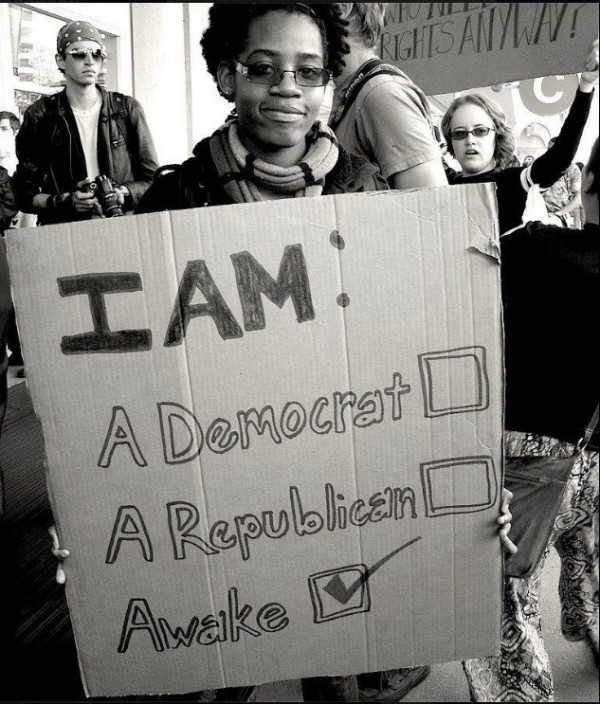
I am a Republican. At least I think I am. At least I once was.
I have some of the traditional makings of a Republican: white, born to military brats, raised with Christian values. I recently learned that some of my physiological traits point me towards being a Republican: strong gag reflex (the strongest, really, I couldn't swallow pills until I was 25), severe adverse reactions to being startled (I got scared watching Scary Movie 3). My most important beliefs align with Republican values: I believe in small government and free markets, anti-abortion (especially late-term), the right to bear arms, and at my core, believe the US should be the land of opportunity where anyone can make it.
But I drive an electric vehicle. And I recognize the privilege being white has afforded me, among other advantages that weren't necessarily based on my merit or work ethic. I've worked hard, no doubt, but I've had opportunities to work hard in the ways that have made me successful, where other people don't get those same opportunities or they don't come quite as easily. Also, I'm not racist, or more accurately, I fight the internal biases as I recognize them. I also stopped going to church long ago, because I saw more hypocrisy than righteousness there. Do these things make me a bad Republican? Or, heaven forbid, a Democrat?
No, I don't think so. I think it makes me "mixed" as defined in the book "Prius or Pickup." I subscribe to both opposing beliefs, that the world is a dangerous place and we need to protect ourselves, and also that the world is a big, bright, beautiful place to explore. I'd like to think of it as pragmatism, or maybe pragmatic optimism. I believe life isn't worth living if we're just here to shell up, build walls and do the same thing every day. But I also believe we can't go out into the world assuming the best in people without having our guard up, we'll get taken advantage of or worse. Nothing is guaranteed in life - danger lurks around literally every street corner.
I'll speak briefly about my biggest fear. Where there's a vehicle driven by an imperfect and likely distracted human - there's a chance for tragedy and death. But staying at home to hide from this danger, and just passing time until old age, isn't acceptable to me. And moving to a tight-knit commune with no cars is also not very palatable, because I want to explore the world which has long ago become a vehicle-centered place. So I take the chance and get on the road in order to live the most fulfilling life I can fathom until the day something happens to end my life, whether that is tomorrow or 80 years from now. I strongly believe self-driving cars are the way forward, a must-have solution. There will be hazards and issues along the way, but even if self-driving cars improve the safety by 30%, I think it's worth it; and I think they'll improve the safety by 3000% or more.
I voted for George W. Bush, driven mostly by the campaign promise to fix the Social Security system once and for all. Unfortunately, some major events got in the way of his Presidency, and derailed his agenda to focus on more pressing matters like security and terrorism. I believe that we'd be living in a very different world had 9/11 not happened, and Bush would have done some amazing things that would have set us up for a very different future. But it is a dangerous world, afterall, and two airplanes were able to fly into two towers.
I didn't vote for Obama, primarily because I didn't believe in his Democratic vision, and I had a Republican candidate I was more closely aligned with. But, I was damn proud of my country that we finally elected our first black President. It made me think, wow, maybe we've gotten over the largest hurdle in the racism issue. I see now that I was wrong, that Obama's election was not as indicative of the abolishment of racism as I thought, that perhaps its only been mostly overcome in one party, in one portion of our society.
I didn't vote for Trump, either. Call me a bad Republican if you wish, because if voting for Trump makes me a good Republican, I don't want to be a good Republican. Trump's campaign was littered with racism, incoherent and unintelligent spats, and character flaws I just couldn't get passed. As a business person myself, I like, no LOVE, the idea of a successful entrepreneur and business owner taking over a political post - in isolation, this sounds like a brilliant idea to me. But I'd elect Elon Musk or Mark Zuckerberg before I'd vote for a racist misogynist like Trump. When Trump was elected, I was scared, more than ever before, of war coming to American soil in my lifetime as a direct result of our President. I made decisions about where to live based on proximity to Trump buildings, wanting to distance myself from potential targets, that's how serious my fear was. I suppose I'm pleasantly surprised that Trump hasn't started World War III yet, although I'm not going to throw my support behind him or his wall anytime soon.
I also didn't vote for Hillary in the last election. Call it throwing away my vote if you wish, I honestly thought, like so much of the media that covered the run up to the election, that Hillary had in the bag, although I don't think I would have voted for Hillary even if I knew the tables were in Trump's favor. Hillary campaigned on some of those core Democratic ideas that, frankly, make me gag. For example, while a minimum wage of $15 might sound good to the single mother taking orders at McDonald's, I argue that it would deprive the high school student wanting to gain work experience the chance to gain said experience. A high school student living at home (with parents) with no kids does not need a "livable wage" in order to gain work experience. As an employer, what I am I supposed to do with a bunch of graduates that have no proven track record in work? Statistics say that, all other things kept equal, having a job makes you a better candidate for a job than being unemployed.
Ultimately, I voted for an independent, not because I thought he would win, although he was far more palatable than the two primary candidates as a potential President, but because I wanted to make a statement to the Republican party that, as a registered Republican, the candidate you gave me does not work for me. Well, it doesn't sound like my statement was heard, because here we are with a Republican President whom I did not vote for.
Why Andrew Yang & His Big Idea
Alright, so I've set the stage that I'm maybe not the most far-right out there, that I see flaws in the Republican party, the views and the current POTUS. But on the issues most core to me, I do lean Republican. Now, I'll explain why I am open to and excited for Andrew Yang's run at the White House. First of all, Yang isn't a career politician, which I love - he has been in touch with, and the lead the way for, the business and entrepreneurial communities in successful American-Dream kind of ways (not bankrupt-y and tax-evasion-y ways). That's pretty awesome, right? Also, he's a minority, one that hasn't yet been elected to the White House, so I'd be happy to see the second minority President so early still in my lifetime. Third, he's not pitching the usual Democratic nonsense that turns me off from the likes of Hillary and Obama. In fact, he could very well be the Republican's Democrat. I wouldn't expect that the Republican party would run a candidate other than Trump in the next election, so if you're like me, a Republican who doesn't like Trump, I think Yang is going to be a really good option.
Now, Yang has a lot of really well thought out, detailed and specific plans and ideas for his Presidency, which I think any intelligent voter will appreciate. I'll come back to this point later. The primary platform that Yang is running on is incredibly novel, and yet, not entirely new or unvetted: he is proposing a Universal Basic Income, or UBI, namely, $1000 per month given free and clear to every US citizen of 18 years of age or older.
Stay with me here. I know the visceral reaction you're probably having if you lean right and if this is the first time you're hearing this. I've been there, but hear me out. If you lean right, you probably agree with me that the US is spending far too much on things like welfare,  food stamps, disability, tax breaks for charities, Social Security, etc. I'm going to refer to all these programs and others like them as simply "welfare" for the simplicity in this post. Not only are we already dolling out millions of dollars to people who aren't working or can't work for various reasons, we're paying people to administer these programs. That means, we're shoveling out cash for government workers to create forms, read forms, reject incomplete forms, process forms, interview welfare candidates, independently verify claims, follow up on applicant candidacy conditions, audit welfare candidates records, and finally, write checks. We're also discouraging certain classes of people from going back to work even if they can. Anecdotally, we've all heard stories of someone living better off than his gainfully employed neighbor. These welfare programs are only good until a certain income is acquired, so a proportion of people getting these benefits will elect not to risk the welfare income and will choose not to work even if their conditions change and they could go back to work. We're breeding dependency on the system, expanding these welfare programs and discouraging looking for gainful employment or betterment. This is the status quo. If we do nothing, elect no leader willing to make the tough changes, this is what we will continue to do.
UBI Makes Government Smaller - A Republican Ideal
Now, hypothetically, what if we could eliminate all welfare programs and replace them with one simple solution that's fair to all Americans, requires no oversight and minimal administration, and encourage citizens to go back to work when/if able? This is a hypothetic exercise for now, and by no means is what Yang is proposing. But doesn't that sound like a good idea? Even if you make good money, could $1000 more per month be useful? For people who don't make good money, wouldn't $1000 per month go a long way in improving their lives? Most people are not going to quit their jobs with a UBI, because $12000 per year isn't a very good salary. But maybe people will quit their second jobs and spend more time with their kids, or go back to school, or pursue the startup they've been thinking about. Some people will quit their jobs, because they were unhappy there but felt trapped. People on disability that no longer need it could look for jobs while still having an assured minimum income even if the job fails them. If we eliminated Social Security, than those that are employed will get more of their paychecks, while not leaving those relying on Social Security without anything. We could save our tax dollars from going to administrative bureaucracy.
I'm not going to get into the details of how to fund the UBI here, nor am I going to discuss which programs stay and which get cut. There is a ton of literature out there, books, articles, you name it, with a lot more information on various proposals to get there; I'll reference some at the bottom. My intention with this post is not to define the way forward, but rather, to ask you, my reader, to have an open mind about the possibilities. I'm not 100% sold that UBI is the perfect answer, honestly, but it’s the best thing I've seen as a solution to a lot of our problems, and I'd like it to be debated on a national stage and frankly, I want it to be tested definitively. There have been a number of smaller studies that showed remarkable results. This concept was almost passed into law decades ago in the US Congress, but was squashed by what amounts to a misunderstanding. What I want you to take away from my post here is this: implementation of a UBI with offsets in other government areas will in fact shrink the government. Thus, this is a very Republican idea. It's being pitched by a Democrat now, but if a Democrat is all we can expect to oppose Trump, and if that Democrat is pitching something palatable, even a better alternative than status quo, to Republicans, then I think we have our Republican's Democrat.
UBI Empowers the Free Market - A Republican Ideal
Beyond diminishing the administration of existing welfare programs, UBI speaks to Republican values in other ways. For example, food stamps are only accepted in certain places on certain things. This is because we have core beliefs that we think we know what people need better than they do. In the same way that it is better to send money to hurricane-devastated areas than to send blankets, clothes and canned food, it is better to give people the power to get what they need for food, etc. The arguments that poor people will spend the money foolishly on drugs and alcohol or junk food, etc., are only beliefs and do not have strong evidence supporting them. These are biases we hold (I'm including myself in this, because I, too, believed it) that says that if you're poor, there must be something wrong with you, you must have made bad decisions. If you hold these biases/beliefs, I'd encourage you to spend just 15 minutes to watch this TED Talk: Rutger Bregman: Poverty isn't a lack of character; it's a lack of cash or read the speaker's book "Utopia for Realists." The essence of it is, poor people are not stupid or bad; the lack of financial certainty acts like a mental block, and causes poor (short-sighted) decisions. By simply giving homeless people $1000, those people have turned their lives around. It's pretty incredible. It's almost unbelievable. But then, I've seen both sides with people I know, and I've come to agree that poverty is simply a lack of cash.
All this to say that my second take-away is: UBI empowers the free market. It empowers people to choose what is best for themselves, instead of limiting them with food stamps and other such welfare programs. Beyond food stamps, I had a debate on social media recently about this border wall Trump wants to build (it still kills me that Mexico was supposed to pay for it, and now we're talking about the US paying for it and nobody seems to care about that multi-billion dollar reversal). The focal point of the debate, although it side-stepped what I initially posted, was that one house very near the border, which wasn't occupied on a regular basis (like a second home or vacation home almost), was easily broken into, robbed and damaged, and the criminals left track marks showing how they carted the goods across the border. The premise on one side was, if we had a border wall, that wouldn't have happened. My argument was, maybe it wouldn't have been so easy, but it still could have happened.
I moved to Florida just in time to be hit by the worst hurricane in history, and saw not only nature-made devastation, but some of the best and worst in human nature. Some of the best in human nature as neighbors checked on each other and helped each other, including hard labor and risking their own lives, and companies giving help in amazing ways, free bottled water, free ice, free showers, free laundry, free medical services, etc. Some of the worst in human nature as people from neighboring states drove into the wreckage to loot, carrying guns and injuring people that got in their way - leaving behind bodies of humans who made it through what they thought was the worst, only to be shot and killed protecting their home days later. In reaction, large spray-painted wooden signs appeared all around town threating life and limb to would-be looters, like, "I WILL SHOOT," or "YOU LOOT, I SHOOT" and "YOU LOOT, YOU DIE," the latter was just a few doors down from me. Here's the thing that sucks - we don't have a border with Mexico here in Florida. These weren't illegals. These were opportunistic American citizens. There were other problems, too, like unlicensed contractors or pretend contractors coming in to "help" repair damages and taking advantage of the hurricane victims. Crime takes many forms, and it's all pretty crappy.
So back to the house near the Mexican border that was robbed - what if, instead of a wall to keep Mexicans out of the country, we spent that money on protections for our own property? If you have a mostly-empty house near the border that is in danger, maybe something more than standard door locks is needed. Americans can be bad too, as I've seen so recently after Hurricane Michael, so it would be awfully ironic if the border wall was erected, and then looters from the American side of the wall went and damaged and stole from said house. And also, if Mexican criminals elected to cross the border to rob your house, a wall may just be a nuisance in the grand scheme of things. My point is, a wall will not end crime. If we can agree on that point, then why not use the money instead to let the free market work to protect our properties better?
UBI Protects US Citizens - A Republican Ideal
A lot of the literature around UBI is based on the prediction that automation will reduce and eliminate jobs. I'm not going to tell you this is true or not true, because the verdict is still out for me on this one. On the one hand, we've had these fears time and time again in the past, and history has shown that new and previously unimaginable jobs have been created. I

could see this being repeated once again as more jobs are automated into the foreseeable future. But on the other hand, there are compelling reasons why "this time" might be different: namely, artificial intelligence not only makes people faster, it eliminates the need for people altogether, and some automated solutions are actually better than humans in ways that make it hard to see what value humans will have in terms of economic production. Either way, UBI is not a bad thing in terms of job loss. If automation does in fact lead to the rise of technological unemployment or underemployment, then we have UBI to ease the blow. If new jobs are created faster than we can fill them, then UBI provides a cushion while we educate ourselves and transform into candidates for these new jobs. If new jobs are created at the same pace as old jobs are replaced by machines, then UBI merely gives us some certainty in a changing world. What's more, it gives US citizens a head start on the often-villainized illegal immigrants, because our poorest citizens won't need to compete with under-the-table employment of illegals, they'll be able to demand their market worth. And these are really just the direct effects.
Indirectly, the certainty that comes with a UBI (at least theoretically) protects our poorest US citizens against making the bad decisions that lead to things like drug addiction, crime, unwanted pregnancies. Imagine less incarceration, eliminating the opioid crisis, reducing gun violence and mass shootings, fewer women turning to prostitution or remaining in abusive relationships. When people have stability, they are less likely to do drugs, commit crimes and take desperate measures. In turn, this not only helps our poorest US citizens, it protects all US citizens from being the victims of crimes.
But Wait, There's More
UBI may sound like a very leftist ideal on the surface, but actually, it’s a simple, pragmatic and economic solution that beats all other solutions to a lot of our issues. At it's core, it actually supports many of the values of traditional Republicans in ways that you won't get from President Trump or other up-and-coming Republican candidates. And here's the kicker: when it was brought to Congress initially, it was supported by, gasp, a Republican President! A lot has happened since then, and our party lines have become more divisive and more personal. I think, as a Republican, it's only fair to look back at some of the greatest achievements of our government: regulating work hours, or women's suffrage for a couple examples. Those started with a Democrat's audacity and are now taken for granted by Republicans and Democrats alike. It's okay to vote Democrat, especially when that Democrat is pitching something that Republicans can get behind.  Andrew Yang's Presidential race is centered around UBI, and I've spent a lot of time here talking about why UBI isn't so far-fetched for a Republican like myself. But I want to circle back to the man behind the UBI platform, because his job would be far from complete if he gets to the White House and implements UBI. I would encourage you to go to his page and read about his other ideas and plans on Policy: https://www.yang2020.com/policies/ He has a quote on his policy page from the Democratic Party Leadership in Iowa that says, "Mr. Yang has the most detailed and comprehensive set of policy proposals we have ever seen at this stage in the campaign." After reading a number of them in detail, perusing the rest and reading his book, I tend to agree with that statement. He has really outdone any candidate before him in terms of detail and number of policies, and I think you'll agree with me that they aren't the outrageous, impractical ideals we often see from Democrats, but rather, practical, pragmatic approaches that could almost be called bipartisan. In a world as divisive and plagued as ours, I think Yang as a candidate is more than a breath of fresh air.
First and foremost, Mr. Yang needs to be given a spot on the stage to debate and discuss his ideas. What's more, Yang as President could be just want this country needs right now, not for Democrats, and not for Republicans, but for the United States of America.
Links / Sources / Resources
History of Basic Income: https://basicincome.org/basic-income/history/
Elon Musk: Free cash handouts ‘will be necessary’ if robots take humans' jobs: https://www.cnbc.com/2018/06/18/elon-musk-automated-jobs-could-make-ubi-cash-handouts-necessary.html
Yang on Policy: https://www.yang2020.com/policies/
TED Talk - Poverty isn't a lack of character, it's a lack of cash: https://www.ted.com/talks/rutger_bregman_poverty_isn_t_a_lack_of_character_it_s_a_lack_of_cash
Utopia for Realists: https://www.amazon.com/Utopia-Realists-Build-Ideal-World/dp/0316471917/
The War on Normal People (Andrew Yang's book): https://www.amazon.com/War-Normal-People-Disappearing-Universal/dp/0316414247/
Humans Need Not Apply: https://www.amazon.com/Humans-Need-Not-Apply-Intelligence/dp/0300213557/
What to Do When Machines Do Everything: https://www.amazon.com/What-When-Machines-Everything-Algorithms/dp/111927866X/
Raising the Floor: https://www.amazon.com/Raising-Floor-Universal-Economy-American/dp/1610396251/
A fiction book about the potential if we continue with status quo or do something drastically different, called Manna: Two Visions of Humanity's Future: https://www.amazon.com/Manna-Two-Visions-Humanitys-Future-ebook/dp/B007HQH67U/
The Future of the Professions: https://www.amazon.com/Future-Professions-Technology-Transform-Experts/dp/0198799071/
Freakonomics podcast: http://freakonomics.com/podcast/andrew-yang/
What was hardest for me in last election was that there was hardly any meat to chew. Very few issues were addressed by the campaigns and in the debates, and those that were addressed were not addressed directly or properly. I used to vote based on the issues I'm most concerned about, and where each candidate stood on those issues. I had next to nothing to go on this time around.  Instead of having to pick from the lesser of two (or more) evils, I think we should do away with the party system entirely. Instead, Americans should be presented a list of issues, and the voting would have three parts: (1) rank the issues that are most important to each person, (2) vote what action or direction should be taken on each issue, and (3) decide who you want to put in charge. Then the leaders would be tasked with executing America's decisions, based on the most highly ranked issues, regardless of their own personal beliefs or partisan stances. The politicians can be graded on whether or not they accomplished the goals America asked them to work on, and thus potentially earn re-election if successful. That would be a true Democracy!
Every election year, there's talk of whether or not the electoral college is still relevant. On the one hand, it is an antiquated system created when we just didn't have the ability to get accurate information to all parts of the country. On the other hand, a popular vote alone might lead to under-representation. I think this debate hints at something much greater and deeper: that the voting scheme we use today was made for the days when people were uneducated and uninformed. Now, many more Americans have access to decent education and higher education, and we have information overload through the Internet and other media. If a business model was made for the 18th century and isn't working today, you'd do away with it. Why would we run our country any different?
So often, I find that I full-heartedly agree with a candidate on several issues, but am completely disgusted with their stances on others. Do I vote for that candidate, or find someone more palatable overall? We should not have to make these kinds of split-hair decisions. It gets worse, too. Often, the candidates I could agree with most easily overall have weaker stances on each issue, and are third party candidates. So then I have to decide if I want to vote for a candidate not all that likely to win, because he/she does not have an R or a D after his/her name. On the off chance he/she does win, we will have to deal with the consequences of a perhaps less-experienced politician with inadequate defenses.

Maybe now is not the right time to completely revamp our political system, with the fiscal cliff looming and unemployment painfully high. But if and when we get out of this financial mess, I'd like to see a group of politicians from both sides get together to develop and propose how a government in the 21st century could run. We need fresh ideas to change the course of this country, not infighting and bazillion dollar campaigns. Scrap tradition and disregard the nuances and tactics our founders established; imagine how a newly founded country in these times could be built and structured. I'm not saying do away with the values or our rights, just think out of the box to look for new ways to preserve and protect our values and rights. The good news is, creativity is a strength of America, and we have a wealth of intelligent people that could envision a new democratic process and make it happen.
 The technological unemployment thing is a myth - we'll have new and different jobs to replace the ones that are lost to automation