I am a Republican. At least I think I am. At least I once was.
I have some of the traditional makings of a Republican: white, born to military brats, raised with Christian values. I recently learned that some of my physiological traits point me towards being a Republican: strong gag reflex (the strongest, really, I couldn't swallow pills until I was 25), severe adverse reactions to being startled (I got scared watching Scary Movie 3). My most important beliefs align with Republican values: I believe in small government and free markets, anti-abortion (especially late-term), the right to bear arms, and at my core, believe the US should be the land of opportunity where anyone can make it.
But I drive an electric vehicle. And I recognize the privilege being white has afforded me, among other advantages that weren't necessarily based on my merit or work ethic. I've worked hard, no doubt, but I've had opportunities to work hard in the ways that have made me successful, where other people don't get those same opportunities or they don't come quite as easily. Also, I'm not racist, or more accurately, I fight the internal biases as I recognize them. I also stopped going to church long ago, because I saw more hypocrisy than righteousness there. Do these things make me a bad Republican? Or, heaven forbid, a Democrat?
No, I don't think so. I think it makes me "mixed" as defined in the book "Prius or Pickup." I subscribe to both opposing beliefs, that the world is a dangerous place and we need to protect ourselves, and also that the world is a big, bright, beautiful place to explore. I'd like to think of it as pragmatism, or maybe pragmatic optimism. I believe life isn't worth living if we're just here to shell up, build walls and do the same thing every day. But I also believe we can't go out into the world assuming the best in people without having our guard up, we'll get taken advantage of or worse. Nothing is guaranteed in life - danger lurks around literally every street corner.
I'll speak briefly about my biggest fear. Where there's a vehicle driven by an imperfect and likely distracted human - there's a chance for tragedy and death. But staying at home to hide from this danger, and just passing time until old age, isn't acceptable to me. And moving to a tight-knit commune with no cars is also not very palatable, because I want to explore the world which has long ago become a vehicle-centered place. So I take the chance and get on the road in order to live the most fulfilling life I can fathom until the day something happens to end my life, whether that is tomorrow or 80 years from now. I strongly believe self-driving cars are the way forward, a must-have solution. There will be hazards and issues along the way, but even if self-driving cars improve the safety by 30%, I think it's worth it; and I think they'll improve the safety by 3000% or more.
I voted for George W. Bush, driven mostly by the campaign promise to fix the Social Security system once and for all. Unfortunately, some major events got in the way of his Presidency, and derailed his agenda to focus on more pressing matters like security and terrorism. I believe that we'd be living in a very different world had 9/11 not happened, and Bush would have done some amazing things that would have set us up for a very different future. But it is a dangerous world, afterall, and two airplanes were able to fly into two towers.
I didn't vote for Obama, primarily because I didn't believe in his Democratic vision, and I had a Republican candidate I was more closely aligned with. But, I was damn proud of my country that we finally elected our first black President. It made me think, wow, maybe we've gotten over the largest hurdle in the racism issue. I see now that I was wrong, that Obama's election was not as indicative of the abolishment of racism as I thought, that perhaps its only been mostly overcome in one party, in one portion of our society.
I didn't vote for Trump, either. Call me a bad Republican if you wish, because if voting for Trump makes me a good Republican, I don't want to be a good Republican. Trump's campaign was littered with racism, incoherent and unintelligent spats, and character flaws I just couldn't get passed. As a business person myself, I like, no LOVE, the idea of a successful entrepreneur and business owner taking over a political post - in isolation, this sounds like a brilliant idea to me. But I'd elect Elon Musk or Mark Zuckerberg before I'd vote for a racist misogynist like Trump. When Trump was elected, I was scared, more than ever before, of war coming to American soil in my lifetime as a direct result of our President. I made decisions about where to live based on proximity to Trump buildings, wanting to distance myself from potential targets, that's how serious my fear was. I suppose I'm pleasantly surprised that Trump hasn't started World War III yet, although I'm not going to throw my support behind him or his wall anytime soon.
I also didn't vote for Hillary in the last election. Call it throwing away my vote if you wish, I honestly thought, like so much of the media that covered the run up to the election, that Hillary had in the bag, although I don't think I would have voted for Hillary even if I knew the tables were in Trump's favor. Hillary campaigned on some of those core Democratic ideas that, frankly, make me gag. For example, while a minimum wage of $15 might sound good to the single mother taking orders at McDonald's, I argue that it would deprive the high school student wanting to gain work experience the chance to gain said experience. A high school student living at home (with parents) with no kids does not need a "livable wage" in order to gain work experience. As an employer, what I am I supposed to do with a bunch of graduates that have no proven track record in work? Statistics say that, all other things kept equal, having a job makes you a better candidate for a job than being unemployed.
Ultimately, I voted for an independent, not because I thought he would win, although he was far more palatable than the two primary candidates as a potential President, but because I wanted to make a statement to the Republican party that, as a registered Republican, the candidate you gave me does not work for me. Well, it doesn't sound like my statement was heard, because here we are with a Republican President whom I did not vote for.
Why Andrew Yang & His Big Idea
Alright, so I've set the stage that I'm maybe not the most far-right out there, that I see flaws in the Republican party, the views and the current POTUS. But on the issues most core to me, I do lean Republican. Now, I'll explain why I am open to and excited for Andrew Yang's run at the White House. First of all, Yang isn't a career politician, which I love - he has been in touch with, and the lead the way for, the business and entrepreneurial communities in successful American-Dream kind of ways (not bankrupt-y and tax-evasion-y ways). That's pretty awesome, right? Also, he's a minority, one that hasn't yet been elected to the White House, so I'd be happy to see the second minority President so early still in my lifetime. Third, he's not pitching the usual Democratic nonsense that turns me off from the likes of Hillary and Obama. In fact, he could very well be the Republican's Democrat. I wouldn't expect that the Republican party would run a candidate other than Trump in the next election, so if you're like me, a Republican who doesn't like Trump, I think Yang is going to be a really good option.
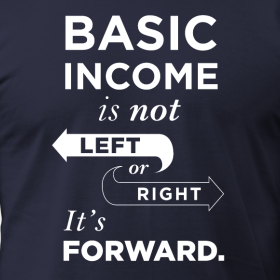
Now, Yang has a lot of really well thought out, detailed and specific plans and ideas for his Presidency, which I think any intelligent voter will appreciate. I'll come back to this point later. The primary platform that Yang is running on is incredibly novel, and yet, not entirely new or unvetted: he is proposing a Universal Basic Income, or UBI, namely, $1000 per month given free and clear to every US citizen of 18 years of age or older.
Stay with me here. I know the visceral reaction you're probably having if you lean right and if this is the first time you're hearing this. I've been there, but hear me out. If you lean right, you probably agree with me that the US is spending far too much on things like welfare,
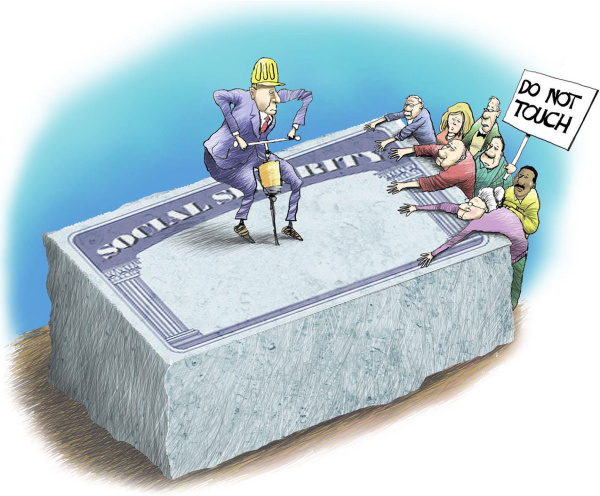
 food stamps, disability, tax breaks for charities, Social Security, etc. I'm going to refer to all these programs and others like them as simply "welfare" for the simplicity in this post. Not only are we already dolling out millions of dollars to people who aren't working or can't work for various reasons, we're paying people to administer these programs. That means, we're shoveling out cash for government workers to create forms, read forms, reject incomplete forms, process forms, interview welfare candidates, independently verify claims, follow up on applicant candidacy conditions, audit welfare candidates records, and finally, write checks. We're also discouraging certain classes of people from going back to work even if they can. Anecdotally, we've all heard stories of someone living better off than his gainfully employed neighbor. These welfare programs are only good until a certain income is acquired, so a proportion of people getting these benefits will elect not to risk the welfare income and will choose not to work even if their conditions change and they could go back to work. We're breeding dependency on the system, expanding these welfare programs and discouraging looking for gainful employment or betterment. This is the status quo. If we do nothing, elect no leader willing to make the tough changes, this is what we will continue to do.
 UBI Makes Government Smaller - A Republican Ideal
Now, hypothetically, what if we could eliminate all welfare programs and replace them with one simple solution that's fair to all Americans, requires no oversight and minimal administration, and encourage citizens to go back to work when/if able? This is a hypothetic exercise for now, and by no means is what Yang is proposing. But doesn't that sound like a good idea? Even if you make good money, could $1000 more per month be useful? For people who don't make good money, wouldn't $1000 per month go a long way in improving their lives? Most people are not going to quit their jobs with a UBI, because $12000 per year isn't a very good salary. But maybe people will quit their second jobs and spend more time with their kids, or go back to school, or pursue the startup they've been thinking about. Some people will quit their jobs, because they were unhappy there but felt trapped. People on disability that no longer need it could look for jobs while still having an assured minimum income even if the job fails them. If we eliminated Social Security, than those that are employed will get more of their paychecks, while not leaving those relying on Social Security without anything. We could save our tax dollars from going to administrative bureaucracy.
I'm not going to get into the details of how to fund the UBI here, nor am I going to discuss which programs stay and which get cut. There is a ton of literature out there, books, articles, you name it, with a lot more information on various proposals to get there; I'll reference some at the bottom. My intention with this post is not to define the way forward, but rather, to ask you, my reader, to have an open mind about the possibilities. I'm not 100% sold that UBI is the perfect answer, honestly, but it’s the best thing I've seen as a solution to a lot of our problems, and I'd like it to be debated on a national stage and frankly, I want it to be tested definitively. There have been a number of smaller studies that showed remarkable results. This concept was almost passed into law decades ago in the US Congress, but was squashed by what amounts to a misunderstanding. What I want you to take away from my post here is this: implementation of a UBI with offsets in other government areas will in fact shrink the government. Thus, this is a very Republican idea. It's being pitched by a Democrat now, but if a Democrat is all we can expect to oppose Trump, and if that Democrat is pitching something palatable, even a better alternative than status quo, to Republicans, then I think we have our Republican's Democrat.
UBI Empowers the Free Market - A Republican Ideal
Beyond diminishing the administration of existing welfare programs, UBI speaks to Republican values in other ways. For example, food stamps are only accepted in certain places on certain things. This is because we have core beliefs that we think we know what people need better than they do. In the same way that it is better to send money to hurricane-devastated areas than to send blankets, clothes and canned food, it is better to give people the power to get what they need for food, etc. The arguments that poor people will spend the money foolishly on drugs and alcohol or junk food, etc., are only beliefs and do not have strong evidence supporting them. These are biases we hold (I'm including myself in this, because I, too, believed it) that says that if you're poor, there must be something wrong with you, you must have made bad decisions. If you hold these biases/beliefs, I'd encourage you to spend just 15 minutes to watch this TED Talk: Rutger Bregman: Poverty isn't a lack of character; it's a lack of cash or read the speaker's book "Utopia for Realists." The essence of it is, poor people are not stupid or bad; the lack of financial certainty acts like a mental block, and causes poor (short-sighted) decisions. By simply giving homeless people $1000, those people have turned their lives around. It's pretty incredible. It's almost unbelievable. But then, I've seen both sides with people I know, and I've come to agree that poverty is simply a lack of cash.
All this to say that my second take-away is: UBI empowers the free market. It empowers people to choose what is best for themselves, instead of limiting them with food stamps and other such welfare programs. Beyond food stamps, I had a debate on social media recently about this border wall Trump wants to build (it still kills me that Mexico was supposed to pay for it, and now we're talking about the US paying for it and nobody seems to care about that multi-billion dollar reversal). The focal point of the debate, although it side-stepped what I initially posted, was that one house very near the border, which wasn't occupied on a regular basis (like a second home or vacation home almost), was easily broken into, robbed and damaged, and the criminals left track marks showing how they carted the goods across the border. The premise on one side was, if we had a border wall, that wouldn't have happened. My argument was, maybe it wouldn't have been so easy, but it still could have happened.
I moved to Florida just in time to be hit by the worst hurricane in history, and saw not only nature-made devastation, but some of the best and worst in human nature. Some of the best in human nature as neighbors checked on each other and helped each other, including hard labor and risking their own lives, and companies giving help in amazing ways, free bottled water, free ice, free showers, free laundry, free medical services, etc. Some of the worst in human nature as people from neighboring states drove into the wreckage to loot, carrying guns and injuring people that got in their way - leaving behind bodies of humans who made it through what they thought was the worst, only to be shot and killed protecting their home days later. In reaction, large spray-painted wooden signs appeared all around town threating life and limb to would-be looters, like, "I WILL SHOOT," or "YOU LOOT, I SHOOT" and "YOU LOOT, YOU DIE," the latter was just a few doors down from me. Here's the thing that sucks - we don't have a border with Mexico here in Florida. These weren't illegals. These were opportunistic American citizens. There were other problems, too, like unlicensed contractors or pretend contractors coming in to "help" repair damages and taking advantage of the hurricane victims. Crime takes many forms, and it's all pretty crappy.
So back to the house near the Mexican border that was robbed - what if, instead of a wall to keep Mexicans out of the country, we spent that money on protections for our own property? If you have a mostly-empty house near the border that is in danger, maybe something more than standard door locks is needed. Americans can be bad too, as I've seen so recently after Hurricane Michael, so it would be awfully ironic if the border wall was erected, and then looters from the American side of the wall went and damaged and stole from said house. And also, if Mexican criminals elected to cross the border to rob your house, a wall may just be a nuisance in the grand scheme of things. My point is, a wall will not end crime. If we can agree on that point, then why not use the money instead to let the free market work to protect our properties better?
UBI Protects US Citizens - A Republican Ideal
A lot of the literature around UBI is based on the prediction that automation will reduce and eliminate jobs. I'm not going to tell you this is true or not true, because the verdict is still out for me on this one. On the one hand, we've had these fears time and time again in the past, and history has shown that new and previously unimaginable jobs have been created. I

Indirectly, the certainty that comes with a UBI (at least theoretically) protects our poorest US citizens against making the bad decisions that lead to things like drug addiction, crime, unwanted pregnancies. Imagine less incarceration, eliminating the opioid crisis, reducing gun violence and mass shootings, fewer women turning to prostitution or remaining in abusive relationships. When people have stability, they are less likely to do drugs, commit crimes and take desperate measures. In turn, this not only helps our poorest US citizens, it protects all US citizens from being the victims of crimes.
But Wait, There's More
UBI may sound like a very leftist ideal on the surface, but actually, it’s a simple, pragmatic and economic solution that beats all other solutions to a lot of our issues. At it's core, it actually supports many of the values of traditional Republicans in ways that you won't get from President Trump or other up-and-coming Republican candidates. And here's the kicker: when it was brought to Congress initially, it was supported by, gasp, a Republican President! A lot has happened since then, and our party lines have become more divisive and more personal. I think, as a Republican, it's only fair to look back at some of the greatest achievements of our government: regulating work hours, or women's suffrage for a couple examples. Those started with a Democrat's audacity and are now taken for granted by Republicans and Democrats alike. It's okay to vote Democrat, especially when that Democrat is pitching something that Republicans can get behind.  Andrew Yang's Presidential race is centered around UBI, and I've spent a lot of time here talking about why UBI isn't so far-fetched for a Republican like myself. But I want to circle back to the man behind the UBI platform, because his job would be far from complete if he gets to the White House and implements UBI. I would encourage you to go to his page and read about his other ideas and plans on Policy: https://www.yang2020.com/policies/ He has a quote on his policy page from the Democratic Party Leadership in Iowa that says, "Mr. Yang has the most detailed and comprehensive set of policy proposals we have ever seen at this stage in the campaign." After reading a number of them in detail, perusing the rest and reading his book, I tend to agree with that statement. He has really outdone any candidate before him in terms of detail and number of policies, and I think you'll agree with me that they aren't the outrageous, impractical ideals we often see from Democrats, but rather, practical, pragmatic approaches that could almost be called bipartisan. In a world as divisive and plagued as ours, I think Yang as a candidate is more than a breath of fresh air.
 First and foremost, Mr. Yang needs to be given a spot on the stage to debate and discuss his ideas. What's more, Yang as President could be just want this country needs right now, not for Democrats, and not for Republicans, but for the United States of America.
Links / Sources / Resources
History of Basic Income: https://basicincome.org/basic-income/history/
Elon Musk: Free cash handouts ‘will be necessary’ if robots take humans' jobs: https://www.cnbc.com/2018/06/18/elon-musk-automated-jobs-could-make-ubi-cash-handouts-necessary.html
Yang on Policy: https://www.yang2020.com/policies/
TED Talk - Poverty isn't a lack of character, it's a lack of cash: https://www.ted.com/talks/rutger_bregman_poverty_isn_t_a_lack_of_character_it_s_a_lack_of_cash
Utopia for Realists: https://www.amazon.com/Utopia-Realists-Build-Ideal-World/dp/0316471917/
The War on Normal People (Andrew Yang's book): https://www.amazon.com/War-Normal-People-Disappearing-Universal/dp/0316414247/
Humans Need Not Apply: https://www.amazon.com/Humans-Need-Not-Apply-Intelligence/dp/0300213557/
What to Do When Machines Do Everything: https://www.amazon.com/What-When-Machines-Everything-Algorithms/dp/111927866X/
Raising the Floor: https://www.amazon.com/Raising-Floor-Universal-Economy-American/dp/1610396251/
A fiction book about the potential if we continue with status quo or do something drastically different, called Manna: Two Visions of Humanity's Future: https://www.amazon.com/Manna-Two-Visions-Humanitys-Future-ebook/dp/B007HQH67U/
The Future of the Professions: https://www.amazon.com/Future-Professions-Technology-Transform-Experts/dp/0198799071/
Freakonomics podcast: http://freakonomics.com/podcast/andrew-yang/