Showing posts with label trains. Show all posts

Sunday, March 31, 2019

Japan Guide: Training It - The Best Way to Get Around Tokyo and elsewhere


You may be used to grabbing an Uber or a Taxi to leave the airport in the US and in other countries, but I would recommend against it in Japan, especially in Tokyo. The trains are much more affordable, and are quite convenient, quick and easy to navigate once you get the hang of it. For a comparison, to get to our hotel in the Akihabara district of Tokyo from the airport, a taxi or Uber would have cost about $80 USD, while the train tickets were about $4 USD per person. Additionally, trains are a great way to get around Tokyo, including going to Disneyland Tokyo. You can also take the bullet trains, or shinkansen, to other parts of Japan for a bit cheaper than an airplane ticket, and I mean, they are COOL so you really should use them if you're traveling to other parts of the main island. But, the train system can be a bit daunting for first timers, so here are some tips for figuring out your passage on the trains. Also, don't hesitate to ask for help at the ticket counter, generally they are very helpful and, while they may not be great at English, they will do what they can to get you the correct tickets and get you on your way.

If you're going to be taking the trains to multiple places on a particular day, you may want to buy all day passes (which are about $7 USD). This also takes out the complication of figuring out which one-way tickets you need to buy, but will be more expensive than two one-way tickets typically.

To buy one-way train tickets, you have to know what the fare is because it doesn't tell you the route at the ticket booth. Some stations will have the map in Romanji (Roman letters so English speakers can read them), but not all. If you can find the stop you want to go to on the map, it will say what the fare is, like 220 yen (which is about $2). Then you go to the ticket machine and get a ticket for 220. You have to get the tickets one by one typically.

Once everyone has their tickets, you stick the ticket into the gate and take it on the other side, and that's what lets you through. You'll know right away if you went through the wrong gates, like if you tried to go to bullet train, because the gate will stop you and sound a buzzer of sorts. When you are at your final stop, you'll exit by sticking your ticket into the gate again. If you had one-way tickets, the machine won't return the ticket once it's been used completely. If you had all-day tickets, the machine will return the ticket to you to use again.

The trains run pretty frequently, so if you "miss" one, the next one will come in a few minutes typically. The bullet trains run about every 15 - 20 minutes.
Most of the trains also show the stop name in Romanji as well as the Japanese writing. But it's good to know the Kanji for where you're going, just in case. We like the JR lines best (they all start with J).

The morning rush can be a little nuts on the trains. On popular routes, be prepared to stand the whole way and have to cram in with business men and women on their way to work. You'll see people running up and down the stairs and escalators, so it's important to stay to the left on escalators to make room for people who want to pass you.

The shinkansen, or bullet trains, work very much the same, but are much more expensive for obvious reasons. They are also much more comfortable and are better suited to accommodate luggage. I believe most if not all have bathrooms, and some even have vending machines on the trains. If you plan to ride the shinkansen, or bullet train, I would recommend you look into the JR Pass for Visitors before you go, you can get a really good deal and save hundreds of dollars, but you have to buy it before you get to Japan.
In Kyoto, there aren't really trains everywhere like there is in Tokyo. The buses are pretty good, but I got a little lost. Read my post about our adventure in Kyoto to get a feel for the bus system there. 

More Japan Guide

Getting There / What To Bring 
Training It - The Best Way to Get Around in Japan (Trains) 
Where to Stay
Eating Out
Things To Do 

Key Phrases

Japan Guide: Tips for First-timers and Returning Visitors to Japan

I've recently returned from my third trip to Japan, and it has spurred a lot of conversation with colleagues, friends, and total strangers like Uber drivers and the girl at the DMV. For those who haven't been, Japan can seem like an "exotic" place to visit, but for Jaiman and I, it's as natural as any adventure. There are some really neat aspects of Japan that make it very friendly to tourists as well some aspects that are a little daunting to newcomers. After a number of these conversations, I thought I'd put together a semi-comprehensive guide to visiting Japan.

Embedded in this guide are tips for what to do and what to expect in certain situations. I believe knowing what to expect helps people feel more comfortable when confronted with something so completely different like a whole new culture. Here is a summary with links to each of the sections:

Getting There / What To Bring (below)
Training It - The Best Way to Get Around in Japan (Trains) - What to expect at the train station and how to prepare and navigate for using trains as your primary mode of transportation in Japan.
Where to Stay - What to look for in hotels.
Eating Out - No tipping, and taxes are usually included! And other tips for what to expect at Japanese restaurants.
Things To Do - My recommended Must-Dos as well as some other fun ideas for your itinerary.
Key Phrases - Don't Miss This Section! Most people in Japan are not great at English, so it is very helpful and respectful if you have some basic Japanese phrases under your belt when you go.

Bonus: Japan Is Weird (Different) and Confusing (Unfamiliar) and I Want to Go Back - Some quirks and our favorites from our previous trip are discussed here


Getting There

Narita is the bigger airport in Tokyo, but both Haneda and Narita are fine to fly into and out of. Most itineraries will go through Tokyo, even if you're going elsewhere in Japan. As such, I'd recommend flying to Tokyo and staying there for a few nights if your schedule permits, and then you can always take a bullet train to other parts of the main island instead of getting back on an airplane. If you plan to ride the shinkansen, or bullet train, I would recommend you look into the JR Pass for Visitors before you go, you can get a really good deal and save hundreds of dollars, but you have to buy it before you get to Japan.

Flights from the US are lengthy, at least 10 hours and up to 15 hours depending on where you're flying from. When you land, you'll be about 12 hours off from your previous timezone, so it's important to sleep a little but not the whole time on the plane. The best way to ward off jetlag is to stay up most of the arrival day, and then make sure you go to bed at a decent time the first night.

Many major airlines have personal screens with entertainment, and free alcohol for international flights. You'll also notice that announcements will be made in Japanese and English, and potentially Chinese or Korean as well. While checked luggage may be free for the international flights, I prefer to pack lightly (at least on the way there) so that I can limit myself to carry-ons. If you plan to do a
good amount of shopping, it may be a good idea to bring an empty collapsible bag to fill up with your goodies to bring home. Don't worry, though, if you forget, because you can find cheap bags for this purpose in Japan, too (Jaiman got a huge duffle bag for about $16 USD). 

What to Bring

Definitely bring plenty of Japanese cash (yen) to avoid costly ATM fees, you'll need cash at the train stations and at many restaurants, street vendors, vending machines, etc. Major credit cards (Visa, Master Card, Discover) are accepted at many places, but not all. Make sure you know which credit cards have foreign transaction fees. My Discover card doesn't have foreign transaction fees, for example, so I prefer using that when possible, but sometimes places don't take Discover, so then I'd have to use cash or another card and pay the small fee.

Umbrellas are a good idea generally, but they can be purchased pretty readily if you need one while you're out and about.

Bathing suits are a good idea if you plan to go to a public hot spring / onsen. Many are separate by gender and are only used in the nude, but some will have coed spaces for those with bathing suits.

Comfortable shoes are a must, it doesn't matter how little you expect to walk, you'll probably walk more than you expect. 


More Japan Guide

Getting There / What To Bring 
Training It - The Best Way to Get Around in Japan (Trains) 
Where to Stay
Eating Out
Things To Do 

Key Phrases

Saturday, June 11, 2016

Japan Is Weird (Different) and Confusing (Unfamiliar) and I Want to Go Back


  “People don’t take trips, trips take people.” – John Steinbeck

Without question, some of my best stories have come from traveling abroad to Asia; the culture, history and customs have made impressions on me and also made for moments of confusion and adventure.  I loved my study abroad in Japan, and have wanted to go back for years.  With this most recent trip to Japan being Jaiman's first adventure off our home continent, it was refreshing to see this foreign country through his virgin eyes.  While  many of the memories we made will last forever, I wanted to recap some of the more unique aspects of Japan to keep our memories fresh, before the details start to fade.  


Things That Seem Weird / Confusing

  • Many restaurants ask you if you want to sit in smoking / non-smoking... this wouldn't be so weird except that we're now used to mostly non-smoking places.
  • If you are trying to buy multiple things with a credit card, they will ask if you want to split the charges.  
  • So many places take cash only - even places that seem like they would take card.
  • Buying train tickets can be very confusing!  
  • Japanese - It's hard, and kanji specifically is even harder to read.
  • "Free" public wifi came with excessive "catches" - not really free. 
  • Some places offer discounts if you have your passport with you (and are a foreigner)... it seemed counter-intuitive to me to carry passports around, I tend to want to protect them, but we missed out on some discounts apparently.  
  • Some menus specify body parts that make meat sound unappetizing; I would prefer a little bit more detachment from the animal.  For example, I just want to order chicken, pork or beef, but the choices are more like cow tongue, chicken tail, pig intestine, etc.


Things I'll Miss About Japan

  • Toilet seat warmers with bidets, "showers" and blow dryers

  • Double-handed waving
  • Public baths / hot springs
  • Flavored Kit Kats
 
  • Self-serve drinks even at nice restaurants
  • Calling waiter/waitress over when ready for something
  • Slurping and bringing the bowl to your face
 
  • Politeness, kindness, understanding and gratitude from every retail and food service employee
  • MOS Burger
 
  • No tipping, taxes are included
  • Efficient, on-time trains that can take you anywhere

  • Beer vending machines
  • Crazy cheering at baseball games
 
  • Taking off shoes in public places


Our Favorites

Favorite activity

Laura - Sumo

 
Jaiman - Disneyland


Favorite Food

Laura - Yaki soba in Miyajima

Jaiman - Pork katsu


Favorite Snack

Unanimous - Folded crepes

Favorite Kit Kat Flavor

Laura - Mint 
 
Jaiman - Raspberry
We had such a great trip; we really did so much!  But Jaiman is already talking about going back.  I'm thrilled that he shares both my enthusiasm for travel and adventure as well as my love for Japanese culture and society.  I may not love all the food there, but the country is just such an amazing place, and I would love to go back again in the future.  As such, we made some notes for our future selves and for others considering a first visit to Japan. 

What We Would Do Differently

  • Plan trips to different sections of Tokyo better - We first stayed in Meguro and went to Shibuya, Shinjuku, Akihabara and other areas a couple times, and then when we stayed in Shibuya we were leaving to go to Shinjuku and Akihabara.  In hindsight, it seemed a little silly to visit places so many times.  
  • JR pass for Shinkansen - You have to get it before leaving for Japan, and when I had looked at it, it didn't seem like it was a good deal for the time we were there, but it actually would have been a great deal for the second half of our trip, so in the future I would buy it for at least part of the trip, depending on our plans.  
  • All day bus pass in Kyoto - We didn't know this existed until our last day in Kyoto, and again would have saved us some money.  
  • Plan more bus tours? - I don't know how much I would like this, but we did so much by foot that it was completely exhausting.  I would like to do things that would alleviate some of this walking and maybe give us more culture / history / interesting information.  
  • Save more money for the trip - This tip came from Jaiman, he loves shopping and I think he felt a little constrained towards the end.  
  • Learn how to read Hiragana and Katakana - Again, this tip came from Jaiman.  While Kanji is very challenging, Hiragana and Katakana is relatively simple and it can unlock quite a bit of the Japanese you see all around you in Japan.  
  • Learn key phrases in Japanese - How do you ask for a check at a restaurant?  Or look for postcards?  There are several things that are just easier said in Japanese than trying to pantomime, and you really can't assume that people in Japan will understand enough English to help you.  
  • Hotels closer to train stations in Tokyo - We did well in Meguro, but our hotel in Shibuya was a bit of a hike.  I didn't realize how useful the trains really are, so next time I would plan on taking trains more and stay closer to them so we can come and go more easily.  
  • Use hotel shuttle in Miyajima - I just had no idea our amazing hotel in Miyajima had a shuttle, and we made this little trek with our suitcases that would have been much easier via shuttle.  
  • See a show or concert - We were hoping to come across a concert, but other than street performers in Shibuya, we really didn't see much going on.  Just another thing that would have been fun (and hopefully gotten us off our feet for a bit).  
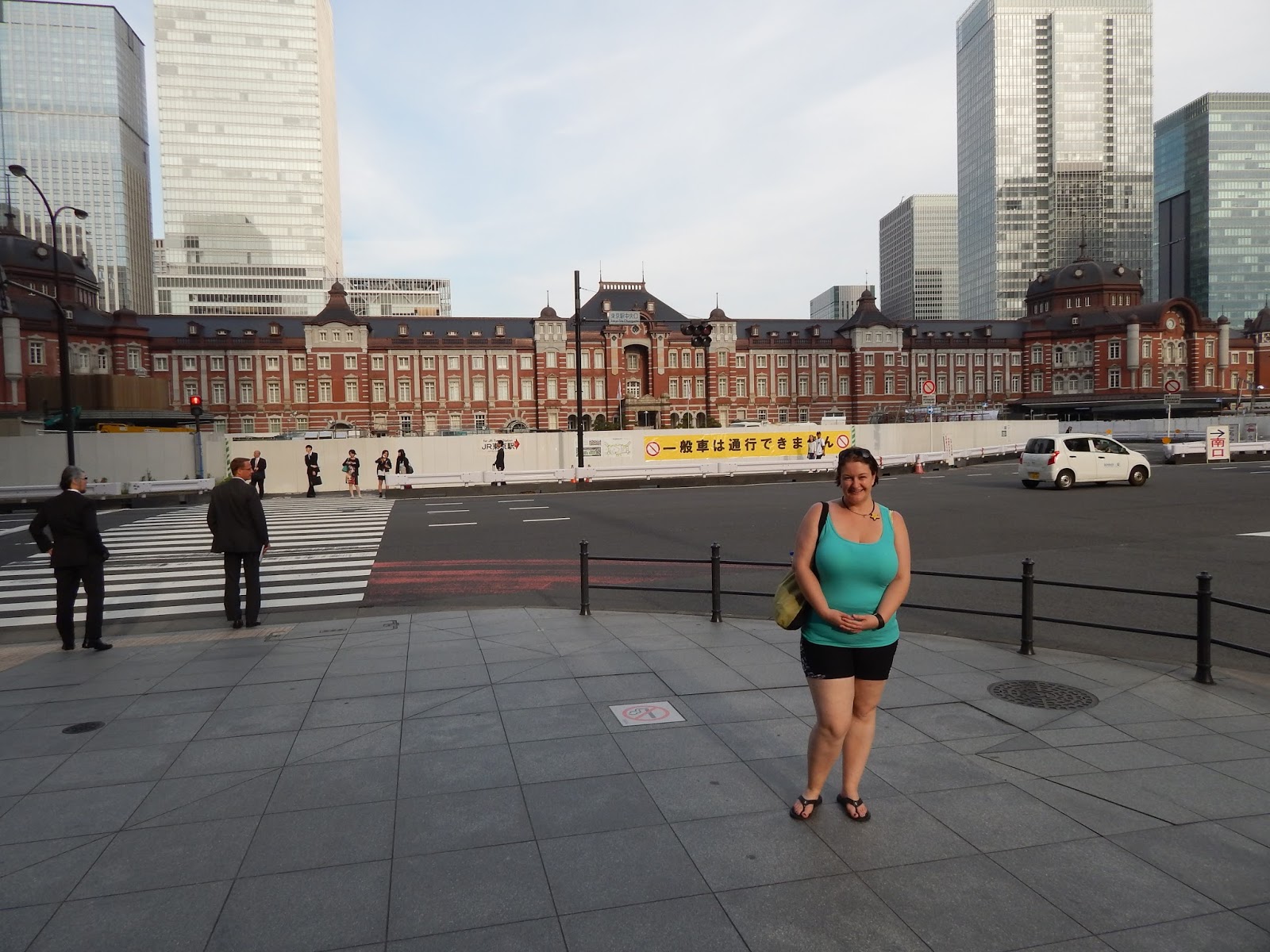
  • Know what the real Imperial Palace is - We happened to find ourselves walking around the Imperial Palace Park, but then I mistook the train station as the palace; it was a huge and elaborately decorated train station!