Showing posts with label insurance. Show all posts

Thursday, October 3, 2013

A New Economy: Industries of the Autonomous Vehicle

I'm intrigued, excited and fascinated by the autonomous vehicle for so many reasons.  Many are personal, but I am also anxious to see how it plays out on a macro economic scale.  Disruptive technologies always shuttle in with them new business needs that most people wouldn't have imagined just years prior.  Whole industries crop up as a result of the technologies or ways of doing business differently.  There are ultimately winners and losers, and even the winners will eventually get replaced.  The history of innovation fascinates me, but what really gets me going is what the future could hold.  When self-driving cars are the norm, whole industries will be demolished, and brand new ones, unfathomable ones, will rise up.  The developed world and emerging economies will look very different, and what they look like are what I want to explore here.  

The Driverless Vehicle
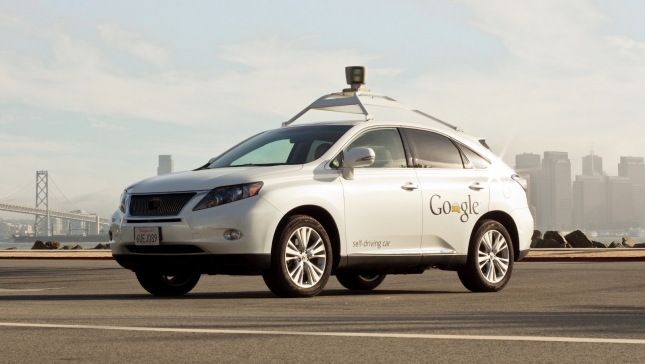
Most of us see autonomous vehicles as modes of transportation for ourselves that are automated.  This is, however, just one exciting application of vehicle autonomy.  On the opposite end of the spectrum, we will no longer need truck drivers, taxi drivers, chauffeurs or valets, because the vehicles can operate without humans inside.  Just imagine calling a cab from your smart phone (or whatever device we use in the future), and getting into a completely empty vehicle, being driven to your destination, and getting out so that the cab can go pick up another passenger.  Packages will be shipped across the country in trucks with no cab and no human; thus they will not have to stop for sleeping breaks or food, and will be faster and safer.  When your own self-driving car brings you to your destination, it can let you out at the front door and go park itself.  Then you can call it to come get you when you are ready to leave, combining valets and chauffeurs into a single function independent of a human to pay or tip.  

Rentals and Contracted Services
Autonomous vehicles will ultimately reduce the price of cab fares, because they will not require a human to be able to make a living off of the profits.  The price will compete with public transportation, which has its own drawbacks (slower, sitting next to weirdos, uncomfortable), and thus the use of public transportation may also become extinct.  People own private vehicles today for many reasons, but some of those are basically to combat the negatives associated with the alternatives: cabs are too expensive and public transportation stinks for reasons previously alluded to.  So as the expense of cabs comes down (and the lack of some creepy immigrant who can't speak English as the driver), they become a favorable alternative.  Thus, fewer people will own private vehicles.  In addition, many private vehicles will be put to use on some sort of contract basis as a cab.  See, it would seem silly to have a perfectly functional vehicle sit in a parking lot, baking in the sun or getting drenched in the rain or snow while you are working for 8 to 12 hours a day.  Sure, some people won't want strangers in their cars, but others would find it a marvelous opportunity to send their car off after its delivered them to their office and have it earn some supplemental income while they are working.  Sure, it puts mileage and wear and tear on the car, but if owned, it will probably be more profitable than just letting it sit each day.  In-car camera systems will be installed to detract from vandalism; customers will be automatically charged by the contract service for any damage done.  

More Entertainment and Productivity Technologies
There are already entertainment packages available today, but most of them consider distraction of the driver as a threat and take precautionary steps towards not distracting the driver. With no human driver to distract, consumption of video, music and game entertainment will go through the roof.  Imagine streaming the likes of Netflix into your car while you are transported to work, and picking up where you left off on your return trip.  Your car will have surround sound, 3D (or 4D) entertainment systems and satellite-enabled video conferencing with internet connectivity for your devices.  Carpooling?  A soundproof barrier can separate you and your companion so you can work on or enjoy separate activities without plugging your ears with headphones.  

Destination Parking Grounds
I don't know exactly what to call this, but DPGs sound just as good as any other name I came up with (Potels, anyone?).  This will be a new industry for the avid traveler who can work remotely or needs to travel for work.  It's a mix between a motel and an RV camping site.  Let's say you have a destination 6 to 8 hours away.  You need or want to be there tomorrow.  You pack your things, set your destination and depart at night.  You curl up in your comfy car bed while your car autonomy does the driving.  You get a full night's sleep, and when you awake, you are in another state or perhaps another country.  The car has pulled into a DPG, where there are showers and dressing rooms available at a minimal fee.  You grab your bag, hop in the shower, get dressed, and return to your car.  Now you have just a few more miles to drive to get to your actual destination.  Or, if you are going to be working remotely, you set up your office computer in your car, and start taking calls and discussing metrics, or whatever it is you do.  When work is done, then you get to go have drinks with your friend in the area, or visit that fantastic restaurant you read about.  Travel no longer requires a day, you travel in your sleep so you can maximize your time awake.  With DPGs, some people may give up their homes and live out of their cars, hopping from DPG to DPG, traveling the country or world while still being able to get work done.  Their cars may be equipped with small washers and dryers, mini-kitchenettes and wine refrigerators.  

Insurance, Law Enforcement and Lawyers
DUIs will be a thing of the past, so law enforcement and DUI attorneys will have to find something else to do.  But new types of insurance will exist; there will be specialists for cars with human drivers, and the majority of car insurance policies will assume no driver liability.  Insurance prices should go down overall, and regulations may drop the requirement to have insurance on autonomous cars.  Law enforcement and insurance will be more concerned about people hacking the settings on their autonomous vehicles.  Lawyers and IT security experts will concern themselves with people hacking into others' cars.  

AutoNASCAR
While people may still flock to car racing with human drivers, there will be some sports fans that will favor autonomous vehicle racing.  These races will be all about the logic used in the programming, the equipment in the cars, and the ability of the cars to navigate and react to their surrounding competitors.  These cars will be willing to crash and burn, making for spectacularly brutal attacks that human drivers wouldn't risk.  

Better, Real-Time Navigation Systems
When I automate a process at work, there is an added bonus that the programming also captures data that I would otherwise not bother capturing.  Likewise, when autonomous cars are commonplace, they can transmit commute time and traffic data to centralized locations to allow other cars to better adjust their routes in real time.  If that sounds too Big Brother-ish, consider that at a minimum, the cars can determine the best commute routes by time of day and seasonal trends for the specific owners' commutes (without transmitting any data to anyone else), and recommend departure times to their drivers based on historical statistics.  "Best" commute routes can be defined by fastest, most consistent, most energy conservative, or safest.  Can you even imagine having that kind of analysis today?

Modular Vehicle Assemblies
The customization of your car's interior will become an industry onto itself.  Car design can take on a whole new string of innovations, from sleeping arrangements and vanities to finish getting ready for work while commuting.  You could get a massage on your commute, or practice your Italian, or curl your hair and put on makeup (without the near misses and accidents if attempted today).  But don't expect to have too much time, because when all cars on the road are autonomous, commutes will be much faster, with less stop-and-go reactions than human drivers.  No matter what your needs, there will be products available to fit them.  High-end car manufacturers will sell complete, luxury packages customizable on the web before the car is built, while economy car manufacturers will sell a shell for which you can add on and replace modules as you see fit throughout the life of the vehicle.  

Driverless Drive Thrus
Your car will be able to run some errands for you while you are at work or asleep.  It can pick up your prescriptions at Walgreens, order and pick up Jack-in-the-Box for lunch, drop off packages at the post office, and pick up Christmas gifts bought online at Best Buy.  Stores and restaurants will adapt by having a special drive thru line for autonomous vehicles to transmit their orders via technology like Bluetooth (or to keep the cars off the grid, generating a QR code that can be scanned) and then the drive thrus will have robot arms to deliver the orders into the autonomous vehicles.  They will get their own car washes, and maybe even go to the gas stations themselves (attendants may need to fill the tank).  Forget your wallet or some paperwork at home?  Send your car home and have your wife or son put the wallet or paperwork in the car, and then call your car back to your location.  Of course, wallets and paperwork may be on their way out, but surely there will be something you will need.  


I'm sure there are other industries which we can't even imagine right now, but I think these are already going to rock the world and change the lives of millions.  


Monday, July 22, 2013

How to police self-driving cars

As you know from a previous post, I am a huge advocate of self-driving or autonomous cars.  In short, they would be exponentially safer than a human driving a car, and would free up time for its human passengers to do other activities.  After the question of safety, which I am not going to debate here, the next question is always around the law: who is accountable should a self-driving car have an accident?  I think the difficulty people are having with answering this question is that it is such a foreign concept to us that we can't wrap our brains around it.  Thus, I was inspired to write this post in order to simplify our thinking and perhaps clear the way for future discussions on this topic.  I'm going to make the case that car manufacturers, or more specifically, the company producing and installing the software into autonomous vehicles, should be held responsible for any accidents caused by vehicles using said software.  

Before you get all defensive on me, hear me out.  If a brand new car, driven off the lot, spontaneously explodes and injures the driver and a person in another car, the car manufacturer is at fault.  I think we can agree on that much.  More broadly, a malfunction of an unmodified vehicle that causes harm to someone (or really, had the potential to harm someone) is a product defect and thus the responsibility falls on the car manufacturer.  Of course, a car owner could void this responsibility by tinkering with the vehicle, in which case the car owner would be responsible if he/she created a defect in an otherwise certified safe car.  If another company did the tinkering that lead to the harm, the vehicle owner would hold that company accountable.  All of this is in practice today, and has been for many years.  

Now, let's apply it to autonomous vehicle features, without going fully self-driving.  New (high end) cars have some of these features already.  Yes, you heard me right: mass-produced cars are already doing some of the thinking for us.  Some drivers are already entrusting their lives into the hands of a car that makes its own decisions; and the rest of us are driving on the same roads as those cars.  The primary example I will focus on is the Volvo that stops itself before impact with a large object.  My brother-in-law was so excited when he test drove the car, bragging about how the salesman encouraged him to drive it directly at a brick wall.  Against all intuition, he successfully approached the brick wall at such a speed as to trigger the car to automatically apply the brakes.  Amazing!  Does this excite you?  Or scare you?  And more importantly, what happens if the car's software has a glitch?  One could imagine how a glitch could trigger the car to randomly apply the brakes on the freeway, causing the car behind it to plow into it.  Who is at fault for the cause of the accident?  Sure, the other driver might get a ticket for driving too close to be unable to stop in time, but I would argue that stopping in the middle of the freeway with no reason could be questioned; and its certainly not the Volvo owner's fault, right?  The test drive showed that no matter what the driver is doing, those brakes are going to be applied if that's what the car has decided to do.  Thus, responsibility must be taken out of the driver's hands.  

 
Now let's take a different angle.  Let's suppose that the Volvo driver is suddenly faced with stopped traffic ahead and an out-of-control runaway semi-truck barreling down a hill at him.  The driver, seeing this, attempts to swerve around the stopped traffic, maybe even attempt to hit the guard rail and plow through it, rather than be squashed between a semi and the car in front of him.  Certainly, if the driver is able to rationally see the guard rail as a favorable collision to being squashed, he should be able to maneuver the car in order to do so, and potentially save his life.  If then the Volvo's autonomous braking feature prevents the driver from driving into the guard rail, and he is instead squashed, would there not be a public outcry and lawsuits against Volvo?  

Parking is another aspect we're seeing early autonomy in.  Some features are just park assist features, like guide lines on the camera.  But some cars are actually controlling and manipulating the steering wheel.  If this doesn't scare the nay-sayers, I don't know what it will take to scare them.  Yet parking is one of the most accident-prone parts of driving, because we are dealing with tighter tolerances.  Tighter tolerances is also a good reason to have the computer take over, too, since computers are more precise and accurate than people are.  Regardless of the rationale, there will still be some damage done by an auto parking car eventually, and I am sure that the car manufacturer will be found at fault for this error that could have been prevented by a human driver.  

I'd be willing to bet that, long before our cars drive themselves completely, we'll see at least one such accident go to court and favor the driver.  That court case is going to be crucial in setting the precedent for future autonomous car accidents.  Car companies installing autonomous features have to be ready for this. 

This, in no way, should deter car manufacturers from adding these features to their cars and moving forward with vehicle autonomy.  Smart features that enhance the safety of a vehicle are going to be primarily selling points.  There will be late adopters who will resist, and that's true of all technologies.  But the majority of the population will gradually become comfortable with these features, and the features will become selling points or requirements in future purchasing decisions.  Instead of car manufacturers shirking away from the technology because of the messy legal fears, they need to embrace the responsibility with the added value that can be derived from the features.  This will serve as motivation to ensure utmost safety of their features - glitch-proof, do-no-harm mentality needs to be instilled, while the return on investment will still be positive.

Still, there will be accidents.  Some will be tragedies that would not have happened had a human driver been in control.  And the nay-sayers will point to them being the beginning of the end.  But my bet is that we will see a vast improvement in safety overall: fewer fatal accidents, fewer pedestrian accidents, fewer accidents causing injuries.  Fewer intentional "accidents", too, by the way, caused by road rage and suicidal / homicidal incidents that go unrecorded for lack of evidence.  All across the board, our roads will get safer and safer as more people drive cars with more and more autonomous features.  Autonomous cars are better for the society as a whole, and will greatly reduce the inherent risk of getting into a vehicle.  Let's not forget how fatal driving can be today - we must never forget that.  The most important thing, when there is an accident caused by an autonomous feature, is to collect all the data we can about that accident and prevent it from happening again.  Pioneers of all sorts are often made into sacrifices and martyrs, and I wish just as much as anyone else that this didn't have to be the case with early adopters of the self-driving car, but I know it is bound to happen.  It will happen, we will settle it in court, and we will move on.  

Friday, May 10, 2013

Why Self Driving Cars Are Coming Sooner Than You Think

No futuristic technology excites me more than the self driving car.  This desire to own one is purely selfish: (1) I hate driving, and I feel it is a waste of my time and energy.  It is also exhausting emotionally when some idiot almost hits me.  (2) It makes me nervous to have others drive me, be it taxi drivers or friends.  (3) I love the flexibility and convenience driving affords me, as opposed to public transportation and alternative modes of transportation.  (4) Being in a car in a populated area is the most dangerous thing most people do in their lifetimes, and most people do it every day.  It doesn't matter that I'm a safe driver; some idiot can hit me when I'm stopped with nowhere to go, and damage my personal property.  Even if its repaired, the car loses value.  Thus, I want all other drivers to own one, too.

So you can have your phablet or your 3D television, all I want for Christmas is an autonomous car.  Hell, I'd even give up my smart phone for a car that drives itself.  Maybe I'm one of the few in the early adopter stage; that wouldn't be a surprise to those who know I own the first Chevy Volt in Arizona.  Maybe I'm just lazy and want to make life even easier on me.  Either way, I want it.  But I won't be so naive to think that everyone will jump at the chance of buying one.  In fact, I don't even think the product life cycle of the self driving car is even worth talking about.  When you question whether or not car makers can make it and car buyers will buy it, I think you're missing a lot of the more important aspects of the discussion.   

The legislation that does exist today - primarily requiring an alert, responsible human driver - is ridiculous.  To that end, if that's the legislation that sticks, we will never get mainstream adoption.  The legislation is indicative of caution exerted around the unknown, which is understandable because we don't really have a solid, viable product in the consumer's hands to base it on yet.  I think what needs to happen is we need to flip it around.  Governments are interested in reducing car accidents and drunk driving.  Why not legislate that new cars have to be equipped with at least partially autonomous features?  The more cars that will avoid hitting things on the road, the less accidents we're likely to see, and the less lethal the remaining accidents should be.  To address the drunk driving issue, breathalzers could be installed and programmed to signal the car to take over the driving when the driver is blowing a high BAC.  Governments should be rallying behind the self-driving car, not putting up barriers.  

We know we can't always rely on government to do the right thing, so let's turn to the commercial world.  Taxis, limo services, shuttles and all sorts of transportation providers should be interested in self-driving cars.  The upfront cost may be astronomical to begin with, and some drivers are paid very poorly.  But there has got to be some length of time where the self-driving car makes economical sense over paying hourly wages, and that payback period will drop with large contracts and larger volumes in production.  

Let's not forget individual consumers who are unable to drive.  This can include the legally blind, the physically handicapped and the elderly.  I'm not saying they're going to shell out a bunch of money themselves, but there are probably grants, charitable support or other funding opportunities to help get them in self-driving cars to empower them to live with more freedom and flexibility.  Disabled military veterans, specifically, have several organizations and grants to support them in civilian life.  Even where there are no available government monies or charities, these kinds of a causes could be crowdfunding-worthy.  

Finally, insurance companies will want their drivers in autonomous cars.  There is huge potential for insurers to give discounts or even potentially subsidize the cost of an autonomous car, knowing their risk is much lower and that the more autonomous cars on the road, the less likely others are to have accidents.  They could give insured drivers the option of replacing their totaled cars with less expensive cars equipped with self-driving capabilities.  

The electric car is great, but it is not a good model to compare future demand for self-driving cars to.  The benefits of the electric car are mostly idealized: reducing dependency on gasoline from overseas, reducing pollution, paying less per mile, not having to go to the gas station.  These points are hard to defend, when it takes sometimes dirty energy to create the electricity, same of creating the car itself, and the cost of the cars make them less than economical.  Cool, yes, but economically sound and environmentally neutral, no.  The self-driving car, on the other hand, has much more tangible benefits.  People who can't drive can use them to reap the benefits of driving, the safety of the autonomous car's passengers and drivers around it is increased, and intoxicated drivers can get home safely without requiring a cab, to name a few.  Thus, the only main stakeholders for the growth of electric cars are the consumers, while the adoption of the autonomous car benefits almost everyone on the road, plus insurers, governments and people who are prevented from driving.  This is the angle that should be taken when discussing the feasibility of self-driving cars in the foreseeable future.