Sunday, March 29, 2015

The Three Things Everyone Should Learn: Number One

Programming

I am not a college professor, nor a professional programmer, but from time to time, I get to impart some of my computer-related knowledge and skills to students of varying levels of ineptness.  I structure my classes in a way that everyone in the class learns something useful that can be applied in their own lives.  This is not so easy, because some of my students

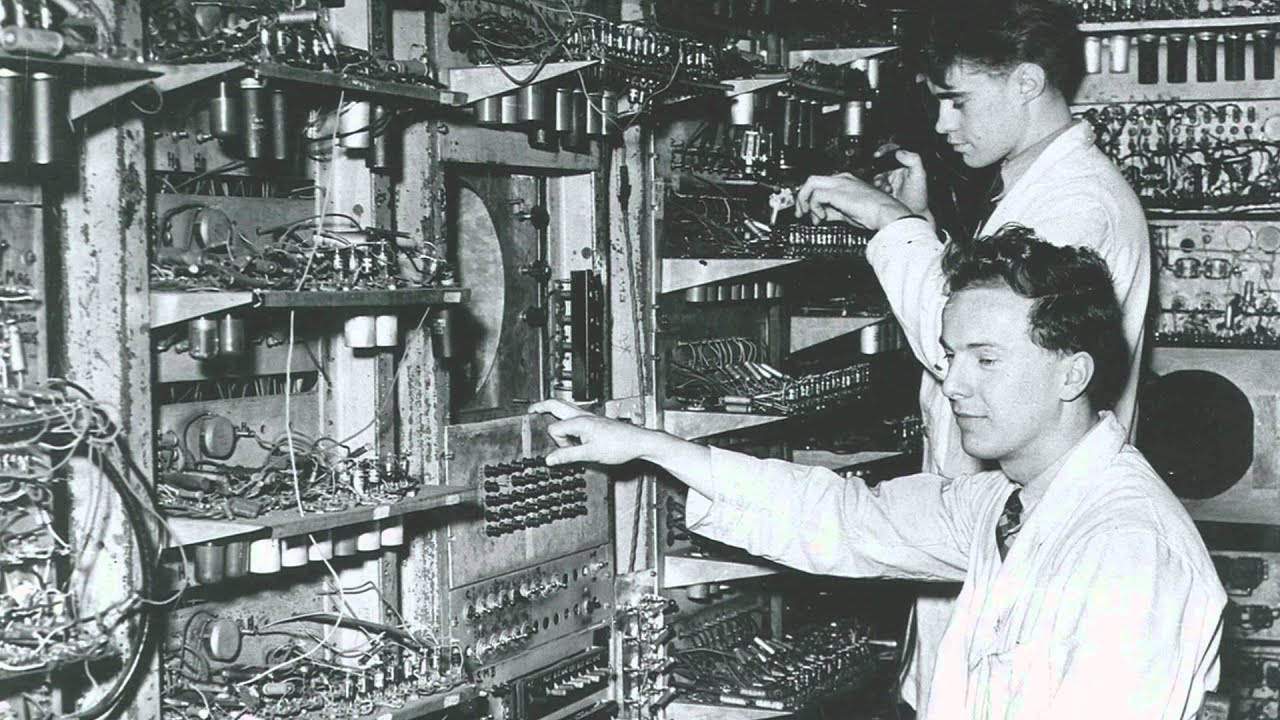
have taken classes on the exact same topics as I am teaching, some are very skilled at those topics already, and a handful of my students don't know the difference between a right-click and a double-click.  But I start off every class with one key point: computers were created to be programmed to make our lives easier.  Computers were not invented so that we could check email, post selfies to facebook or play games, although these are all clever and arguably beneficial resultants of the age of computers.  No, computers were made to solve problems that we could not solve efficiently by any other means.  Therefore, when I think of programming, I do not think of it as a field of study, nor do I think of it as a thing for only the geekiest smart people in our society.  I've been programming all my life, often without realizing it, without connecting the dots in my path of development as a programmer, and when the option to study programming was presented to me, I ran for the hills.  Hell no, I don't want to be a "programmer."  But the power of programming is so compelling that, despite resisting programming as a profession, I cannot turn my back on it.  The truth is that I'm lazy when it comes to work.  I like to think big thoughts, taste fantastic food and drink, travel, experience neat things, but I don't particularly like working.  I like my profession, actually, but I don't like the tactical day-to-day tasks.  I have always taken exception to the mantra that if you love what you do, then you'll never work a day in your life.  I call shenanigans on that: every person I know has had to work, even if they love what they do.  There are just some aspects of having a job or running a business that are less pleasant but necessary.  So I've developed a mantra for my work that has soaked into the culture around me: if you do something the same way, repeatedly, following the same exact steps, then it should be automated.  This mantra is especially true for tasks that take an extensive amount of time, require instructions to do manually because there are so many steps, or are prone to mistakes when the steps aren't followed.  Imagine if every tedious task you had to do on a daily, weekly, or monthly basis was automated and completed within, say, 30 seconds.  How much time would you have to think strategically and creatively?  How many hours would you spend with your family or doing things for yourself instead of putting time in at the office to finish that report?  At its highest level, this is called exception-based management.  Spend your time on the exceptions, then oddities, the things that were so unforeseen that you wouldn't have known to program a computer to answer it, or you wouldn't want a computer to answer it.  Let the computer handle the rest of the monotony.  
Programming is, in my opinion, one of the most important, and overlooked, skills in today's society.  If you sit at a computer all day, I believe you probably could use some automation in your life.  If you have to email, post, learn, stay on top of, practice, sell, buy, look up, research, or write anything, you probably could use some automation in your life.  I may be a little biased from my own point of view, but my hope was to basically cover everyone who gets paid to do something, in the scope of "needing automation in your life".  I am positive that everyone could use automation, in their work, in their education, in their personal lives.  And we are living in a very exciting time of rapid growth and development in this area - a simple search on your favorite app store proves that for any generic task you can think of, there's an app for that!  Awesome!  
So if people are already writing apps for things, why does everyone need to learn programming?  Developers only write apps for one of two reasons: they see a need and believe that they can make money from it, or, they have a need in their own lives, and don't mind sharing it with others who also have that need.  But developers aren't the only people who have needs, right?  Heck, developers I know are the least needy people in my life: they have no need for clean clothes, showers, a neat home.  Just give them a cot, food and a computer and they're happy.  I kid, of course, I love my developer friends, they are some of the smartest and most interesting people I know.  But why should non-programmers sit around and wait for some developer to come along and write an app to solve our problems?  What if they never do?  Don't we have needs that are unique to our professions and situations?  Might there be novel needs that could be automated without a college degree in computer science?  My answer is yes: we all need to know how to program because we can all improve the world around us, make our lives simpler and easier with automation, so that we can get back to doing what we enjoy faster.  

I say that everyone should learn how to program, because I know that if I just said, "some people should learn how to program" or "one person in your organization should learn how to program," the very laziness that drives me to program would drive you to say, "she's
probably right, we need to get someone else to learn how to program."  Or in terms from our playground days, "Not it!"  I say everyone needs to learn how to program because some of you will not try, some of you will try and fail, and some of you will try and succeed.  And yes, having a few people on a team be very good at programming is awesome, because they can usually carry the automation needs of the whole team.  But I will caution this: when I write some piece of code to help answer a problem in someone else's work, I can only program what they tell me it should do.  When I write code for my own work, it not only is better logic because I have more insight into the problem and solution, it gets better with time as I use it and think of ways to make it faster, more helpful and more accurate.  In fact, I've written code for people who were in a position higher than my own, they have used it and were appreciative of my automation, but down the road, I took over their responsibility.  Managers are so funny when they give you more responsibility, aren't they?  They can rationalize it in such clever ways, in this case, "You're already familiar with the report because you automated it, so this isn't too much more than what you already know."  But inevitably, when I take over responsibility for something that I had previously automated for someone else, I find that they missed a lot of opportunities for further, better automation.  
Early in my career, I often found myself thinking, "If I only had a programmer to partner with, we could do so much..." As I've grown, I've realized that working with programmers is complex, because you have to be able to correctly identify your problem and describe the desired solution.  It is much harder to do this if you do not understand the logic of
programming.  It is also difficult to troubleshoot the inevitable problems that arise, if you don't understand for yourself what the code is doing.  All too often people blame the code, "it must be broken," rather than realizing that their inputs were incorrect.  The best-written code will solve for the more common possible human error, but once a macro is involved, any and all problems are blamed on the code, rather than on the user.  For this reason, people who are not in the profession of programming often are reluctant to help others because they are then liable for troubleshooting and fixing any and all problems that come up.  It is so much more empowering for individuals to write and own their code; you can customize it and tailor it to your own needs, you can rapidly develop and test improvements, you can troubleshoot (and find your own errors instead of having that angry developer rub your nose in your mistake), you can adapt it to changes in the inputs and output requirements, and you get a sense of pride from creating such a work of artful automation.  Putting the responsibility of programming on someone else's shoulders can be hurtful to them, less-than-optimal for you, and dangerous for both of you.  So, learn how to program.  Everyone.  

Having hopefully made my point, I will get off my pedestal and give you some practical, actionable advice on how to get started.  If you use Microsoft Excel or Access a lot in your job, I would recommend learning VBA, Visual Basic for Applications.  It is a modified version of VB, Visual Basic, so taking a VB course or getting a VB book would help familiarize yourself with the syntax and logic.  Start by Recording Macros in Excel or Access, and then examine the code.  Use the Internet, a class, or a book, to learn some basic concepts: declaring and using variables, "If" and "Select Case" statements, "For" and "While" loops.  Modify the macro you recorded using these concepts.  Bam!  You can solve a ton of automation needs in Excel and Access.  If you need to monitor a specific website for certain changes, or interact with a website to gather certain information, learn VB.  In both cases, you may also want to learn how to write CMD script to automatically run the macros and programs that you've programmed.  Learning basic programming of any kind, like Java, will help you better query search engines on Google, Amazon, and ebay.  Google Alerts is very helpful, but only if you set it up correctly using the best search syntax, for example.  For writing SmartPhone apps, I believe Java is still the best place to start, and there are several websites that offer free, yes, FREE, classes on how to program.  MIT offers open courseware for introductory classes, Coursera also has free college classes, Treehouse, Codecademy, Udacity, and Khan Academy are just a few of the available resources offering free training on programming topics.  The only problem with this approach to learning how to program is, well, you.  Until we develop the technology to download knowledge into your brain directly and immediately, you are going to have to set aside time to take these courses, go through the examples, and try programming.  And, if you're like me, you're lazy, so it is not easy to do.  If you go this route, I would recommend having a fairly simple, but useful, application idea in your mind; you want something to work towards and achieve that will give you immediate feedback on the usefulness of programming.  Learning to write, "Hello world," and sorting fruit by color are hardly helpful, but courseware has to provide generic, easy-to-understand examples for you to work through.  Having a project in mind will help solidify concepts that you can immediately apply to your idea.  If motivation and willpower to continue is a particular problem for you, then you may want to seek out a community college course or another class with regularly scheduled meetings that you pay for, to incentivize you to go and continue going and to get the most out of it.  

Learning to program, like most things in life, takes initiative to do.  But since not everyone in your office is going to do it, I can almost guarantee it will make you stand out among your peers.  Just be cautious not to be pigeon-holed as the programmer, if that's not the career path you want to take.  Take it from a non-expert expert, I can put code together but I am by no means a programmer, but the power to automate simple tasks has been a key driver in my ability to succeed in my field.  With great power comes great responsibility, and programming is the closest thing I can think of to a real-life attainable super-power.  Besides, computers were meant to be programmed.

Thursday, January 15, 2015

What Musicals Can Teach Corporate America

I have always found inspiration, encouragement, and wisdom about life in musicals.  But it occurred to me not too long ago, that big companies could also learn a thing or two from the life lessons our on-stage heroes learn through song and dance.  Here are a handful of lessons I came up with.  Please feel free to add your own in the comment section below!
 
Pippin
While every company can dream about being extraordinary, and enter into spaces they know nothing about, only to fail, not everybody can be the next great battle hero (or facebook, or Apple).  Still, it is better to live, to make, and to have, then it is to mount a burning platform and die. 

Music Man
Be wary of the manager who comes along saying that there's something very bad going on here, and he has just the solution.  The manager who commands a reorg is the Music Man of the corporate world.  He need not be accountable for the results, because he will be on the next train, to the next town, before you can reach him with tar and feathers.  Oh, YOU got Trouble with a capital T when the Music Man comes to town.

Wicked
Sometimes perception becomes reality.  Acting on the best intentions can be misunderstood, misinterpreted, and made to look wrong.  However, being popular is also lonely and disappointing.  It's not enough just to do the right thing for the right reasons, or what you believe to be right, and it's certainly not enough to look good on the outside without actually doing good; charisma and presentation are are just as important as the actions.  

Joseph and the Amazing Technicolor Dreamcoat
Even in the face of the most extreme adversity, you can still rise to fulfill your dreams.  Be good and honest and good at what you do, and others will recognize your value.

Shrek the Musical
It doesn't matter what you look like on the outside; it's what's inside that counts.


Pirates of Penzance
When you make a commitment, make sure it's the right one, and that the terms are correct.  Catastrophe can be avoided with a little double checking and due diligence.  

Rent
Treat people right, because you never know when you'll need them to be on your side.  


Tuesday, December 30, 2014

New Year's Resolutions for the Internet, Things to Look Forward to in 2015, and more...

It took me a little while to come up with my resolutions this year.  It was a little odd for me, because I tend to be very goal-driven, gushing with ideas and dreams and wild aspirations.  I think part of me is still a little disturbed about turning 30, and part of me is disappointed in my ability to accomplish every resolution every year.  I don't like to fail.  But I also don't want to set my sights so low as to be bored if I achieve them all.  So instead of writing resolutions for myself right away, I started by looking at what was coming up in 2015 in entertainment and astrology, and then by coming up with ideas and more achievable suggestions for others.  Here's what I came up with.


Things to Look Forward to in 2015
  • January: Watch the premiers of Scandal and How to Get Away with Murder (both Jan 29, 2015), Big Bang Theory (Jan 8), Glee (Jan 9), The 100 (Jan 21)
  • February: The Amazing Race (Feb 25)
  • March: Watch the premier of The Following Season 3 (Mar 2, 2015) and Once Upon a Time (March 1, 2015)
  • April: See Furious 7 (April 3, 2015); Total Lunar Eclipse (April 4)
  • May:  See The Avengers: Age of Ultron (May 1, 2015)
  • June: See Jurassic World (June 12, 2015) and Inside Out (June 19, 2015), Watch the premier of Under the Dome Season 3 (date tbd) and Extant Season 2 (date tbd)
  • July: Hike Seven Falls in Tucson
  • August: Perseids Meteor Shower (peaks August 12th)
  • September: Total Lunar Eclipse (Sept 28)
  • November: See The Hunger Games – Mockingjay Part 2 (Nov. 20, 2015)

New Year's Resolutions for the Internet
  • Stop using "could of", "should of", and "would of"; what you are trying to say is a contraction of "have", so it should be "could've", etc.  Or better yet, just write the whole damn thing out.  If you don't think this is important, just read what urban dictionary has to say.
  • Appreciate the actual message in Frozen, not the strange morals that could be derived from the overplayed song "Let It Go," in which Elsa decides to rebel against humanity and do whatever the heck she wants.
  • Report more positive news.  2014 was a remarkable year, but you probably wouldn't know it based on the headlines surrounding Ebola, the disappearance of flight 370, the Sony hacking attributed to North Korea and the violent racism-fueled events in Ferguson and around the country.  Let's report on advancements in space travel (SpaceX completed 6 missions this year), clean tech (world’s first solar road opened in the Netherlands in November), improvements in education (high school graduate rates are at their all-time high), trends in healthier food at restaurants, and creativity leading to awesome new companies and whole new industries (ever heard of Uber?).  
  • Use Pinterest more effectively.  It is not just for recipes and DIY crafts!  Read more in my blog post here.
  • Kill anything like "firstable" and "secondable."  Immediately.  I mean, really, this shouldn't even be a resolution for 2015, this should just be over now.
  • Watch more TED Talks and less videos about animals, people hurting themselves and kids freaking out about silly things.  It's not that those things are cute and/or hilarious, it's just that we could all spend more time on topics that would allow us to grow and learn.  
  • Support more Kickstarter and Indiegogo projects, local businesses and startups.  Just browse these websites and you're sure to find some amazing things people are doing, locally and all around the country (and/or world).  No need to wait for things to go viral or become top funded projects, you can put a small chunk of change and a little social media sharing towards something that can be great!
  • Forget the idea of 3D printing food.  Shaped sugar is not the best application of 3D printing, and there is so much more to do with this phenomenal technology.  Let's focus on more practical applications, and allow the culinary arts to blend and create in all the other ways that don't require a CAD drawing, a nozzle and squishy material to shove through it.
  • Create, post about, and eat the most super-duper creative and nerdy pies possible on March 14th.  Why?  Because this is the most accurate Pi Day date of our lifetimes: 3.14.15, and I think that's worth celebrating.

Achievable New Year's Resolutions
  • Read a book.  Or ten.  Audio books count, listen while you commute!
  • Take a hike.  Literally!  Choose a rewarding, challenging hike you can tackle this year, train a little for it, get a hiking buddy, do it, and take lots of pictures to share your accomplishment.  If there is no great hiking in your area, pick another challenging physical activity, like running a 5K.  
  • Take a college course on a topic that interests you.  There are free online courses on coursera.org, edx.org and similar sites.
  • Go to a museum.  For my local friends, I would highly recommend the Musical Instrument Museum.  
  • Take a dance class or dance lessons.  Might I recommend swing dance lessons with Dabney and Karen?
  • Learn to program.  There are literally dozens of resources to help you get started!
  • Spend a week without Facebook -or- Spend a weekend without Smartphones & internet
  • Re-read a book you read in school but didn't quite grasp or were supposed to read but read the Cliff Notes instead

Finally, I extended some of the ideas and themes from my recommendations into things that I would like to achieve.  I typically have a theme for each year (past years have focused on dance, design, inspiration, etc).  I think one thing I've struggled with a lot this past year is that I feel I have given a lot and done a lot for other people, and have not commanded reciprocity, leaving me feeling a little empty.  So I am dedicating 2015 to doing things for me.  It sounds a little selfish writing it, especially because I have a pretty damn good life already, but it's still something I feel I need to concentrate on, because giving comes naturally and I don't take as much as I probably should.  So, with that said, here are my resolutions for a year of doing things for me.  I also kept thinking that I should break down my resolutions into smaller timeframes, because a year is a really long time and time can slip by without realizing it.  So I've also created a rough schedule that will help me achieve my resolutions.  

My New Year's Resolutions for 2015 
  • Shoot to check off four Life List items 
  • Hike Seven Falls in Tucson 
  • Go on a date to one of the events at Desert Botanical Gardens 
  • Expand my vocabulary.  Learn new words and use them in my blog. 
  • Learn to cook a new dish - using a crock pot, oven or stove
  • Take a lesson in blues dancing 
  • Make a gingerbread house 
  • Host a game night or dinner
2015 Tentative Plan
  • January
    • Use a word-a-day app & journal about words I like
    • Host a dinner

  • February
    • Take a lesson in blues dancing
    • Try cooking a new dish (using a crock pot)

  • March
    • Go on a date at DBG
    • Publish a book (on life list)

  • April
    • Go white water rafting (on life list)

  • May
    • Host a game night
    • Ride a tandem bicycle (on lift list)

  • June
    • Hike Seven Falls in Tucson

  • July
    • Go to Taste of Chicago (on life list)

  • August
    • Tour Hershey Chocolate Factory (on life list)
    • Try pole-vaulting

  • September
    • Go to a wine festival and crush grapes into wine (on life list)
    • Go blues dancing

  • October
    • Try cooking a new dish (using the stove or oven)

  • November / December
    • Make a gingerbread house

Monday, December 29, 2014

Life List Progress EOY 2014

I always try to knock off at least 1 or 2 things from my Life List each year.  This year, I checked off three things from my Life List.  The fun thing about my Life List is that some items can be planned for (many of which require travel to a specific location, but not all), while others cannot necessarily be planned for and happen semi-spontaneously.  For the latter, these are things that do require a little bit of putting oneself into a situation where its possible, or "building a door" if opportunity isn't knocking.  For example, it is not likely I will ever be able to accomplish #93, photograph an endangered species, while sitting on my couch, unless the world's population of chiweiners rapidly declines and Carly finds herself among the few remaining.  So, without further ado, here is a recap of my Life List accomplishments for 2014.   

#76 on my Life List was to see a lunar eclipse.  It's not an earth-shattering adventure like many of my Life List activities, but things somehow I have managed to miss them, either because I didn't realize when they were emminent, or because I made other plans that interfered with gazing up into the heavens to catch these stunning events.  Finally, on April 14th, Jaiman and I laid down an old comforter on our driveway and watched as the moon turned a fantastic red.  And while my camera may not be ideal for this sort of photography, nor was I prepared with something to keep my camera still, I managed to take a few decent pictures. 


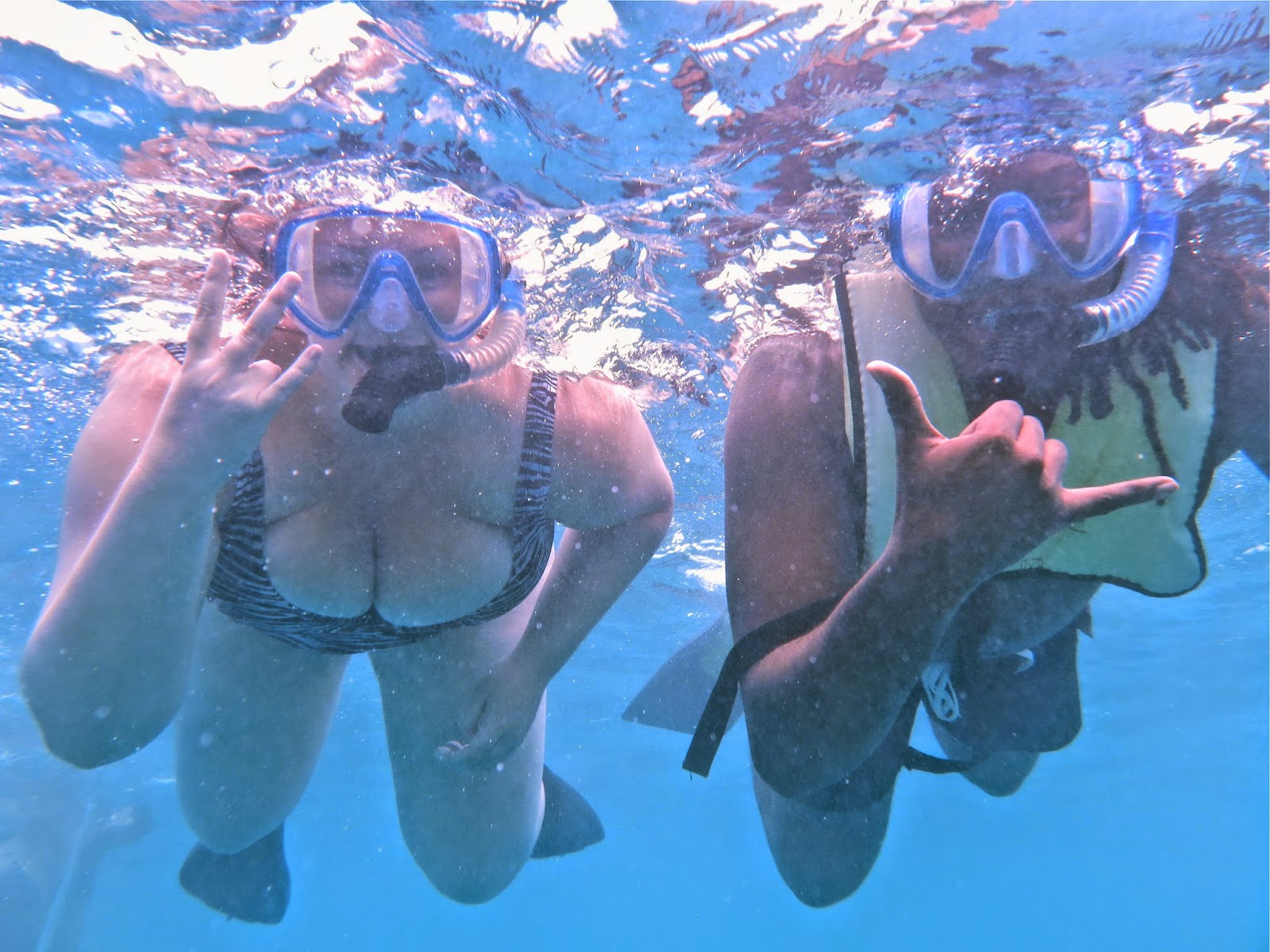
When we went to Hawaii with Jaiman's family in July, I made a point to book us an excursion to swim with giant sea turtles.  You never can tell how well a nature-centric activity might go, but my experience was one of the most exhilarating memories of 2014; far more than I could have asked for.  When the boat stopped, everyone had the option to get floaties or just hop right in, and I decided to hop right in, so I ended up being the first one off the boat.  While I floated, watching Jaiman and his family and the other passengers prepare to hop off the boat, I heard a sudden, loud exhale directly behind me.  Confused, because there were no other people around me to my knowledge, I turned to see a giant sea turtle had come up to the surface to check me out.  I pushed myself away a little bit, having been warned that it was illegal to touch the gentle creatures, and gave him some space, which he didn't really need because he dug back down into the water immediately.  I threw my head under to watch him as he majestically swam away.  We had other near encounters, but none quite like that.  It was a very special moment for me, and completed #110 on my life list. 

One of the stranger things on my life list is a result of feeling "jipped" or "un-Arizonan" for having never seen a local beast (or nuisance, depending on who you ask) that it seems like just about everyone who has lived in the area for any significant amount of time has seen.  After an exhaustingly fun holiday gathering, on Christmas Day, my sister was throwing out dog poop at my parents' house, and came back in the house frantic and yelling at me to come quick.  I knew within milliseconds that she must have spotted a javelina, knowing how much I desperately have wanted to see one not in a zoo.  I reached the garage and sure enough, at the end of the driveway, there were a number of them, adults, babies and everything in between.  A sounding, actually, that's what a group of javelinas is called.  They looked lost, and didn't move quickly, but Dad was there rather quickly to remind us to keep our distance because they could charge at any moment.  My Mom joined us with her phone and snapped a few pictures of the adults and babies from the end of the driveway.  We watched in amazement as the creatures walked around the col-de-sac before wandering away via the neighbor's house.  And with that, I got a little Christmas miracle to check off #68 on my life list. 

Now, of my 150 Life List activities, I have 37 items checked off, leaving me 113 adventures, sights, activities and fear-facing options available to attempt in the coming years.  I can't wait to see what items I will check off in 2015!

Tuesday, December 16, 2014

Fitness That Doesn't Break the Bank

I definitely feel the pain of a facebook friend who recently posted a grievance about the cost of eating healthy and fun forms of exercise.  Specifically, the complaint was that a McDonald's burger is cheap and a salad is expensive, and sitting on the couch is free but playing in sports costs a bundle, therefore no wonder our society struggles with obesity.  I think we can all relate to this feeling, and the notion that of course our kids and our society as a whole are fat!  I have definitely found this oddity in my own struggle to lose weight, but I've also found some solutions, which I feel compelled to share in hopes of inspiring others.  

Hiking
Lucky for me, my region is full of awesome mountains to climb with decent hiking paths, and access to most are free, others charge a small fee.  While hiking can be brutal when unmotivated or in the wrong mood, it can also be very rewarding.  One thing I discovered (or re-discovered) recently was that having my dog along helped distract me from the annoyance and burn of hiking uphill.  She really pulled me along, but she also took my mind off the difficult activity.  I don't think it would be the same if it was someone else holding the leash for their dog, I think it works best for me if I'm in charge of encouraging her and holding her back.  One of the best parts about hiking as a form of exercise, as opposed to riding a stationary bike or dancing at home, is that there's a definitive goal and end point; you can't exactly decide you're done in the middle of a hike and sit down to watch TV for the rest of the day.  

Just Make It - but make it simple
I enjoy a good salad, but I'm a bit finicky in the kinds of veggies and fruits I'm willing to eat on a regular basis.  There are few places that make a good salad, in my opinion, and realistically, there are none to my knowledge that do it at a decent price in a healthy way.  Caesar Salads taste great at most places, but the dressing is far from healthy, and the salad often costs more than something full of carbs and fried goodness.  Defeated by my salad woes, I, the woman who turns on her oven only a few times a year and never does anything resembling cooking besides warming up leftovers or frozen foods in the microwave, caved in to making my own salads.  But I cheat a little, and this is why it works for me.  From the grocery store, I buy mostly everything sliced and diced and cut already, which greatly reduces the amount of time I spend preparing my salad.  A typical salad for me consists of shredded lettuce, shredded carrots, baby tomatoes (whatever those are called), slices of bell pepper or mini bell peppers, shredded cheese (but not too much) or crumbles of feta, diced ham or chunks of pepperoni.  I've found a number of things to use as "dressing" that are also rather healthy: lime juice, red wine vinegar, chili garlic sauce (the last of which also helps me consume more water - spicy!).  I know my tastes are a little unique, so I don't expect my readers to go out and reproduce this exact thing, but that's the point: find what works for you, and make it delicious and healthy.  Then when you go to the store, you know the items you need to throw together.  I also usually make two or three salads at a time when I make them, so I don't have to pull everything out of the fridge three times.  

Drink Water Rules
The more water I drink, the better I feel.  Without drinking a lot of water, I tend to look tired, get migraines, and sometimes get so nauseous I throw up.  But water is always a good thing to drink, so I don't know why I do this to myself.  My solution: make rules about my life that involve water.  There are times when I find a craving that I think is for ice cream or cheese or chocolate, but really I was just thirsty.  So I try to always drink water before doing something indulgent.  It also helps you feel fuller faster, so you eat less of a large meal (in theory).  Carrying your own refillable bottle is one of the best ways to ensure you always have water on hand to help fight misplaced cravings.  

Water Rules:
Before eating a dessert or candy, drink 8 oz of water.
Before opening a can of soda, drink 8 oz of water.
When I want to play my game on my phone, I need to drink 8 oz of water.  
Before prepping or going to lunch, drink 8 oz of water. 

Earning Television
Like my drink water rules, I also have rules about watching TV, although I admittedly don't always obey them.  But here's the concept: one episode of anything is a freebie per day.  For every additional episode of a show, I have to do 50 crunches and 32 leg lifts on each leg.  I picked those two exercises because those are the areas of my body I want to work on most, and that are not serviced much by my dancing and hiking activities.  

Replace Caffeine with Peppers
No joke, I often tell people that I get a high on eating spicy peppers like jalapenos, but it is a legitimate way to increase metabolism, get a boost of energy, and yes, even get a little natural high.  I eat them straight, but if you don't have that kind of tolerance, try putting diced jalapenos (also available in the grocery store) in your salad or put slices (available at the store) on your pasta.  If jalapenos are too much, try pepperocinis or banana peppers to start.  The seeds are the spiciest part, so be aware of that as you prepare to eat peppers.  Another tip for eating spice: don't suck in air while you're eating, its insinctual because its "hot" but its not temperature hot, and oxygen only makes the spice work harder.  Instead, keep your mouth closed until the pepper or spicy food has been swallowed, then take a glug of cold water and hold it in your mouth before swallowing.  If it gets too hot, grab some bread or cheese or milk to cool it down, but keep trying to cool it off with water, otherwise you'll fill up on not-so-lean stuff.  Contrary to popular belief, hot peppers do not eat at your stomach lining, they actually improve your metabolism and help your digestion system.  Eating them also encourages consumption of water, which we all could use more of, and clears out sinuses.  

Dancing
When I think about dancing at home, I always picture the scene from Mrs. Doubtfire where Robin Williams, dressed as a woman, slides across the floor, broom in hand.  But seriously, dancing at home is a fantastic way to work out for free.  If you don't know exactly what to do, look up videos on YouTube that teach dancing.  I did some belly dancing that way, and I also use YouTube a lot to practice the few choreographed swing dances, like the Shim Sham, Tranky Doo and Big Apple.  There are lots of videos for each of those dances, all moving at slightly different paces from beginner to advanced.  So browse around a little, find what you want to do, make a playlist of it, and get off your butt and dance!  The best part is, unlike a workout video, if you get bored of a certain routine, you can swap it out for something else in your playlist.  A dancer friend of my posted a study that showed swing dancing burned more calories per minute than any sport or something like that, and even if I didn't get it exactly right, the idea that swing dancing is a rigorous, full body aerobic exercise really jives with me.  

So there you have it - those are my ideas on how to get and stay fit on the cheap.  Obviously, these are easier said than done; but paying for a gym membership also doesn't automatically make you healthy.  Exercising and eating well are disciplines, and require commitment, perseverance and maybe accountability.  One last time I will add is, when I'm not in the mood to workout or when I know I'm not drinking enough water on a particular day, I ask myself this question:  "What do I have to do tonight that is MORE important than getting healthy?"  If I answer it honestly, I usually end up in the gym gulping down water as I sweat through a solid workout.  

Wednesday, October 22, 2014

The Collision Fine

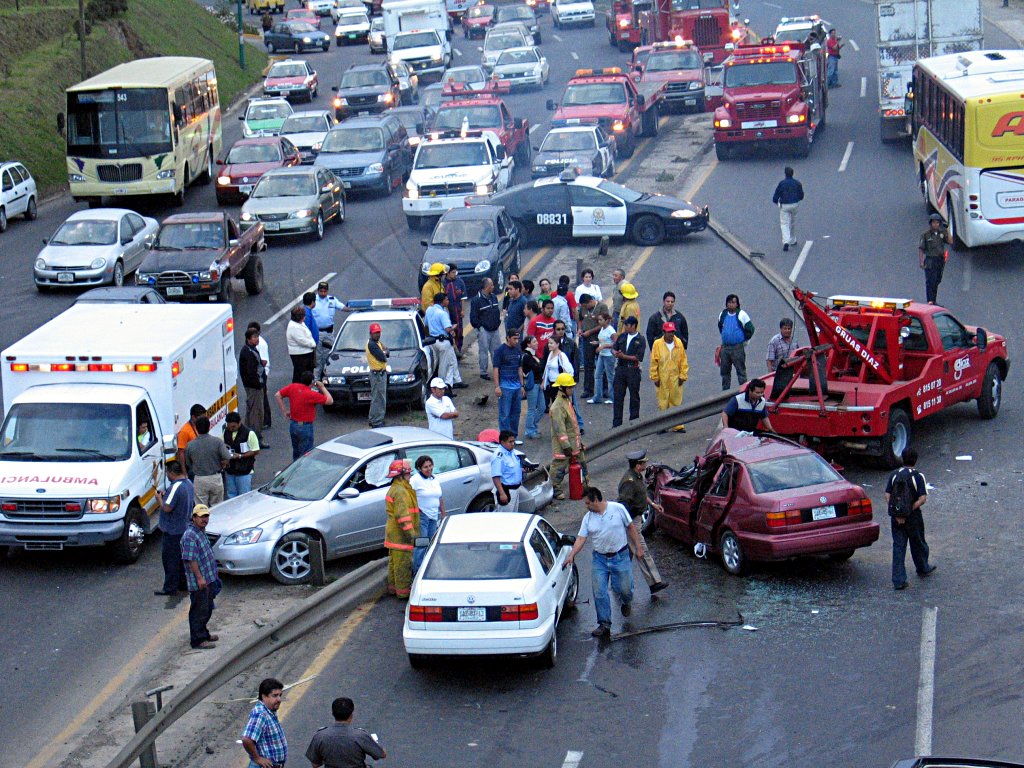
I don't believe in the word "accident" when it comes to vehicle collisions.  When one vehicle collides with another, it is almost always because somebody was doing something stupid or wasn't paying attention.  In the case of mechanical problems or road conditions, maybe it wasn't sheer stupidity but there is still a cause and ways of avoiding it (better maintenance of vehicle, adding extra following distance when ice may be present on the road).  Thus, when I am significantly delayed by an accident on the freeway, it infuriates me.  I believe that people who cause collisions should be penalized much more than today's penalty structure allows.  It is not just damage to the vehicle, or injury to the innocent victim that needs to be compensated for.  Every person who is delayed suffers because of one person's poor driving decisions.  In addition, I believe that if the penalty for causing a collision was significantly higher, people would be incentived to drive safer and pay better attention, which is a huge win for society if we can reduce so-called accidents.  

First, let me say that my gut reaction is that anyone who causes a collision during rush hour that causes significant delays for so many people should have his license revoked permanently and/or car seized and/or shipped out of state/deported.  That's my gut reaction.  But I know that's not realistic, nor do I really want to live in a society that is so unforgiving.    I had an economics teacher joke (in half seriousness) that if everyone's vehicles were equipped with an irremovable knife jarring out of the steering wheel, nobody would drive unsafely; the implication that the safer our cars become, the more our drivers will feel invincible and cause more crashes.  So taking a step down from such an extreme view, here's how I would structure penalties for causing vehicle collisions.

A model would be developed using traffic statistics organized by day of the week, time of the day and direction of travel.  Then, when a collision is reported, the model would determine how many drivers would be delayed as a result.  A similar model would be applied based on the severity of the collision and resulting road blockage to determine a standard amount of time allowance for clean up.  Based on these two models, each collision would have a significant penalty.  The guilty driver will have to pay this fee into a pool collected by the city or state, in addition to paying for direct damages and medical expenses like normal.  If the guilty driver cannot pay this fee, he forfeits his license and is not allowed to drive until such time as he has paid it back in full, or performed the equivalent amount of community service time at $5 per hour, or any combination of the two.  At the end of the year, the pool is distributed evenly to every person in the region who has (1) a valid driver's license, (2) valid car registration and (3) a clean record with no accidents or traffic tickets.  The payout can be pro-rated for individuals who had car registration or a license for only part of the year.  However, if there is any recorded accident or traffic ticket, the driver is disqualified for the year in which those incidents occurred.  

Let's take for example a standard collision, blocking one lane of traffic for 30 minutes during rush hour.  I'll say that this delay is valued at $10 to every driver immediately impacted.  If 500 drivers are assumed to be impacted while the accident is being cleaned up, then the penalty starts at $5000.  If the accident happened at the beginning of rush hour, around 4:30 pm, then traffic doesn't just resume normality after the accident is cleaned up, so another 1000 drivers are inconvenienced at a value of $2.50.  So now the fee is up to $7500.  With 100 such accidents per year, we'd have a pool of about $750,000.  Let's say there are 10,000 drivers who qualify for the payout, so each driver would get a nice little check for $75.  It's not a huge bonus, but it's a nice way for the city or state to say,  "Thank you for being a safe driver this year, here's compensation for the idiots who were not as smart and safe with their driving."  And I think that's dandy.

Now, let's look at actual numbers.  The following stats are from 2013 Arizona DOT's report on crashes.  There were 4,826,903 licensed drivers in AZ, and 107,348 crashes.  There were 76,335 crashes in Maricopa alone.  Of Arizona crashes involving multiple cars, 45.98% were rear ends, 71.66% were in daylight, 86.45% were on days with clear skies, and 93.2% were on dry roads.  That is to say that nearly 50% of car-on-car collisions could have and should have been avoided.  On weekdays, between the hours of 6 am and 9 am, there were 14,837 accidents.  Between the hours of 4 pm and 7 pm on weekdays, there were 20,624 accidents.

Following my model, the 35,461 accidents during morning and evening rush hours could have contributed up to $2.7 billion to the proposed pool.  Assuming the 4.8 million licensed drivers maintained current registration throughout the year on at least one vehicle, and even ignoring the fact that probably 100,000 of those people would not get the reward because they caused accidents, that would amount to $550 per person as compensation for being inconvenienced by car accidents.  That number could go up if you consider longer hours of impact, or if my model underestimated the number of impacted drivers.  But even still, I'd take $550 for being inconvenienced, no problem.  

Sunday, October 12, 2014

The Receivers

I started listening to the audio book The Giver, a book I read in fourth grade and haven't touched since.  It has already started pulling me in; it may be an easy read, but the concepts it deals with can be very adult.  The idea of assigning children, at 12, what their roles in the community will be, and producing hundreds or maybe thousands of happily complying citizens is astounding in a way, especially in contrast with today's young people being told they can be whatever they want to be, and that it's okay to change your mind about what you want to do, and today's adults being told its never too late to change your career.  Imagine even if you got to choose, but whatever the decision was, at 12, you were stuck with it for the rest of your productive years?  That's hard to swallow.  

I chose my career early on, and knew even before it began that it wouldn't fulfill me, and that I would need to keep my creative passions at my side.  I benefited from my Dad's career advice, and my sisters' early work experiences.  I knew what I wanted, I pursued it diligently, and got it.  End of story, right?  I wish.  Like I said, I knew I would need to keep my creative passions at my side, and I have, although they've shifted, from music to writing to painting to interior design to product design.  That's not to say that I ever stopped writing, obviously, or ever stopped thinking about music or painting or interior design.  I just focus less on making money with those areas.  And while all of this has happened primarily in the background of my career, the backburner, the appendix, I've developed a business career that could be quite envied.  I've had a number of entrepreneurial ambitions that have come and gone, but never quite scratched the itch and never hit it out of the ballpark.  Freelance writing was fun, but it became a lot of work for so little pay.  Commissioned art wasn't any more profitable for me, after I paid for the materials and paid with my time.  It was hard to imagine a traditional career in interior design without a traditional interior design background, so I tried going about in an untraditional way, and gave up after the first rejection by HGTV's Design Star.  Software is an area that I think can have a huge return, but I'm not a programmer, have resisted being one, and don't have much to offer programmer partners.  Product design also has a giant pool of talented designers, and I don't know how I could ever compete.  

So I've tried to focus more recently on what my strengths are.  Clearly, I'm not the most talented artist, or the most talented designer, not by a long shot, not even good enough to compete, really.  One strength, I think, is my ability to impart my technical skills to adults in a classroom setting.  Recently, I've also been very much wanting to get involved with 3D printing.  But it turns out, its really hard, and there are a lot of people doing amazing things and I don't feel like I have the technical or design abilities to keep up, or the energy to try.  So putting these two ideas together, what little technical skills I have developed in 3D printing, and my ability to impart those skills to others, I decided I should focus on teaching 3D printing design classes.  My 3D printing dinners idea I thought was a winner, but I didn't throw myself whole-heartedly into the Kickstarter and it thus resulted in a cancellation of the project.  The problem with Kickstarter is that it's not really a way to kickstart anything, its a way to get over the finish line, which means I have to start something.  So taking my own advice on this one, I decided I would just start offering these classes.  

Of course, I focused first on the easy stuff: setting up a location and time and place.  Great!  But the hard work is the marketing, and ultimately, the getting-people-to-hand-over-money-for-what-you're-offering part.  It's so daunting, I don't even want to start.  But why should it be?  I got to thinking about this, and here's the marketing challenge boiled down to its roots: even with targeted ads, I'm not able to reach just the right audience.  I can reach broadly, to every adult living in the Phoenix area, and what percentage of them are going to be (a) on board with continuous learning, (b) interested in 3D printing, (c) able and willing to pay for such education from an apparent nobody, and (d) do not have the warewithall to figure out what they want to learn about 3D printing on their own?  In fact, I was planning on hosting the class at TechShop, which offers training and coaching on the exact same topic, so I would literally be introducing my customers to my competitor.  Now, granted, I could compete on cost and compete on the targeted content approach instead of TechShop's generic training, but still, they are my #1 competitor in the area, to my knowledge.  Interestingly enough, TechShop offered to partner with me, and I like the idea of partnering with a giant like TechShop, especially because they have the resources.  But I don't like their teaching structures, and I don't want to be roped into that arrangement, not if this is going to be my breakthrough source of secondary or substantial income.  

Targeted ads probably work well for certain situations, like if someone writes a lot about coffee or checks in to Starbucks, targeting coffee products towards them might be successful, at least enough to justify spending the dollars on the ads.  But if I'm targeting someone who talks about 3D printing, then there's a good chance they know more than me about 3D printing, and would thus not find my classes useful.  I mean, even if I'm teaching an Excel course, which I probably would be the expert in, if someone talks a lot about Excel, then they probably don't need the course.  The people who need my Excel course are the people who don't talk about Excel, but use it in their work.  The people who need my 3D printing courses are people who are remotely interested in 3D printing, but don't have a clue how to get started.  How do we find these people?  

So this got me to perhaps a brilliant marketing tool, if only we can find a way to incentivize people to use it:  tell us what ads you want to see.  What are you interested in?  What do you want to learn about?  What would help you in your home, travel, work, family, exercise routine, diet struggles, etc.  If we could select which ads we want to see, we could actually find products and services that we would be willing to pay for.  We need a marketplace for life.  Is that too broad?  I mean, there's marketplaces for techy gadgets, geek ware, culinary tools, movies, music, apps, clothes, and even education (although maybe these are the least developed).  What if we could truly have a one-stop-shop, a hybrid of Amazon, edX.org, Craig's List and Angie's List?  Is it feasible?  Or is our world too divided into niches to ever go back to a virtual General Store?  Maybe I should focus on pushing educational marketplaces to a higher level.  But it just feels like the way we go about marketing, and the way consumers go about being marketed to, is ripe for change.  

It's a tough sell all around.  Consumers generally don't like ads; they have developed a distaste for them because they take away time from the cable TV or Hulu shows they are watching, and the ads are rarely introducing something new and exciting that the consumers want or realize they need.  Some smart people have come up with ad-blocking add-ins for internet browsers to shield us from unwanted ads as we surf the web.  But if all ads went away, we consumers would potentially never know about new products or services that we would, in face, enjoy, that would enhance our lives, that would make us happy.  If ads were banned or systemically blocked, would word of mouth be allowed?  Would we still be able to see banners while driving by local businesses?  As much as we hate ads, a world without ads seems a little scary, too.  It's a world of stagnation, no new experiences, no technological advancement, and that is scary.  

On the other end of the argument, consumers can't necessarily be trusted to define what it is that they want.  I learned this the hard way when I surveyed friends and family one time about a really big, bold idea where any imaginable product could be made, and I got responses that consisted of no imagination and even, no interest, in such a possibility.  I was disheartened, and came to grips with a famous quote from Henry Ford about how he knew the automobile would take off:  “If I’d listened to the masses, I would have built a faster horse.”  It made me realize that sometimes vision comes before adoption, understanding and acceptance.  It's the exact opposite of the lean methodology for startups, which preaches that you need to ask the customers what they want.  But the mass market didn't know they wanted cars, or personal computers, or the internet, not at first.  Customers might be able to tell you what features they like and don't like about an existing product, and that market research can be digested to build a better mousetrap, but it won't be a revolutionary industry disruptor, creating whole new industries around it.  It takes vision, so asking consumers to select what topics they'd like to see ads on is like asking them to predict at what age their great grand-children will live towards, there's just no way to know until you see it, hear about it, or experience it, for truly new and different products.  Sure they could say that they want to travel to Australia, build a treehouse, find recipes and ingredients to use on the grill, and hear about new restaurants serving locally crafted beer, and you could target ads at those very ideas.  But for new and different ideas, there's no way to have the consumers predict that they want to see them.  In fact, a recent experience reminds me that broad, generic ads still have value in this world, because if I had only targeted ads, or only ads of my choosing, I would have never seen an ad for McDonald's new jalapeno double, but shortly after I heard about it, I went to try it, and I think it was probably the best $2 burger I've ever had.  I suppose maybe if the ad targeting was clever enough, it would know that I like jalapenos, but if I had any say in the matter, I probably would have excluded McDonald's from my preferences.  

I may be to the point of rambling now, and perhaps there's more to come on this topic.  I'm just imagining that, with big data and such advanced technology, there's got to be a way to give consumers a menu for life, and help them find the products and services they want that they didn't know existed.  What if we could all be Receivers and get exactly and only what we wanted?